How We Fix It
Adelanto is one of the smaller pieces of the territory we cover out of Victorville - about 9,192 households, nowhere near the size of the bigger pockets in this service area.
Small-town job patterns
That matters for how a repair call plays out here. A small town means fewer total jobs, but it also means less variety: once you've seen a handful of springs, openers, and tracks from the same building period, you know what you're walking into before you open the truck.
Checking tension, cable, travel
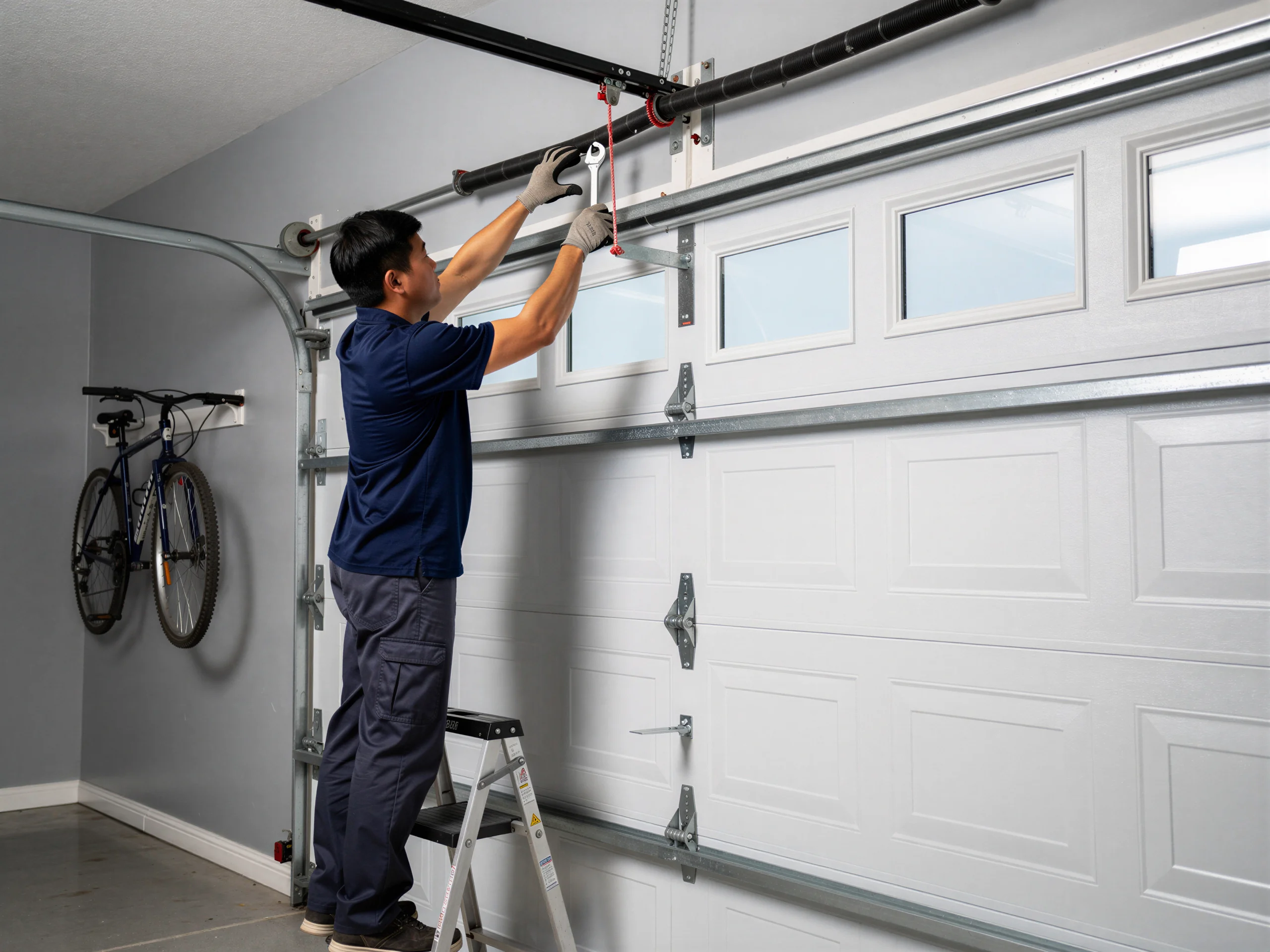
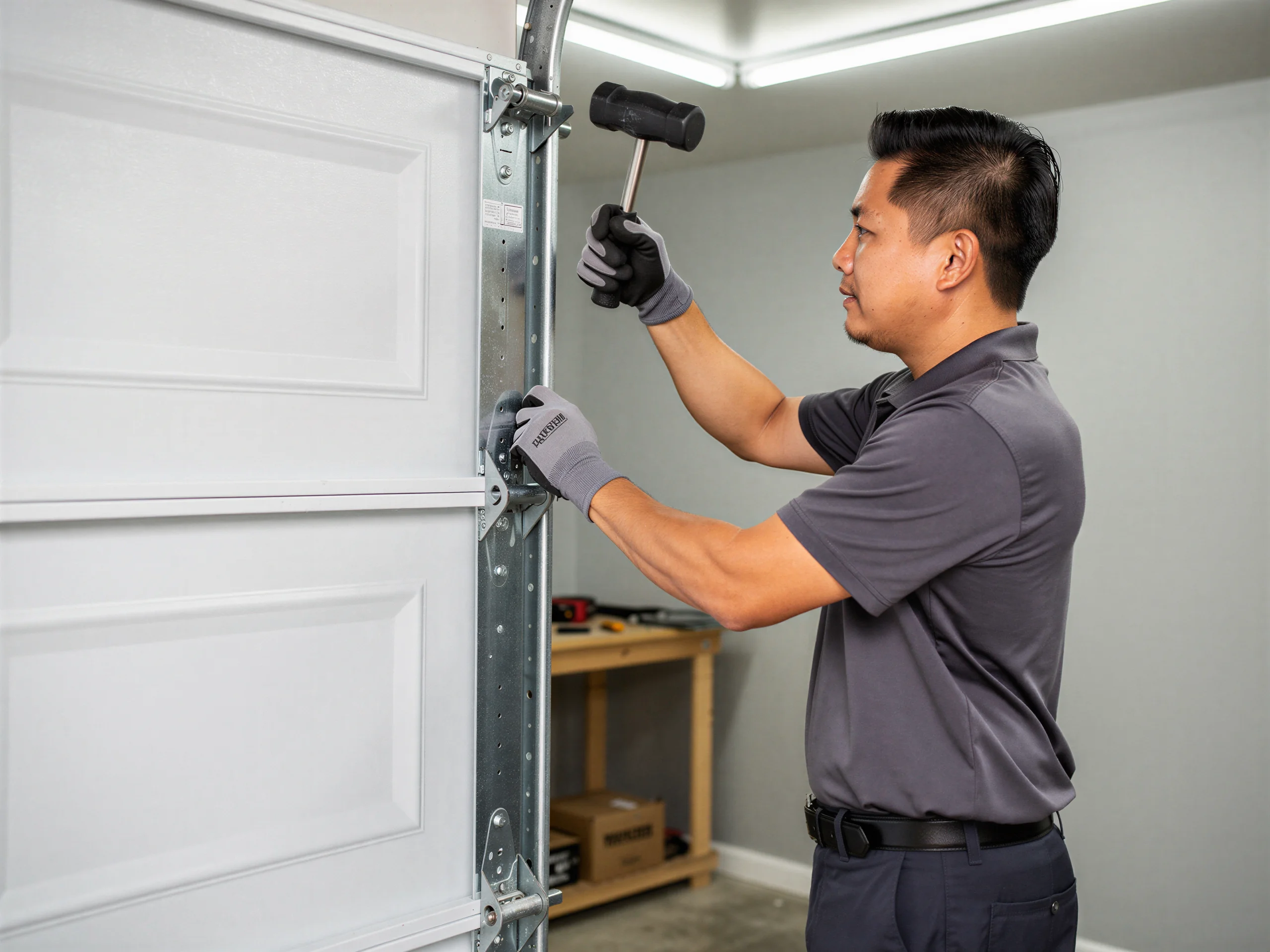
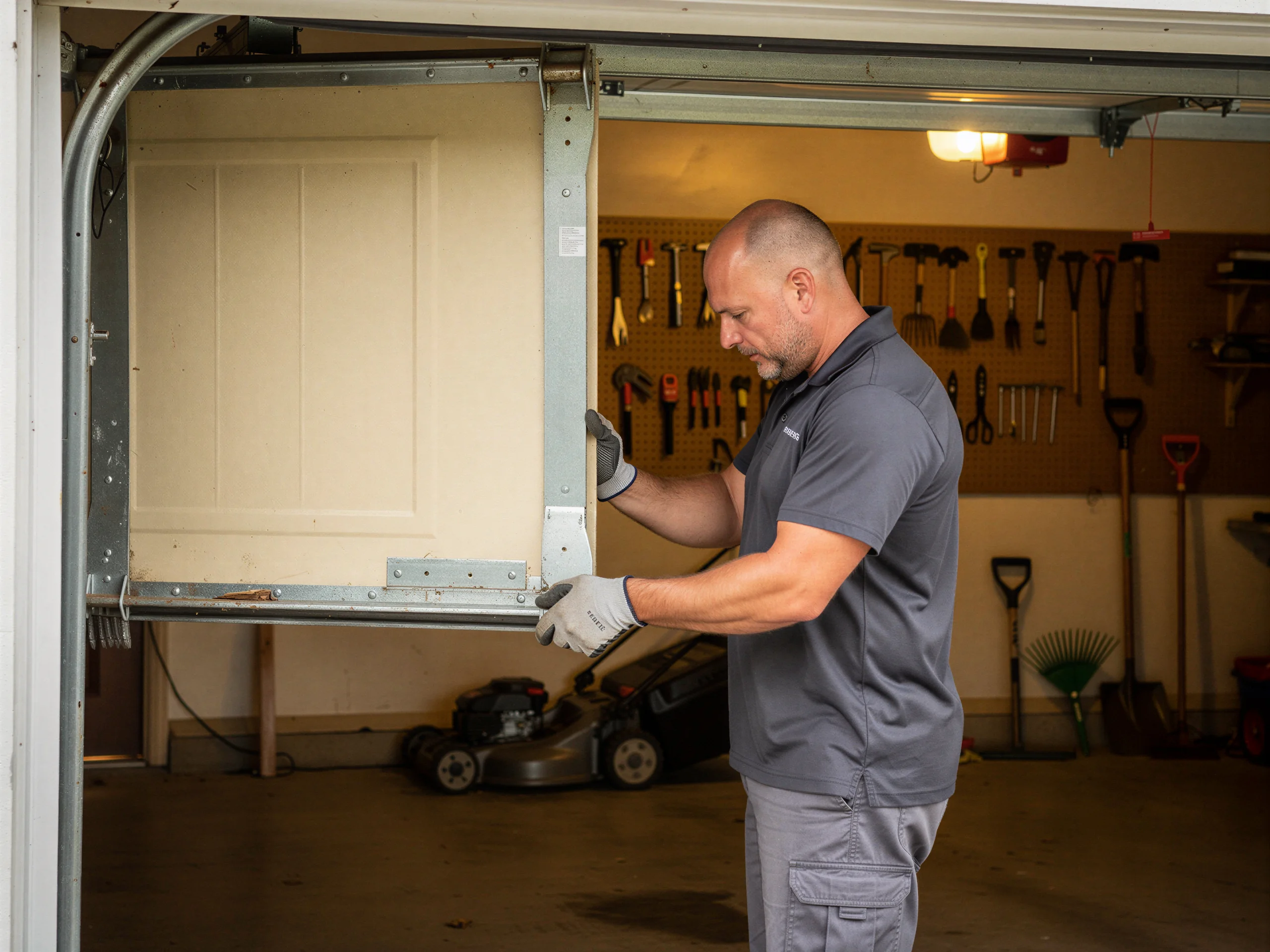
We diagnose on site. For a door that won't open, that's checking the spring tension, the cable condition, and the opener's travel limits before touching a torsion bar - most no-opens trace back to one of those three, not a bad motor.
Noisy or binding doors
For a door that's noisy or binding, it's usually a bent track or worn rollers rather than anything electrical. We tell you what's actually wrong before we tell you a number, and if a repair isn't worth it against a full door replacement, we say so instead of running up a bill on a door that should be replaced.
Stocked Parts
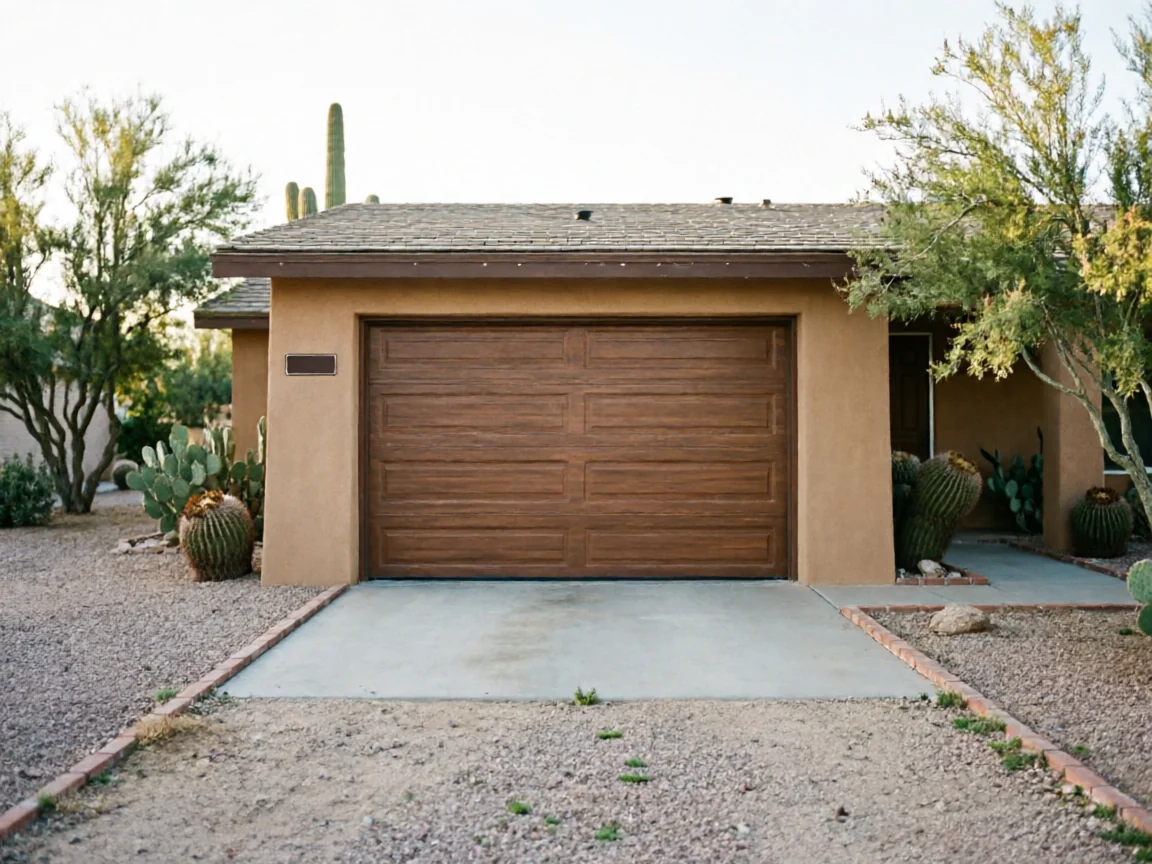
Adelanto's housing stock centers on a median build year of 1997, newer than the 1966-1997 range and 1989 median that covers the wider service area.
Torsion-spring stock for Adelanto
That shifts what shows up on the truck for an Adelanto call. Houses from this era were mostly built with torsion springs rather than the older extension-spring setups you find on the oldest houses in this territory, and openers from the late 1990s are chain or belt drive with standard 1/3 or 1/2 horsepower motors - not the obscure screw-drive units that turn up on older homes elsewhere.
Standard truck parts inventory
We carry standard torsion spring sizes, matching cable, nylon and steel rollers, and universal opener logic boards and circuit boards that fit this generation of door and drive.
Specialty panels need ordering
The one thing we're honest about: if a house here has an older door that predates the area's main build-out, or a specialty panel size, that part may need to be ordered, and that's a day or two, not a same-visit fix. We'll tell you up front if that's the case rather than guess.
Time on the Job
A straightforward torsion spring swap or roller replacement on a standard double door is a same-visit job - the part comes off the truck, goes on, and gets balanced and tested before we leave. Opener swaps take longer because of mounting and travel-limit setup, but they're still handled in one trip for the models common in a 1990s-built house.
What takes longer is anything involving a bent track that's pulled away from the frame, or cable fraying that's damaged the drum - those need more careful alignment work, and we'd rather take the extra time on site than leave a door that slips out of balance again in a month. We travel to Adelanto from Victorville for every call, so there's no local branch stocking extra inventory here; what's on the truck when we arrive is what's available, and we plan the parts load based on what you describe on the phone.
Booking a Visit
Calls from Adelanto come in the same way as the rest of the territory we run from Victorville, about 6 miles out. Tell us what the door is doing - won't open, won't close, stuck halfway, loud grinding, opener clicking but the door not moving - and we bring the parts that match what a late-1990s build typically needs.
If you're not sure what's wrong, that's fine. A lot of Adelanto's housing went up close together in the same stretch of years, so the symptoms we hear from this area tend to repeat: a spring that finally gives out after two decades of cycles, or an opener logic board that's reached the end of its working life. Describing the noise or the behavior over the phone gets us closer to the right parts before we're even on the road.
What Can Go Wrong
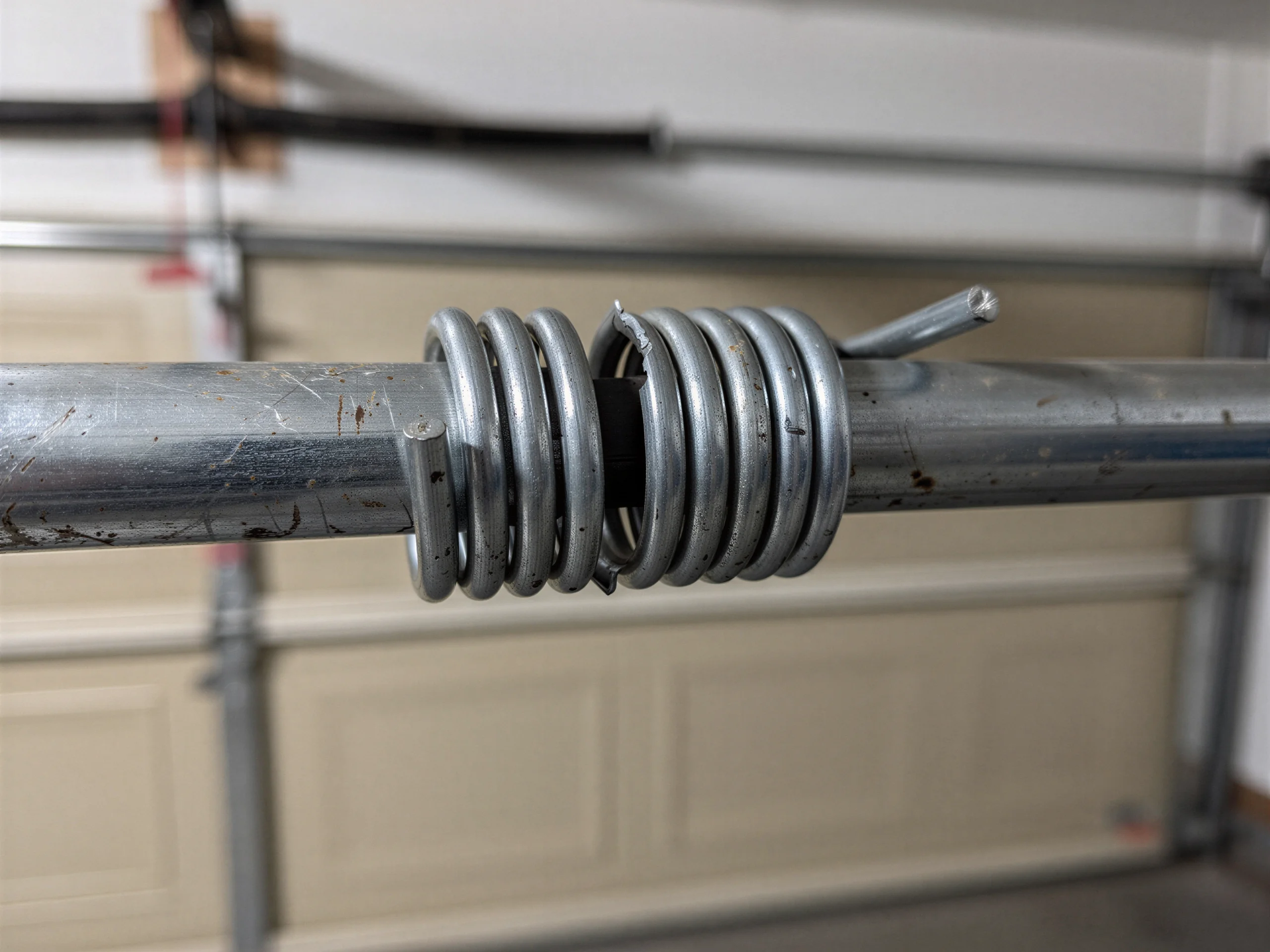
The most common failure on a door from this era is a torsion spring that's simply worn out - springs are rated for a number of open-close cycles, and a 1990s door that's been used daily for over two decades is well past that mark.
One spring failing lopsided
When one side goes, the door looks lopsided and gets heavy on one end; when both go, it won't lift at all. After springs, the next most common issue is roller wear.
Grinding, seized steel rollers
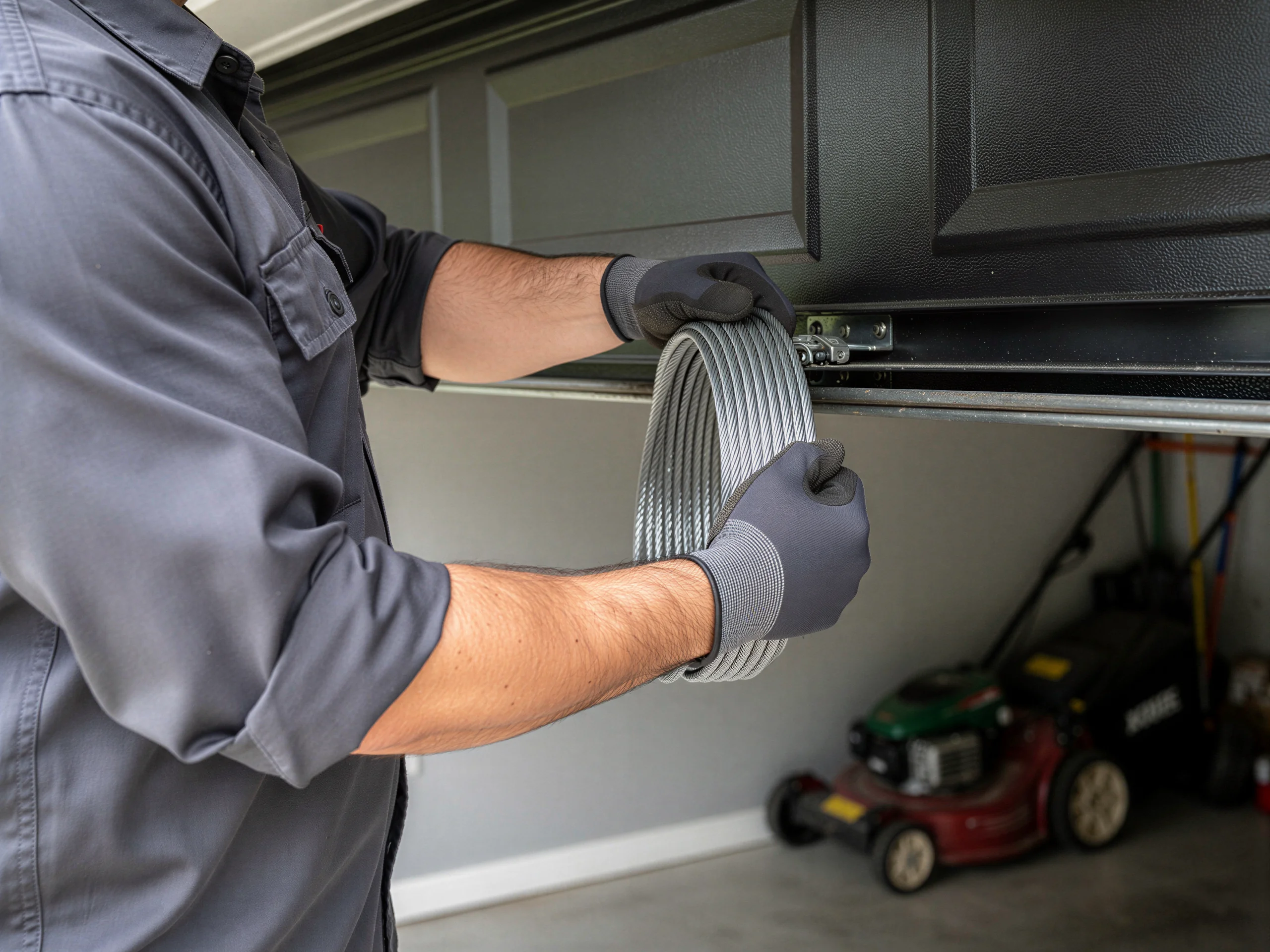
Steel rollers from original installs grind and eventually chip or seize, which shows up as a grinding or scraping sound as the door travels. Cable fraying is less common on doors this age but does happen, especially on doors that get opened and closed several times a day.
Electrical opener failures
Opener failures tend to be electrical - a logic board or capacitor going out - rather than mechanical, since the gearing in a mid-horsepower chain or belt drive from this period usually outlasts the electronics.
What Causes It Around Here
The straightforward explanation is age and the climate band. With HEAT as the dominant climate factor for this area, garage interiors run hot for a large part of the year, and that heat cycles the plastic housing on opener logic boards and dries out lubricant on springs and rollers faster than it would in a cooler setting. Combine that with a median build year of 1997 - meaning most doors here are now past the 20-year mark on original hardware - and you get a fairly predictable pattern: spring failure first, roller wear second, opener electronics third.
Income levels across the service area sit at a median of $74,778, and Adelanto's own median runs lower at $68,419. That doesn't change what breaks, but it does shape the calls we get: more requests for a straight repair on the original hardware rather than a full door replacement, since stretching the life of a working door makes more financial sense than swapping it out early.
Talk to a local pro
Garage door service in Victorville?
Same-day service with honest, upfront quotes.