
Deciding Whether to Repair or Replace in Victorville
Victorville homes mostly date to 1966-1997.
Read moreVictorville homes built mostly 1966-1997 often run original openers with no battery backup. Here's what actually happens to your door when the power drops.
Local detail
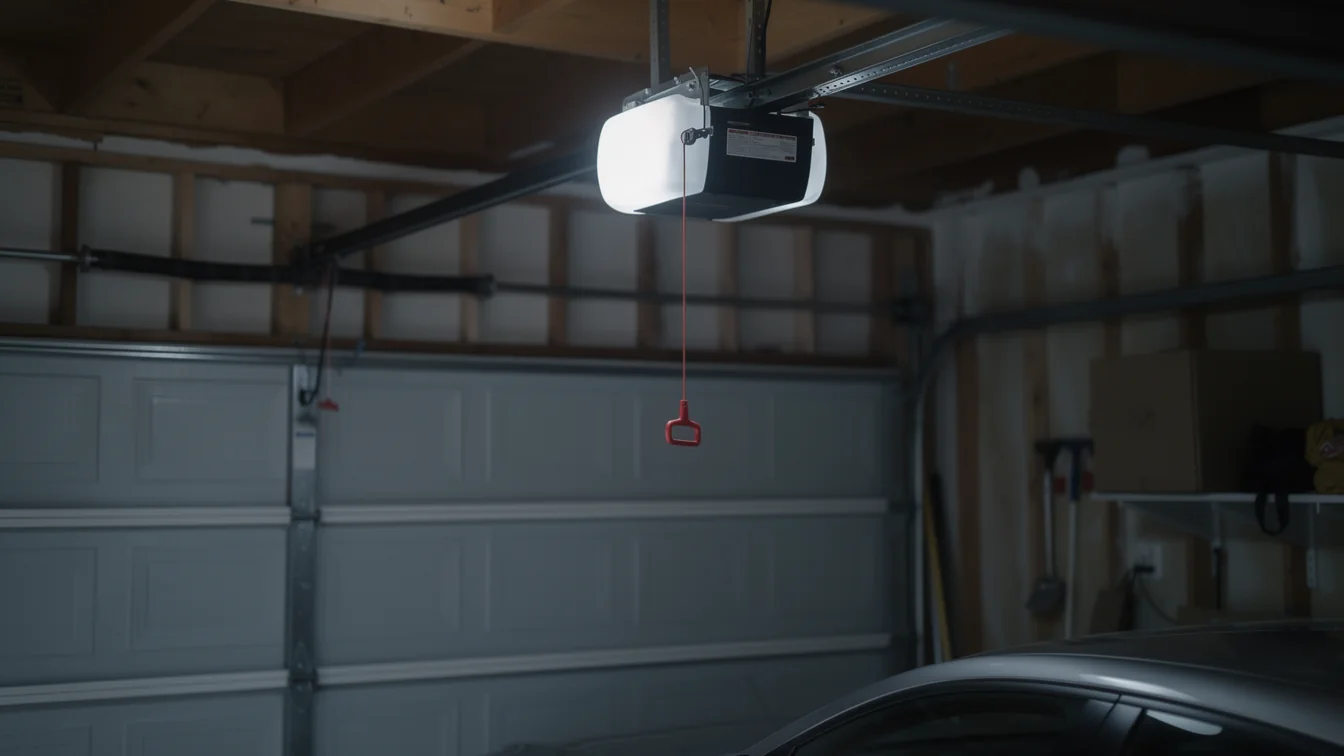
The usual assumption is that a garage door that won't move during a power cut has a broken opener. Most of the time it doesn't. The motor is fine. What's missing is a battery backup, and across the housing stock in this service area - built mostly between 1966 and 1997, with a median year around 1989 - battery backup was never part of the original install. These openers predate the feature by decades. So when the power drops, the door does exactly what it's built to do: nothing. People call assuming they need a new opener when what they actually need is the manual release cord, used correctly, to get the car out. Pulling that cord wrong, or yanking it while the door is partway up, is how a simple power outage turns into a bent track or a door that won't sit in the rail right afterward. That's the actual damage we get called out for, not the outage itself.
If your opener is original to a house from that build window, it was engineered around a different expectation of grid reliability and a different opener market altogether. Nothing wrong with the unit. It just wasn't asked to do what a 2020s opener does by default.
The area
Victorville sits in a moderate-heat climate band, not an extreme one, so we're not chasing heat-warped logic boards or sensors cooking in direct sun the way you'd worry about somewhere more severe. That's worth saying plainly because it's tempting to blame every opener glitch on the climate here, and that's not usually the honest answer. What does matter is age, not weather. An opener installed when a house in one of the eight areas we work across - Mountain View Acres, Spring Valley Lake, Adelanto, Apple Valley, Oak Hills, Phelan, Piñon Hills, or Crestline - was built in that 1966-1997 window has had thirty-plus years of motor cycles, chain stretch, and capacitor wear, independent of how hot the afternoon gets. Heat shortens the life of rubber grommets and lubricant a little faster than cold does, but it's a minor factor next to sheer age. If your opener struggles on the hottest days and works fine the rest of the year, that's more likely a weak capacitor finally showing its age under load than a climate problem on its own.
What we find
With 52,464 households in the service area and 33,942 of those in owner-occupied houses, a meaningful share of owners are sitting on an opener from the same era as their house - 1980s or 90s stock, mostly. Median household income here runs $74,778, which puts a full opener replacement with battery backup within reach for most owners once they decide it's worth it, but it's rarely the first move people make. Most start with a repair, which is reasonable. The situation worth understanding is this: a stuck door during a power cut isn't a sign the opener is dying. It's a sign the opener was never built with that scenario in mind. Whether you replace it now or ride it out until it actually fails is a budget call, not a safety one, as long as you know how to release the door manually in the meantime. The two decisions get confused a lot, and that's where unnecessary replacements happen.
How we work
Before anything else, find your manual release cord and know how it works - pull straight down, don't yank sideways, and never release the door while it's moving. That's the fix for the actual emergency, not a new opener. After that, look at the opener's age: if it's original to a house built in that 1966-1997 range, it has no battery backup and likely no safety sensors that meet current code, which matters more for a replacement decision than a repair one. Check whether the chain or belt has slack or looks stretched, since that's common wear at this age regardless of the power situation. One honest limit: we don't retrofit battery backup onto every old opener model, because the mounting and wiring on some of these units just doesn't support it cleanly. On those, a full opener swap is the straighter answer, and we'll tell you that instead of bolting on something that won't hold.
Questions
Most openers installed in this area's housing stock, built mostly 1966-1997, don't have battery backup - it wasn't standard equipment then. The motor isn't broken; it just has no power source when the grid drops. Use the manual release cord to open the door by hand until power is back.
Not especially. Victorville sits in a moderate-heat climate band, so extreme heat isn't the main stress on these units. Age and cycle count matter more - an opener from the 1980s or 90s is wearing out from decades of use, not from the weather.
Depends on budget and age. If it's original to a house from the 1966-1997 build window, it likely lacks battery backup and modern safety sensors, which only a replacement fixes. If it's a newer unit with a single worn part, a repair is usually the better call.
Recommendation
More garage door guides for Victorville homeowners.
Victorville homes mostly date to 1966-1997.
Read more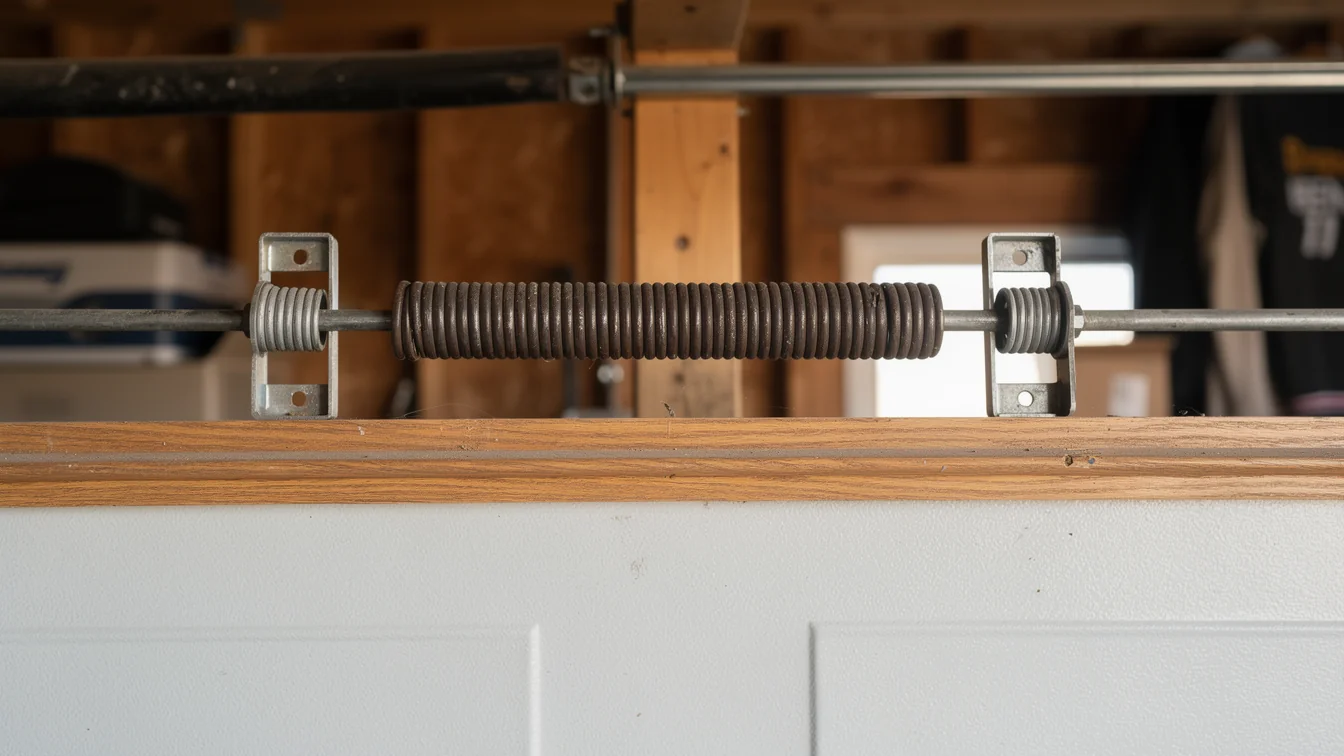
Victorville Garage Door Pros look at why springs on 1966-1997 era homes across the service area fail more often on cold mornings, and what to check first.
Read more
Most Victorville garages date to 1966-1997, before modern insulation codes.
Read moreReady when you are
Victorville Garage Door Pros repairs and installs garage doors, springs and openers in Victorville, CA and the surrounding area.