The Symptom
The call usually starts the same way: the door won't go up, or it goes up and slams down, or it opens halfway and stops.
Loud bang, door stuck
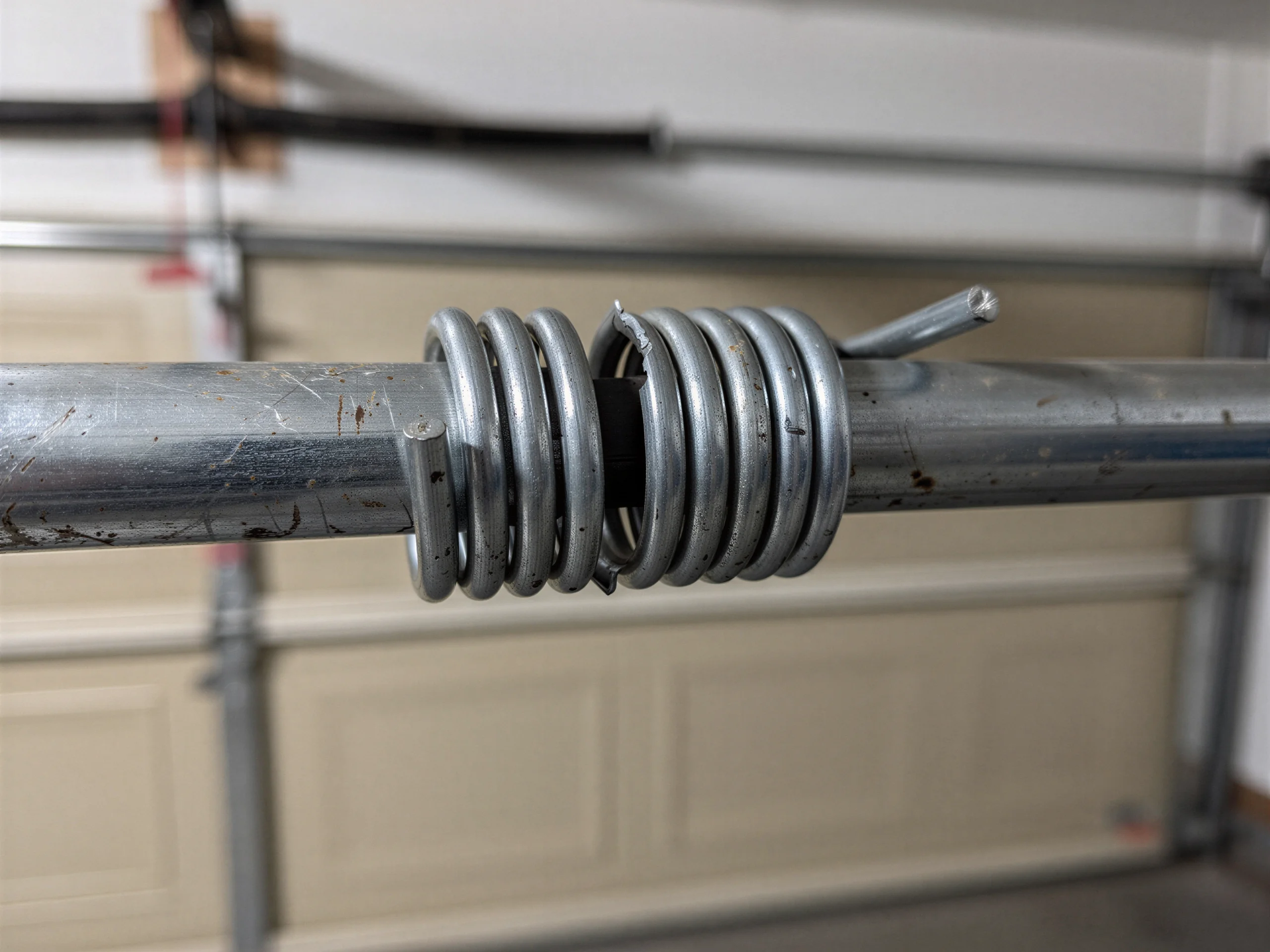
Sometimes it's a loud bang from the garage followed by a door that won't budge - that's almost always a broken torsion spring. Other times it's a slow sag, a door that drifts down on its own, or rollers that grind instead of roll. In a service area where most houses went up between 1966 and 1997 (median build year 1989), a lot of what we see is original hardware finally giving out, or a replacement from the 2000s reaching the end of its own life.
Never-replaced rollers and gears
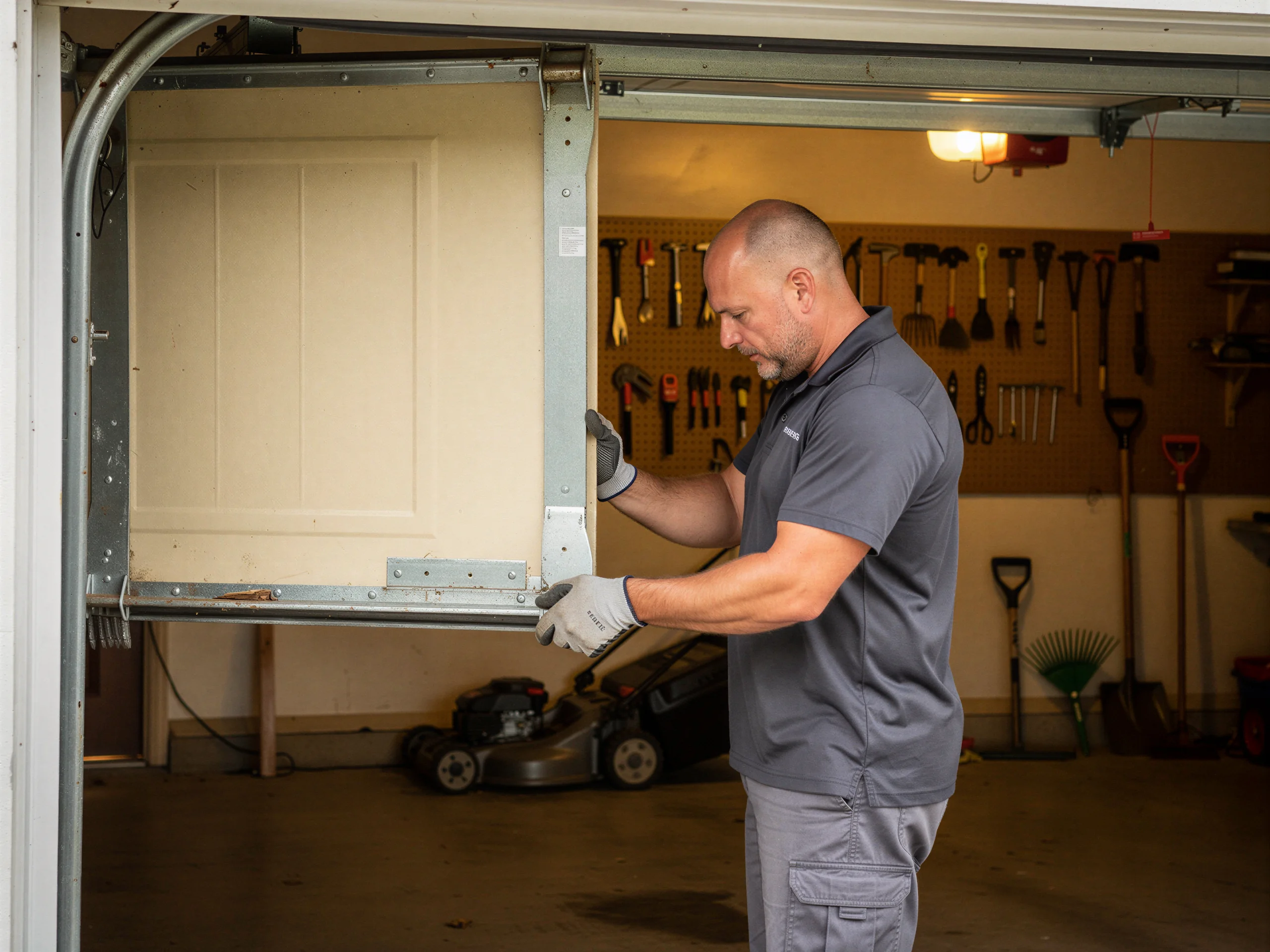
Steel rollers that have never been swapped, torsion springs sized for a lighter door after a panel replacement, openers with worn gears that strip under load. None of this is exotic. It's wear, on schedule, on a door that's been doing its job for decades.
Early warning noises
If your door makes a different noise than it used to, or takes longer to close than it did a year ago, that's the spring or the rollers telling you something before they fail outright. Catching it then is cheaper than catching it after the cable snaps.
Booking a Visit
Tell us what the door is doing - won't open, won't close, off track, stuck, loud - and we'll tell you honestly whether it sounds like a same-visit fix or something we need to look at first.
Single-visit spring and cable jobs
A spring or cable job usually doesn't need a second trip once we're on site, since those parts are common and we carry what fits most of the doors built in this area's 1980s and 90s housing stock. What we can't do is quote a repair over the phone with any accuracy.
Narrowing a won't-open call
A door that 'won't open' could be a dead opener capacitor, a broken spring, or a cable that's jumped the drum, and those are three different jobs with three different parts lists. We'll ask a few questions to narrow it down before we come out, but the real diagnosis happens with a hand on the door.
Repair or replace triage
If you're not sure whether to repair or replace, say so when you call. A 20-year-old door with a dead spring is a repair. A 35-year-old door with a dead spring, bad rollers, and a failing opener is a different conversation.
The Cost of This Job
We don't post a flat number here because the job isn't flat - a single torsion spring swap on a standard door costs a lot less than a double spring replacement plus new rollers and cable on a heavier insulated door. What drives the price is which parts failed, how many, and whether the opener is involved too.
What we can tell you is what tends to drive cost up in houses around here specifically: doors from the 1966-1997 build wave often still have the original spring size and gauge, which isn't always a direct match to what's stocked today, so sometimes the job needs a part ordered rather than pulled off the truck. That adds a day, not a repair cost, but it's worth knowing going in.
The honest limitation: if your door is original to a house from the late 60s or 70s, we may find that the track or the panel itself has warped enough that a spring fix buys you a few months, not a few years. We'll say that plainly instead of selling a repair we don't think will hold.
What Causes It Around Here
Two things do most of the damage here, and neither is dramatic. The first is age across the board - with housing built mostly between 1966 and 1997 and a median build year of 1989, a large share of the doors we service are on their second or third spring, sometimes their original rollers, and openers that have been running longer than most appliances are built to last.
The second is heat. This area sits in a moderate-heat climate band, and steady high temperatures do two things to a garage door system over years: they dry out lubricant on tracks and hinges faster than in a cooler climate, and they stress the torsion spring through repeated expansion and contraction across hot days and cooler nights. A spring that might last longer somewhere milder tends to fatigue sooner here.
Put those together and you get the pattern we actually see on service calls across Mountain View Acres, Spring Valley Lake, Adelanto, and the rest of this area: older hardware, dried-out lubrication, and springs that go without much warning. It's not a design flaw in any one door. It's thirty-plus years of heat doing what heat does to steel.
Talk to a local pro
Garage door service in Victorville?
Same-day service with honest, upfront quotes.