The Symptom
If your garage door is original to the house, there's a good chance it was built sometime between 1966 and 1997 - that's when most of this area went up, with the bulk of it landing around 1989.
Warped single-layer panels
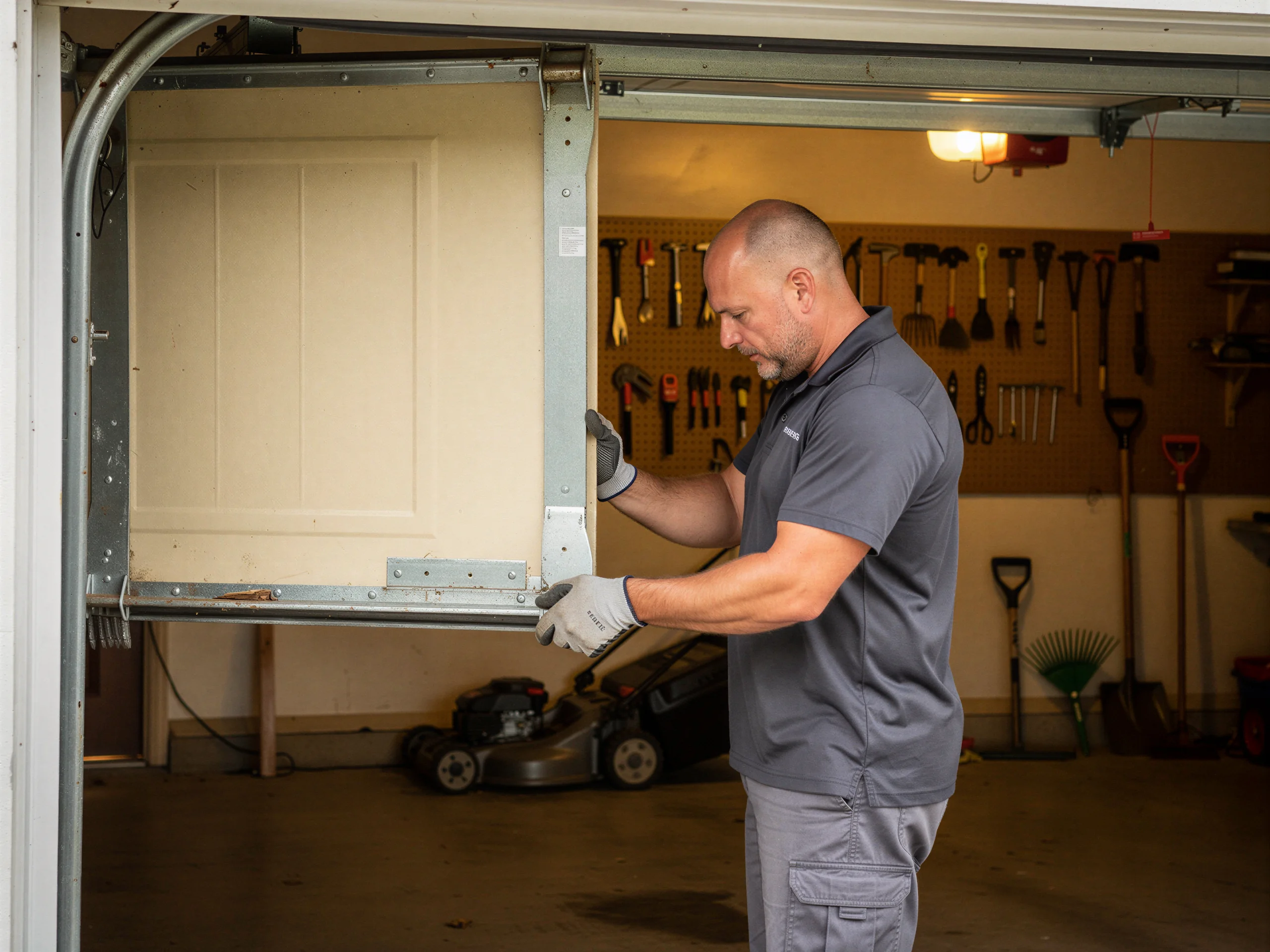
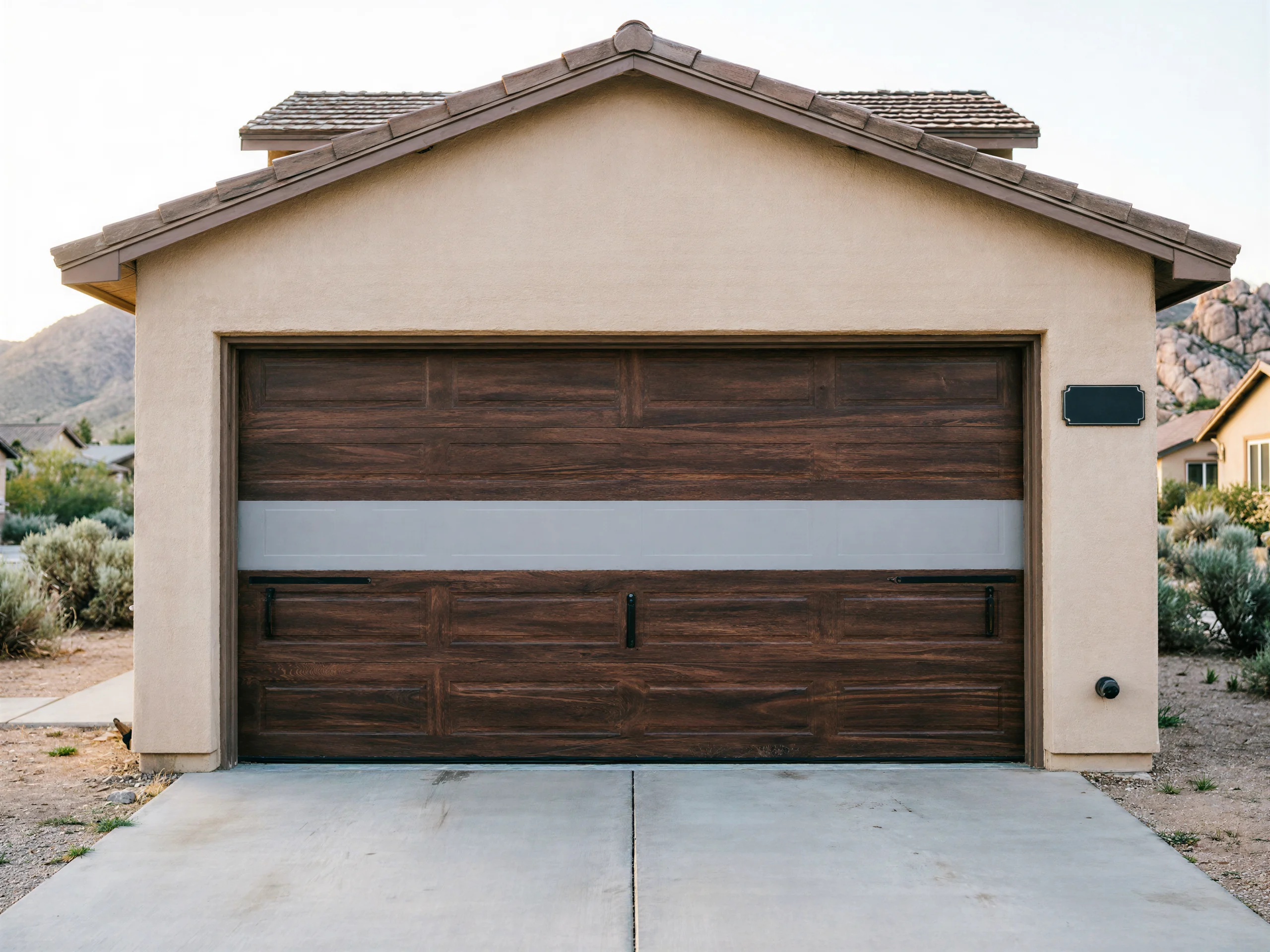
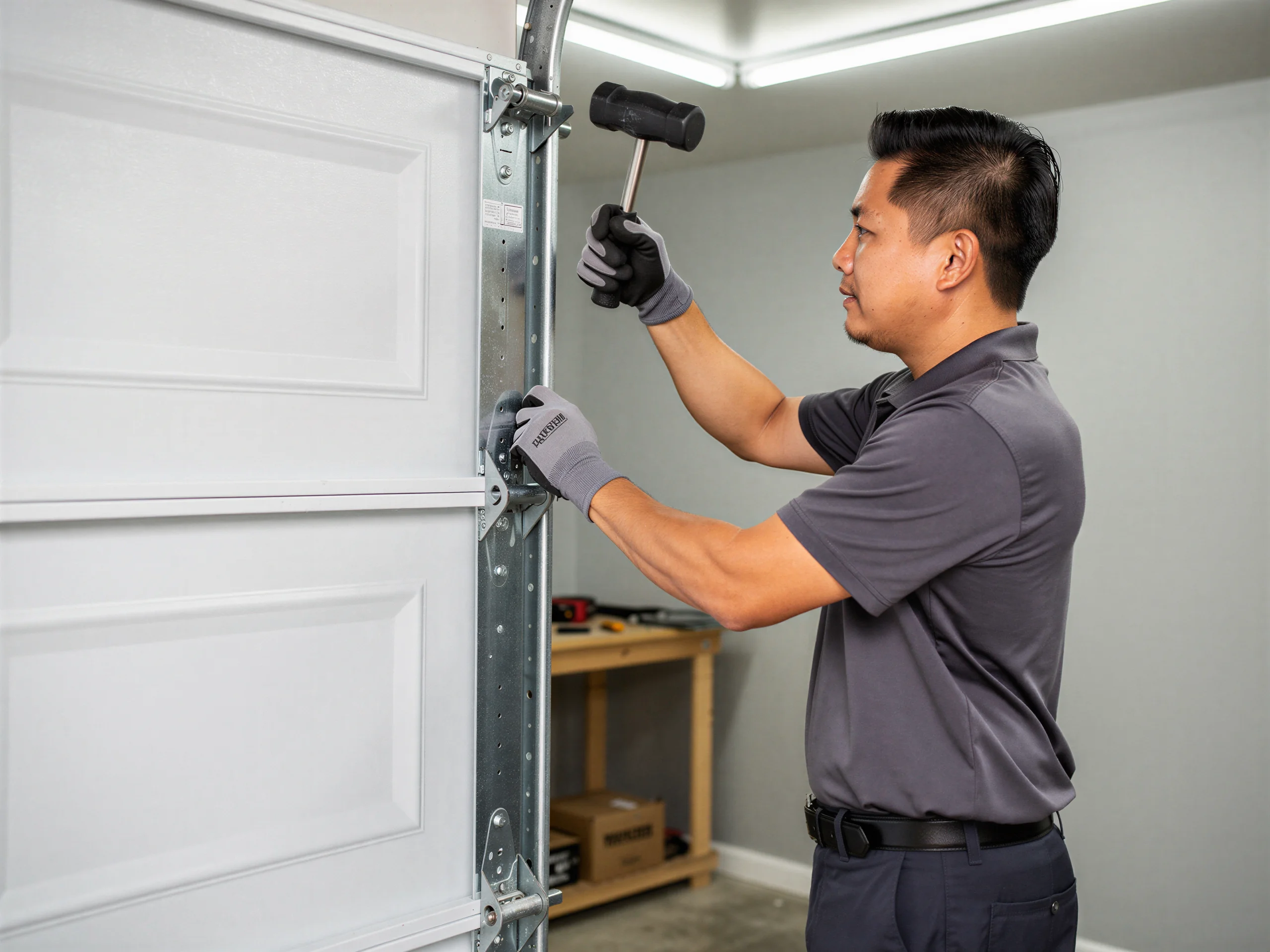
Doors from that era are single-layer steel or thin wood composite, no insulation, and after thirty-plus years of High Desert heat cycling the panels warp, the seams gap, and the door stops sitting flush in the track. You'll notice it as a door that's slow to close all the way, a bottom seal that's cracked and letting in dust, or a surface that looks wavy when the sun hits it sideways.
Panel flex needs replacement
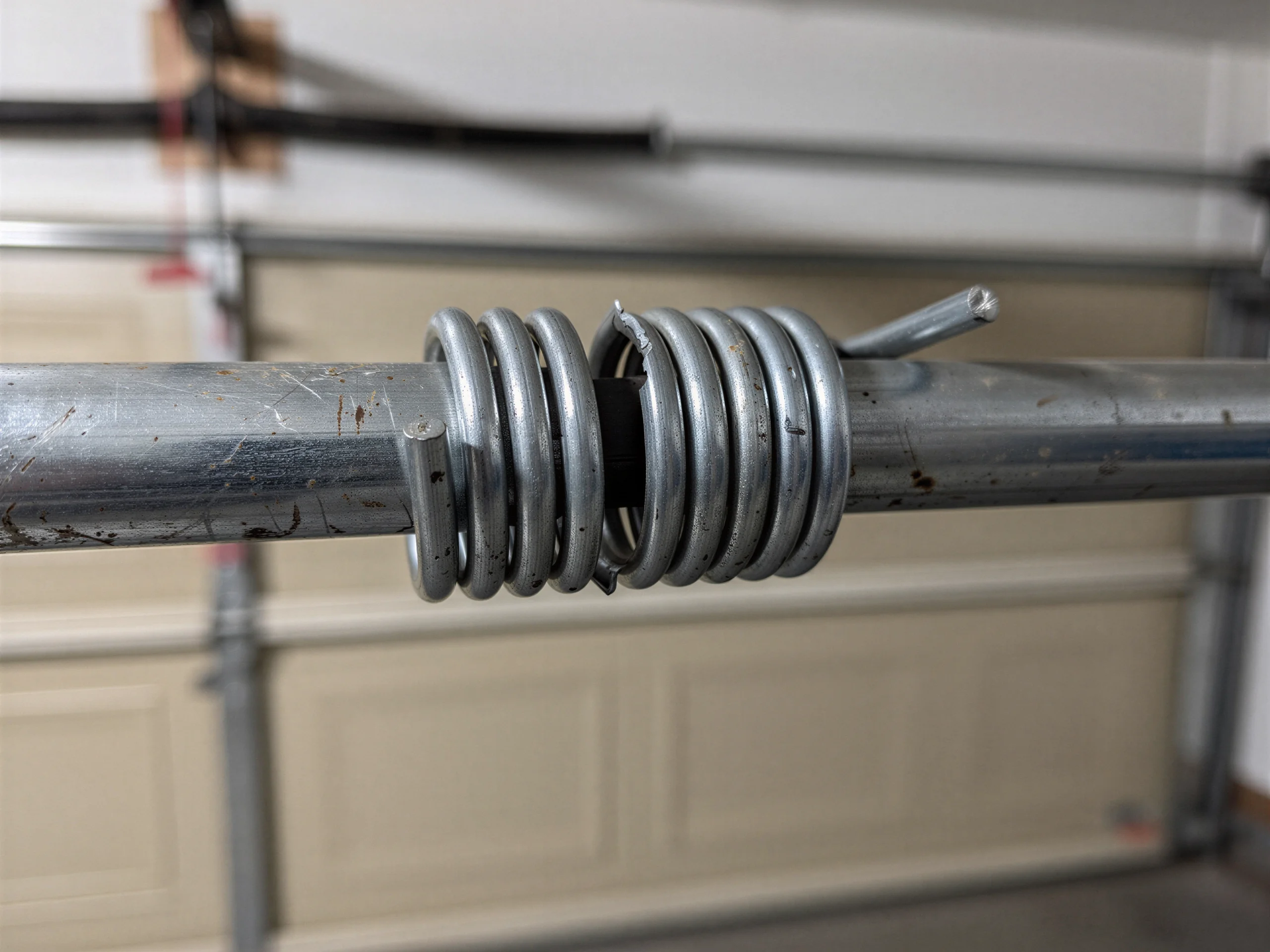
None of that is a spring problem or a sensor problem - it's the door itself giving out. Once the panel steel starts to flex, no amount of adjustment fixes it, and you're looking at replacement rather than repair.
Opener straining from weight
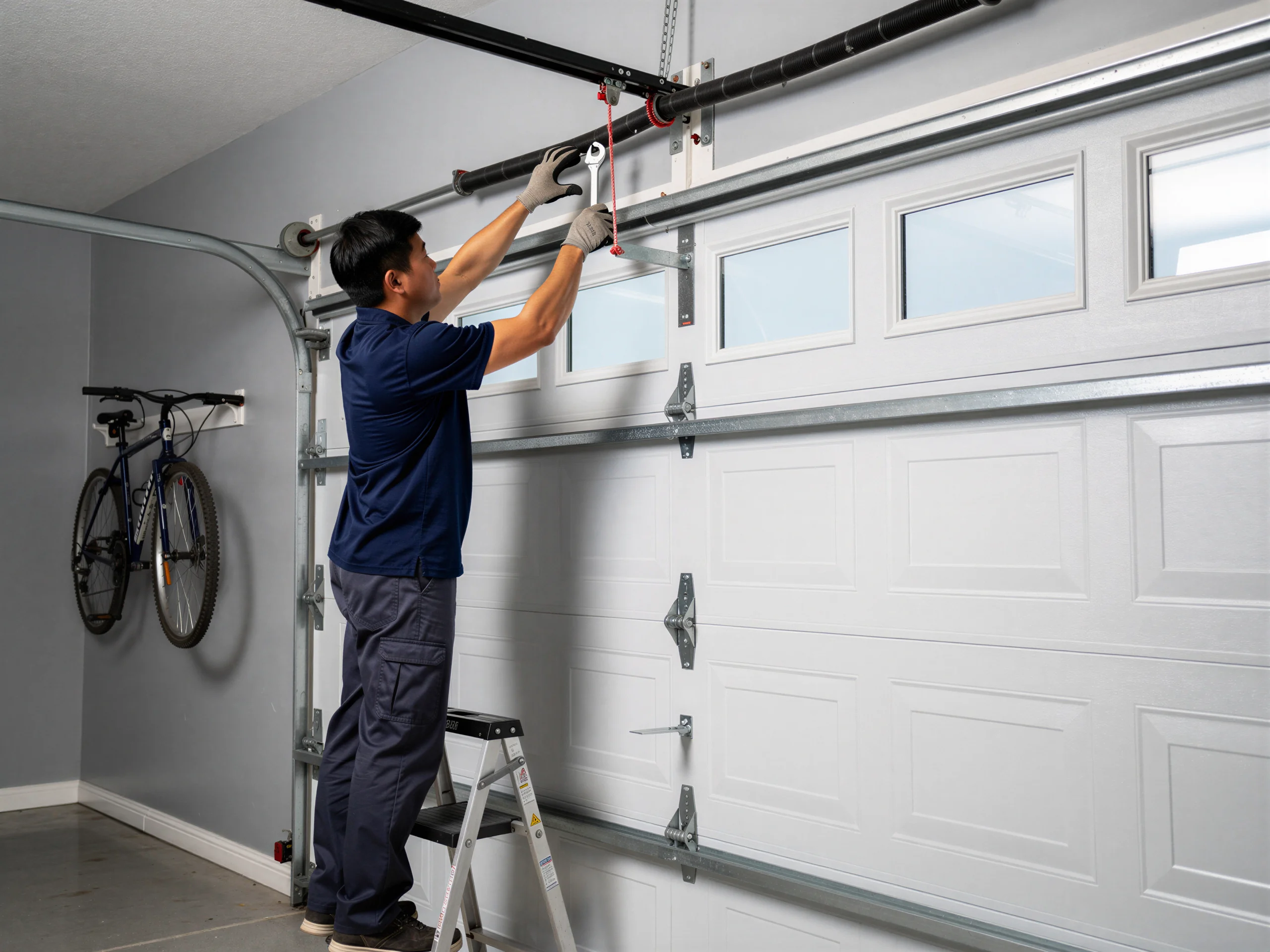
The other tell is an opener that strains harder than it used to; if the door's heavier or more warped than when the opener was matched to it, the unit works overtime even though nothing's wrong with the opener itself.
Booking a Visit
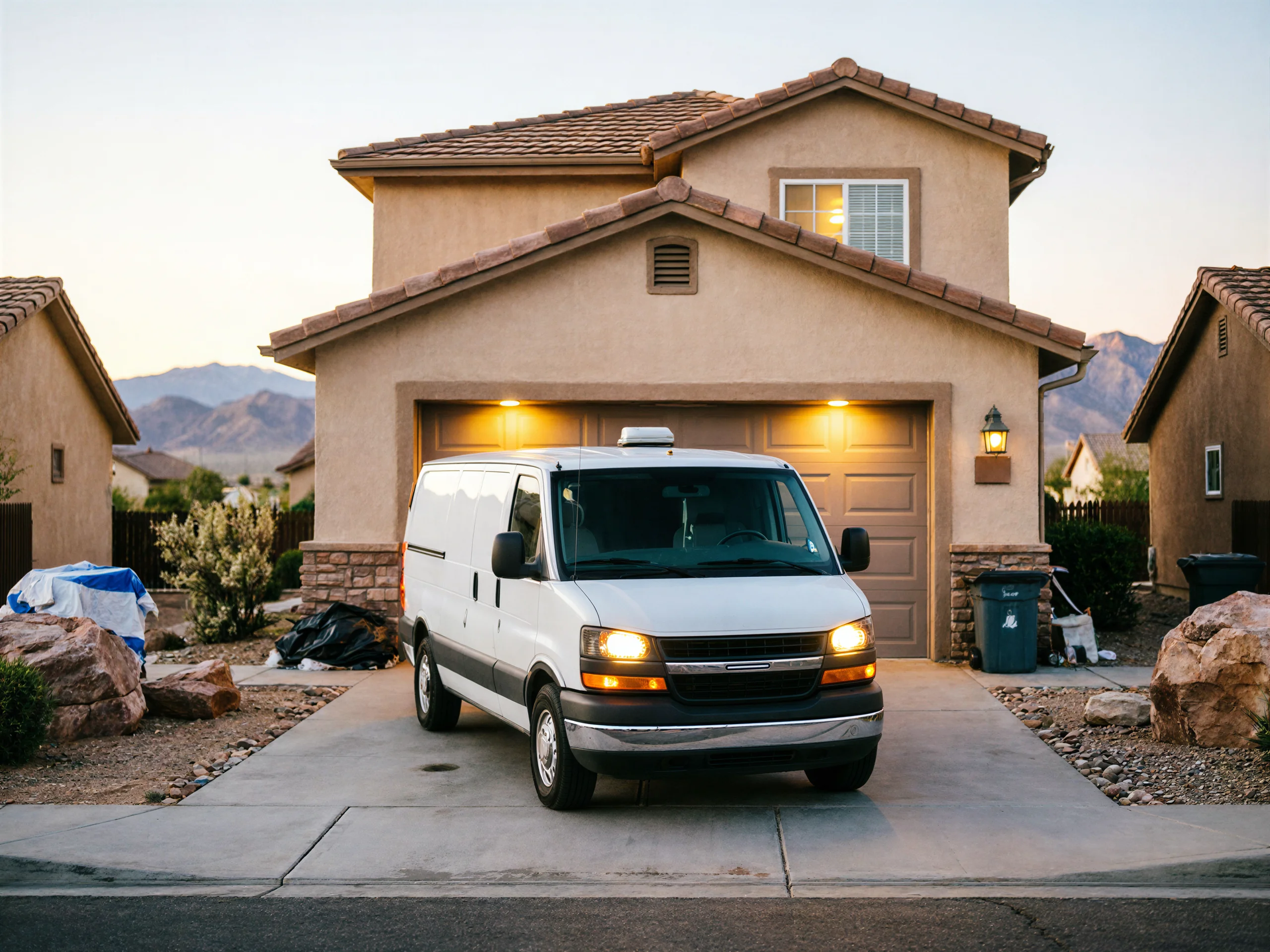
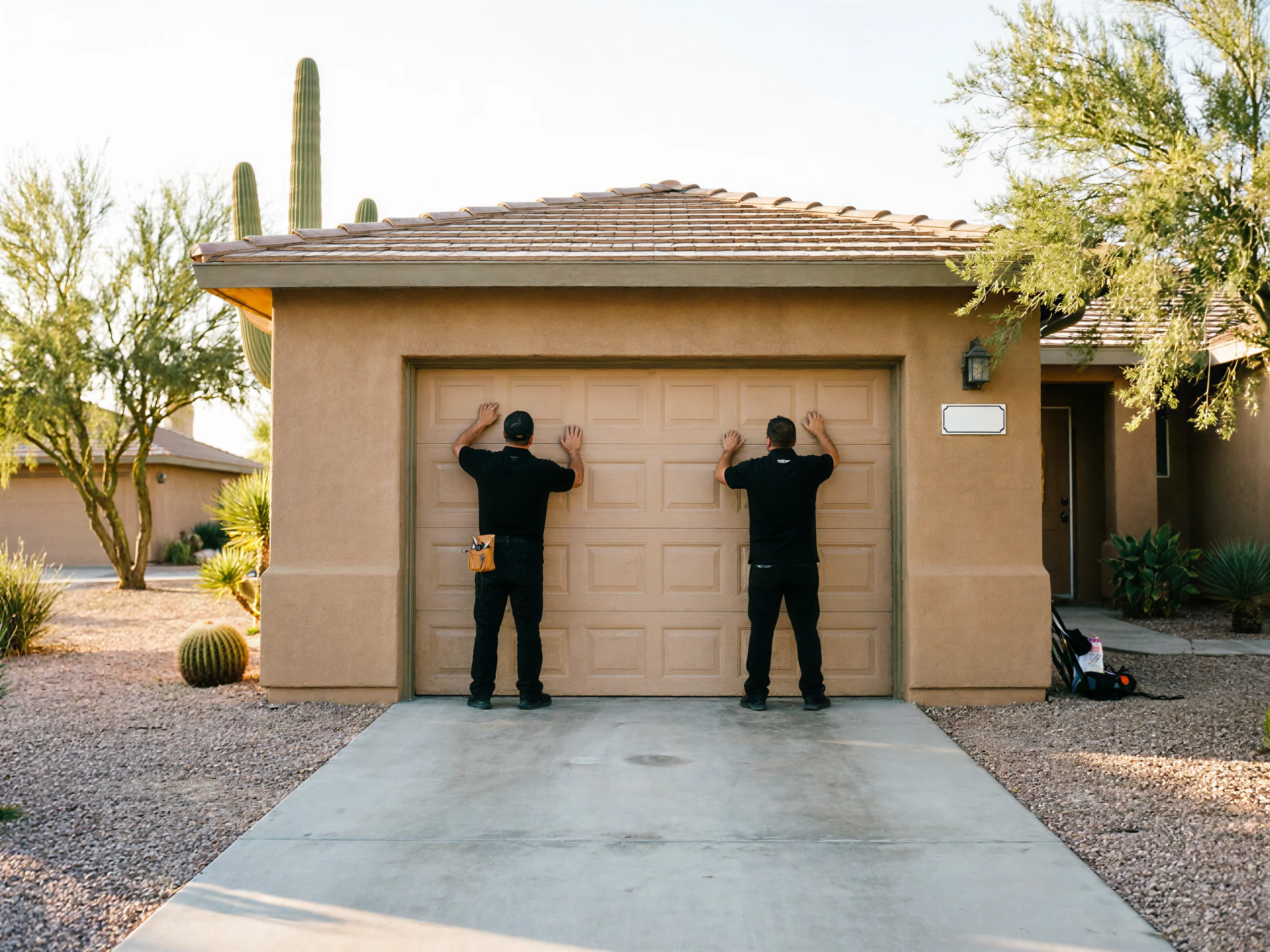
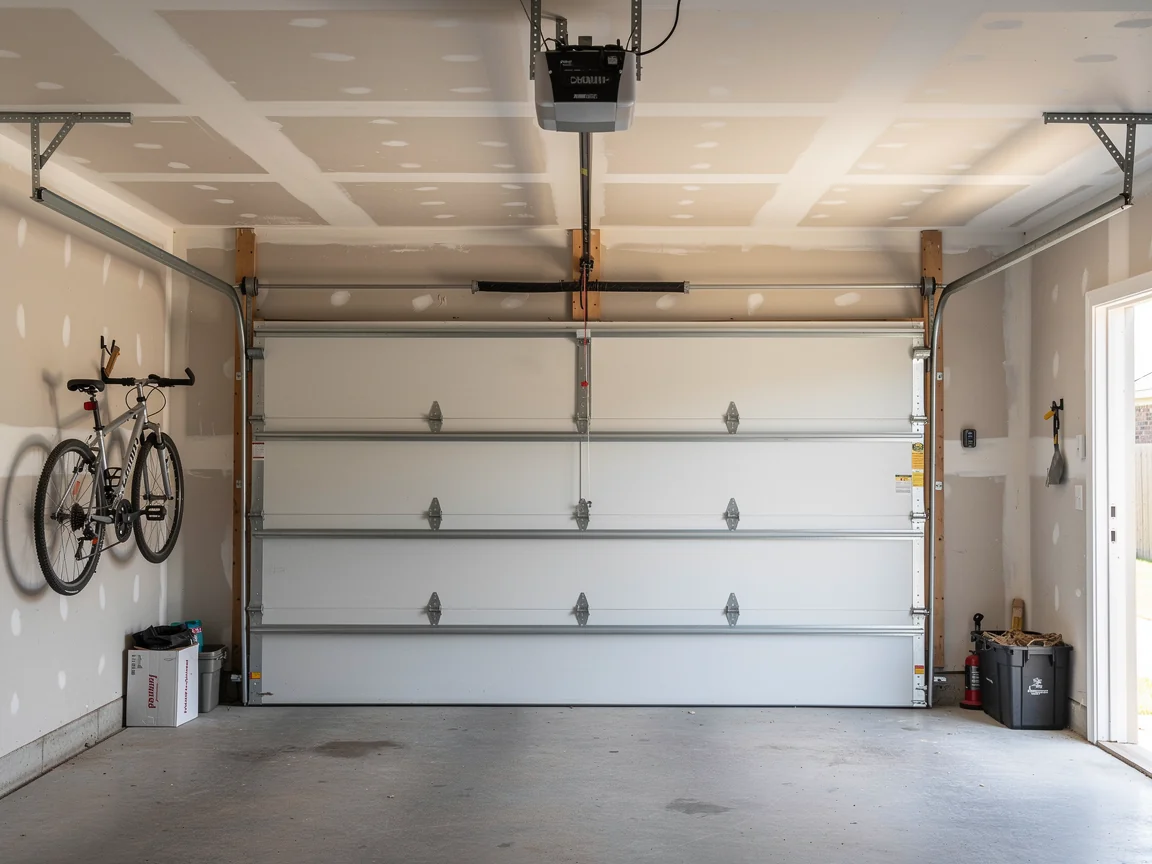
We come out, measure the opening, check the track and header clearance, and look at what the existing opener can handle before we talk door options. That matters more here than it might elsewhere, because a lot of the housing stock in this area has openings and headroom sized to 1980s and 90s door standards, which don't always match current insulated door profiles without some adjustment to the track or jamb. We'd rather catch that during the visit than after the door's ordered. You can start that process from our site at /. We don't quote a firm install price over the phone without seeing the opening - garage openings in houses built across different stretches of this service area aren't all built the same, even within the same neighborhood.
The Cost of This Job
We're not going to list a number here that isn't in front of us, because installation cost depends on door size, insulation level, and whether the existing track and opener can be reused or need replacing too - and that varies house to house even within the same subdivision.
Insulation and header costs
What we can tell you is what drives the cost up or down: a standard double door without insulation on reusable track is the simplest job; an insulated door with a header or track modification to fit an older opening runs more.
Failed-door replacement requests
Median household income across the area sits around $74,778, and most of the install requests we get are homeowners replacing a door that's finally failed rather than upgrading one that still works fine - that changes the conversation, because sometimes patching what's there costs less than a full new install, and we'll tell you if that's the better call for your situation rather than pushing a new door you don't need yet.
What Causes It Around Here
Two things line up here that you don't see together everywhere. First, housing age: most of this service area's roughly 33,942 owner-occupied houses out of 52,464 households were built in that 1966-1997 stretch, with the heaviest concentration from the 1980s and 90s across the eight areas we work in, from Mountain View Acres two miles out to Crestline nineteen miles away. That means a huge share of doors in this area are hitting the same age wall at roughly the same time. Second, the climate band here runs moderate heat, and uninsulated steel panels from that era expand and contract more over a hot day than insulated doors do, which accelerates the warping and seam failure you'd see less of in a milder climate. Put those two together - old doors, moderate heat cycling - and installation requests cluster heavily around houses from that build era rather than newer construction nearby.
Talk to a local pro
Garage door service in Victorville?
Same-day service with honest, upfront quotes.