The Cost of This Job
We don't post a flat number because the job in Apple Valley isn't the same job everywhere else we cover. Most houses here went up around 1987, which puts them past the era of cheap single-piece doors and into the first wave of sectional doors with extension or torsion springs - repair costs split along that line more than anything else.
Original 1987 opener replacement
A torsion spring job on a door from this era runs different than swapping a cable on an older extension-spring setup, and an opener that's original to a 1987 build is almost never worth saving versus replacing outright.
Phone guesses don't hold
We quote on-site once we see the door, the spring type, and the opener, because guessing over the phone gets homeowners a number that doesn't hold up when the truck shows up.
Eight miles, same trucks
What we can tell you is that we travel the 8 miles out from Victorville for every call here - there's no separate local crew, no branch office, just the same trucks and the same parts bins.
Doing It Yourself
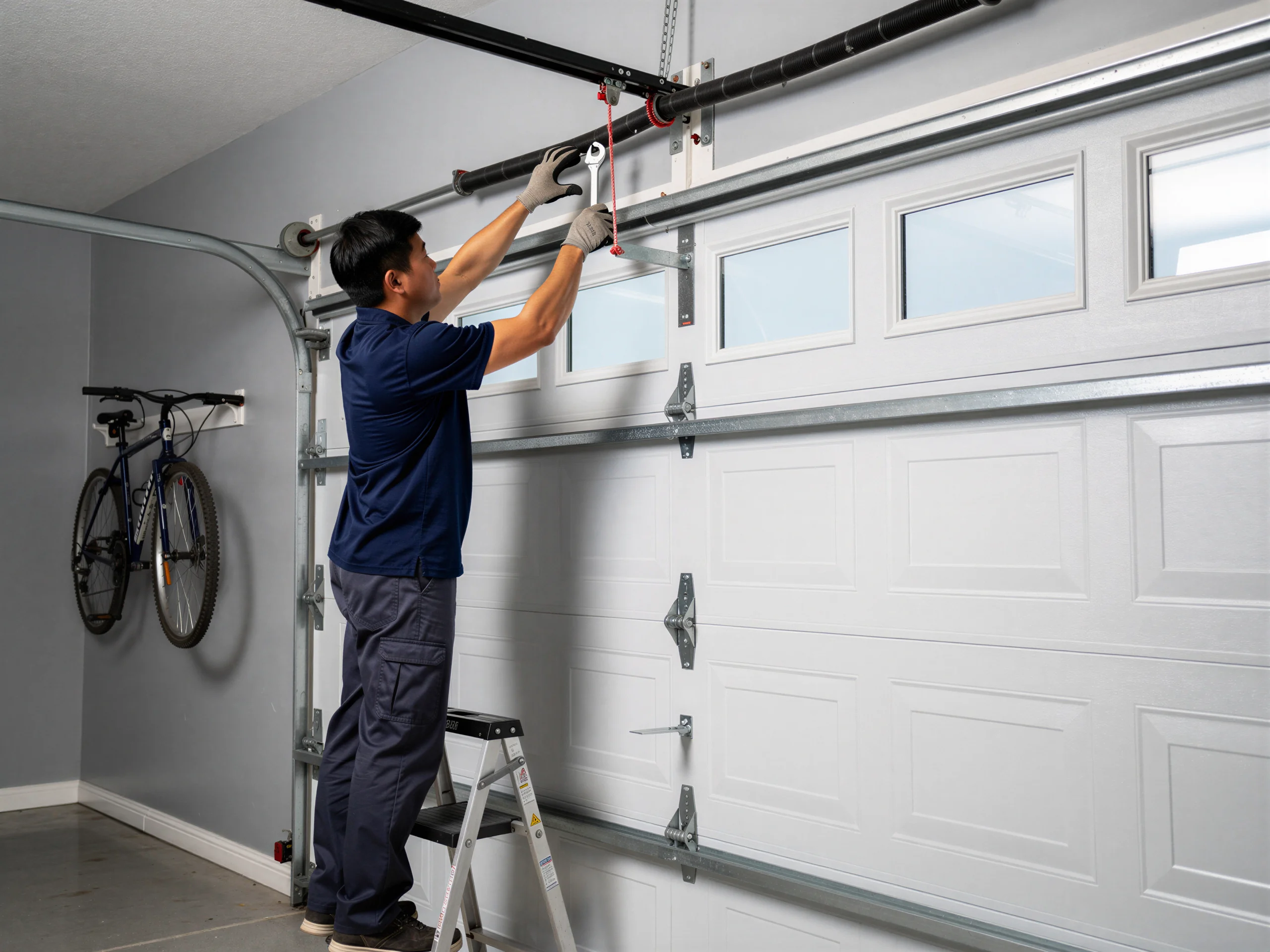
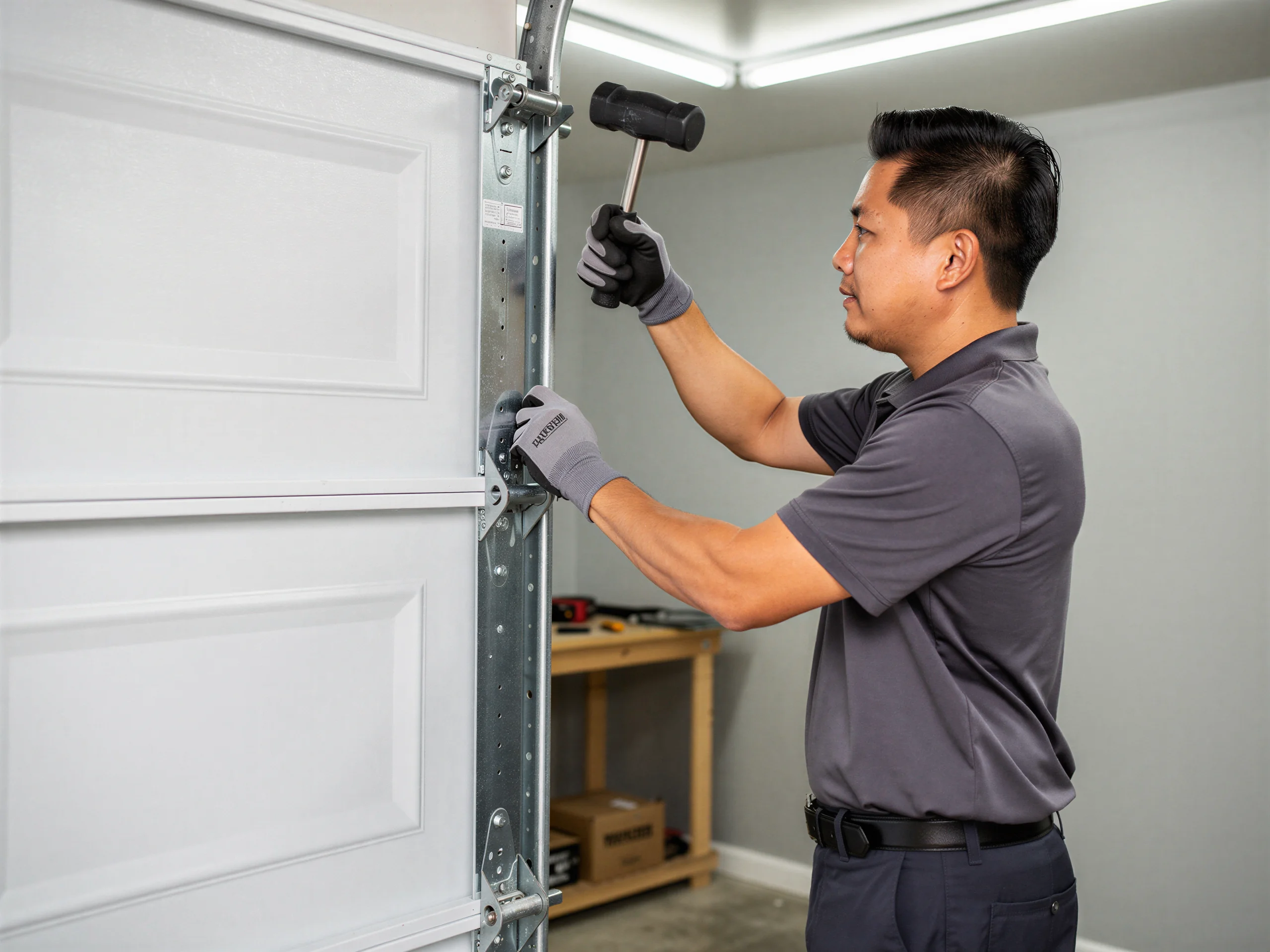
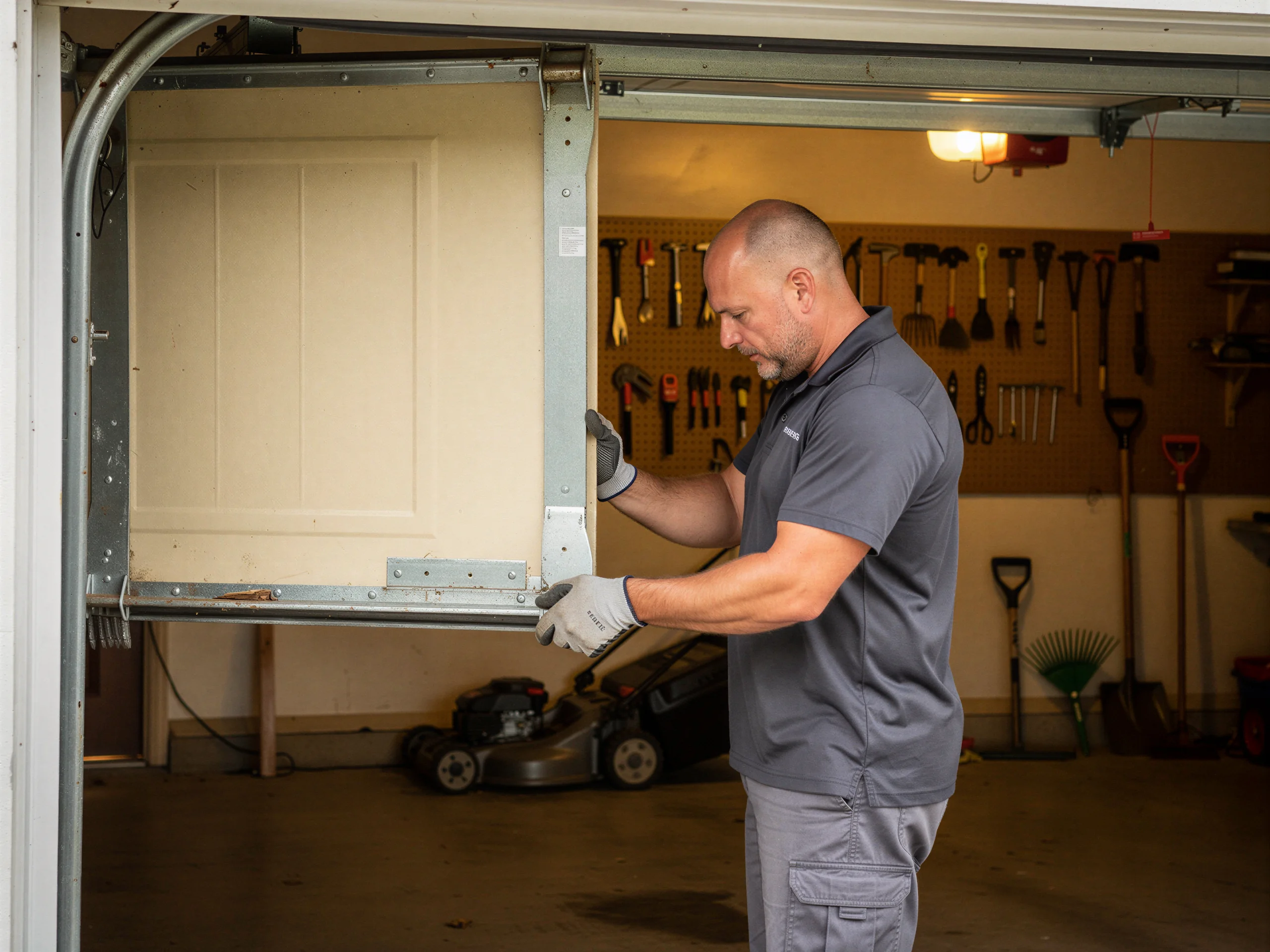
If your door is sticking, off-track, or making a grinding noise on the way up, don't start by taking the torsion spring off yourself. On a sectional door from the late 1980s, that spring is wound tight enough to do real damage if it lets go while you're working on it, and most homeowners don't own the winding bars to do it safely.
Photo-eye and track checks
What you can check yourself: the photo-eye sensors near the floor (dirt or a knocked-loose bracket causes half the "won't close" calls we get), the weatherstripping along the bottom panel, and whether the tracks are bent or just dirty.
Reversing door limit setting
If the opener runs but the door won't move, or moves and then reverses, that's usually a safety sensor or a limit setting - five minutes with a rag and a level, not a service call.
Leave spring and drum alone
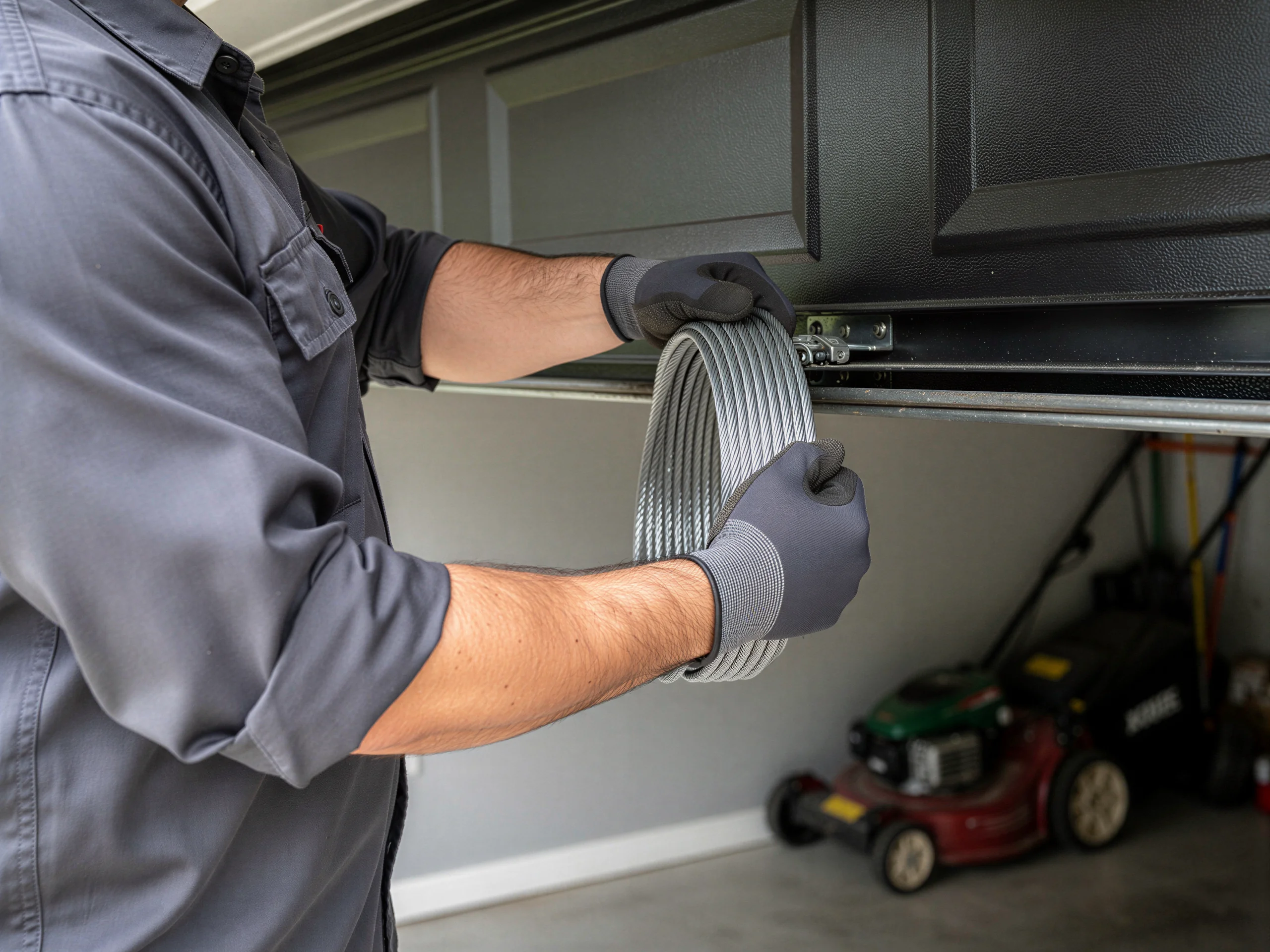
Anything involving the spring, the cable, or the drum at the top of the track, leave it. We'd rather talk you through the easy fix over the phone than bill you for a trip that didn't need one.
What Causes It Around Here
The housing stock in Apple Valley centers on 1987, and that year matters more than most homeowners realize. Doors and openers installed when a house is built tend to get replaced once, badly, by whoever owned the place in the 2000s - so what we find on a service call is often a mismatched combination: an original steel door frame paired with a newer chain-drive opener that was never set up for the door's actual weight. That mismatch puts extra strain on the spring and the drive gear, and it's the single biggest cause of the "opener runs but door barely moves" calls we get out this way. Add in a household income median around $65,926 for the area, and what we see most is homeowners stretching a repair as long as it'll go rather than replacing early - which is a reasonable call, but it means springs and cables here often get run closer to failure than they would on a newer door.
Stocked Parts
We carry torsion springs sized for the door weights common on sectional garage doors from the late 1980s and early 1990s, since that's what a large share of Apple Valley's roughly 24,747 households are still running.
Hinges and cable stock
We also stock standard rollers, cables, and the hinges that wear out on doors this age - they're simple parts but not the kind every hardware store carries in the right size.
Single-piece door hardware
What we don't keep on the truck are parts for the handful of original single-piece doors still out there from before this build wave; those use hardware nobody manufactures anymore, and if yours is one of them, expect us to quote a full door replacement rather than a patch repair. We'll tell you straight if that's the situation instead of trying to source a part that'll fail again in a year.
The Symptom
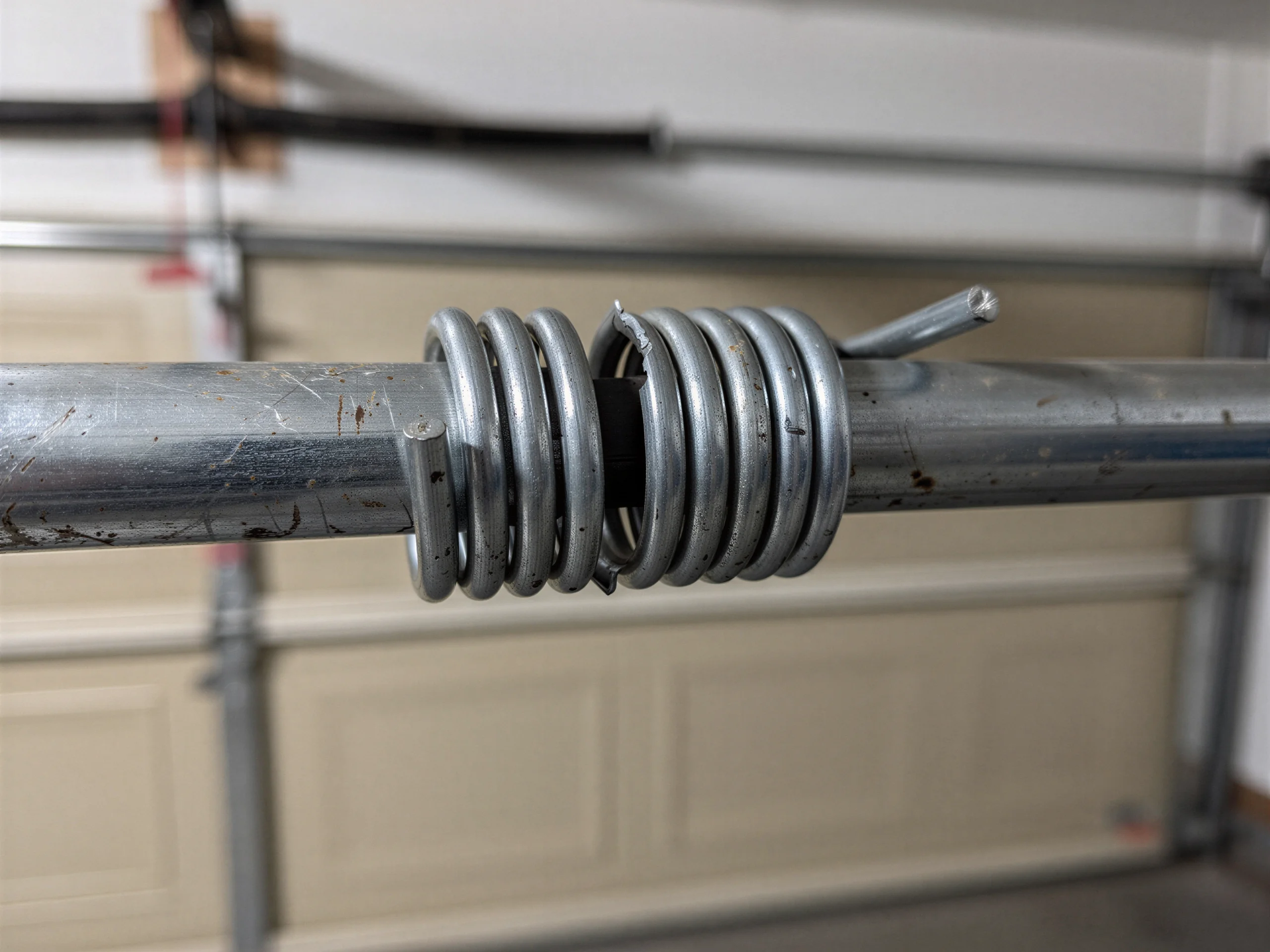
The call we get most from this area is a door that's heavy to open by hand and loud going up on the opener - both pointing at a torsion spring that's lost tension, not failed outright yet. On a 1987-era door, that spring has usually been through thirty-plus years of cycles with maybe one replacement in between, and when it starts to go, it goes gradually: the door gets harder to lift, the opener strains and sometimes trips its own overload protection, and eventually the spring snaps clean. Catching it in the "heavy and loud" stage instead of the "snapped cable, door stuck halfway" stage is the difference between a planned repair and an emergency one. If your door's doing that, don't wait on it.
Talk to a local pro
Garage door service in Victorville?
Same-day service with honest, upfront quotes.