The Cost of This Job
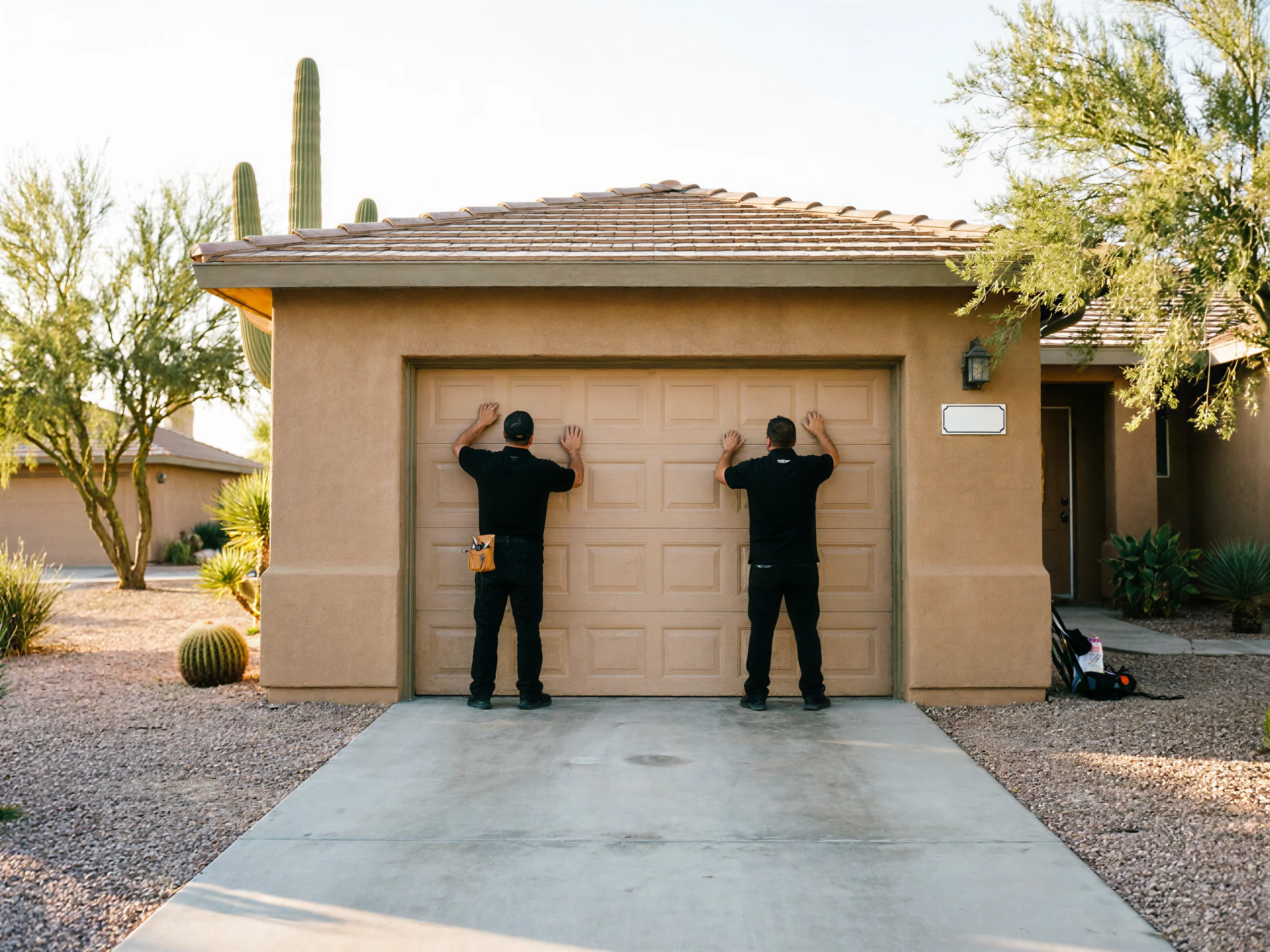
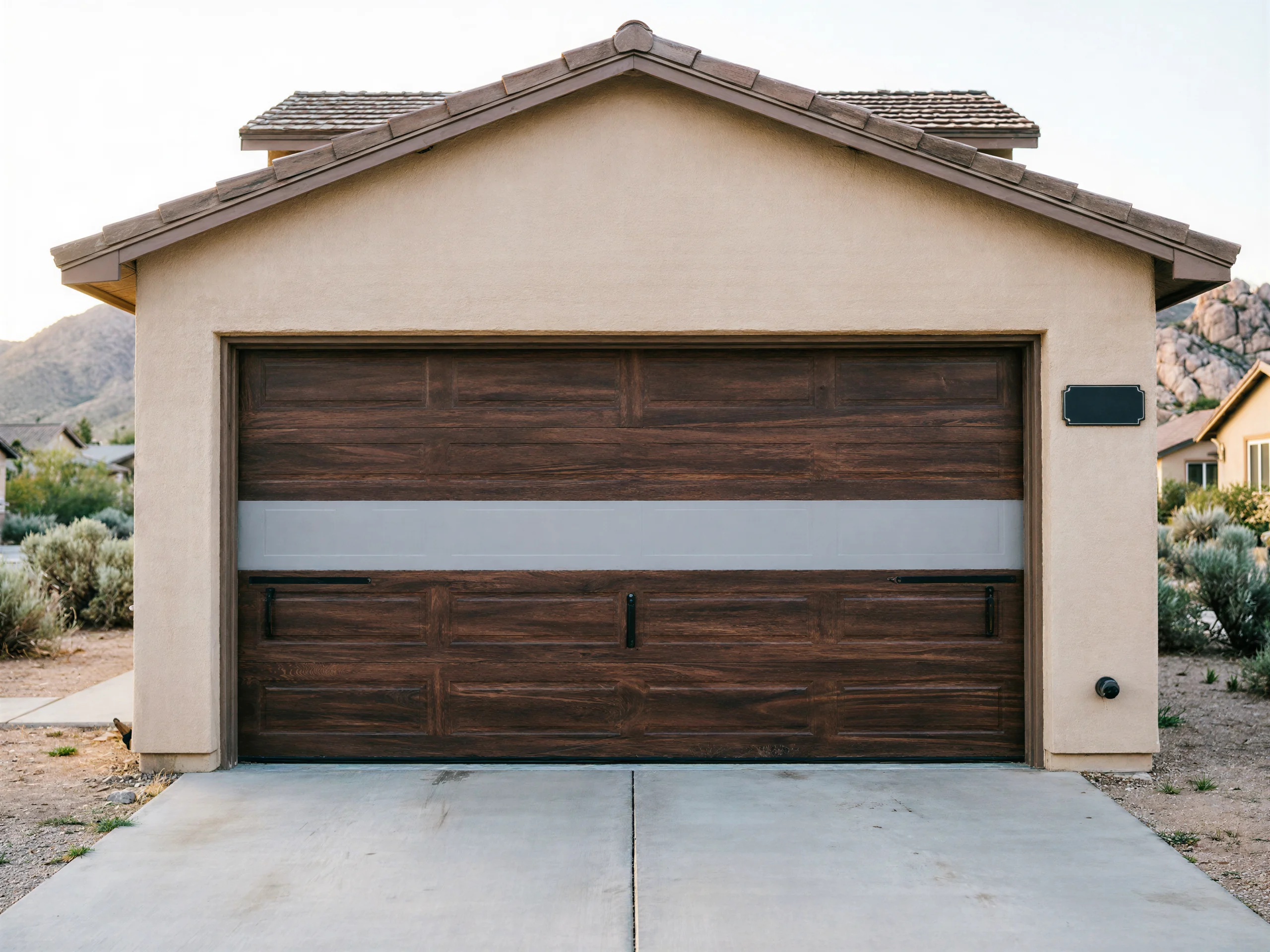
What drives the bill on a panel job here isn't labor, it's matching. Apple Valley's housing stock centers on 1987, and a lot of the steel doors from that run came in colors and rib patterns the mills don't make anymore.
Close match or more panels
If one panel on a six- or eight-panel door is dented or sun-bleached past the others, you're often choosing between a close match that's visibly off in direct light, or replacing more panels than the damage alone would call for, just so the door reads as one color again.
Newer catalog style swaps
A single panel swap on a newer door with a current catalog style is the simple end of this job. An older door where the manufacturer has changed its panel dimensions since is the complicated end, and sometimes the honest answer is that a full door makes more sense than chasing a discontinued panel.
Quick swap or big decision
We don't carry a published price list for this page, and we're not going to invent one here, but we'll tell you on the call whether you're looking at a quick swap or a bigger decision before anyone drives out.
Doing It Yourself
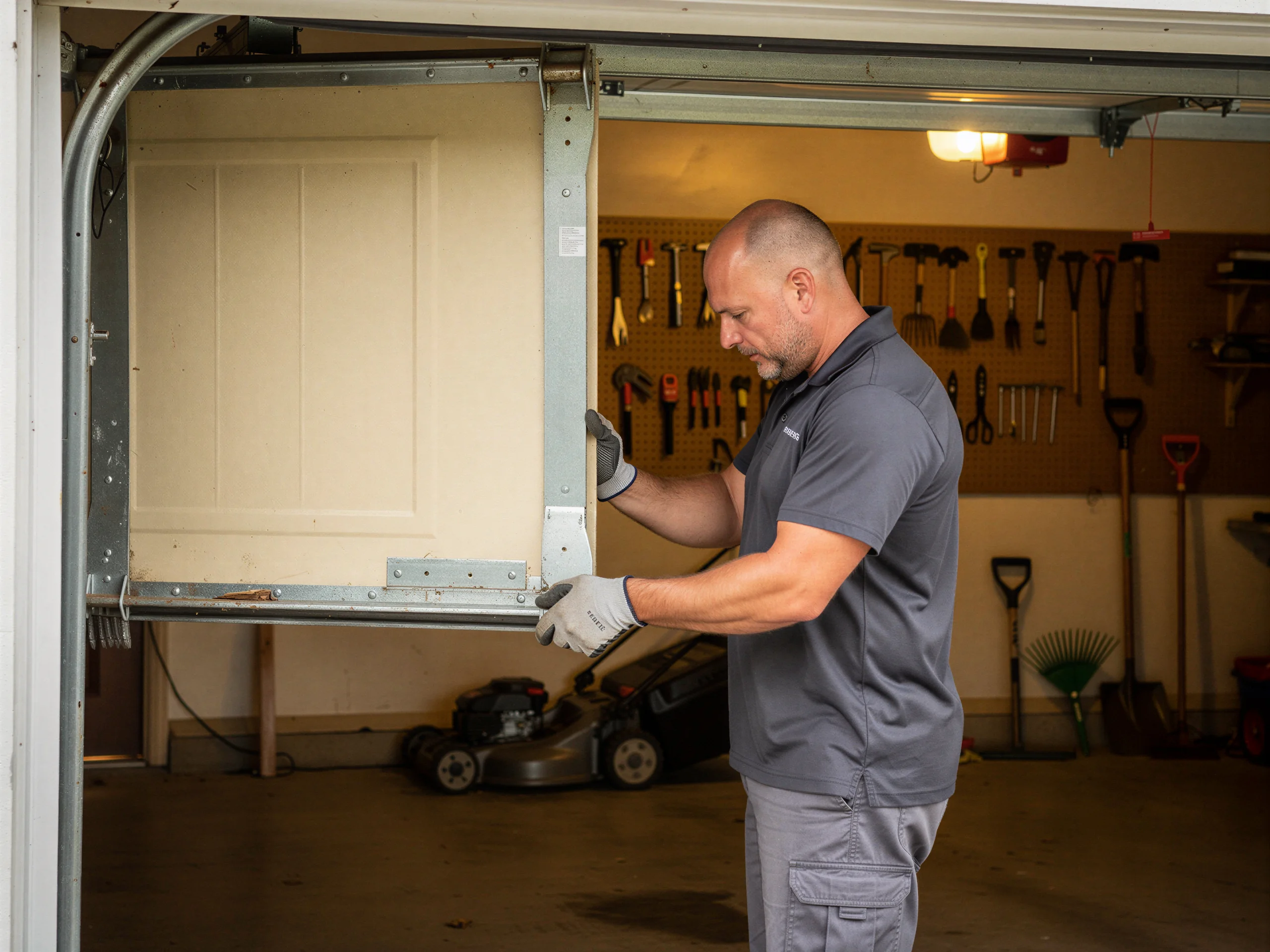
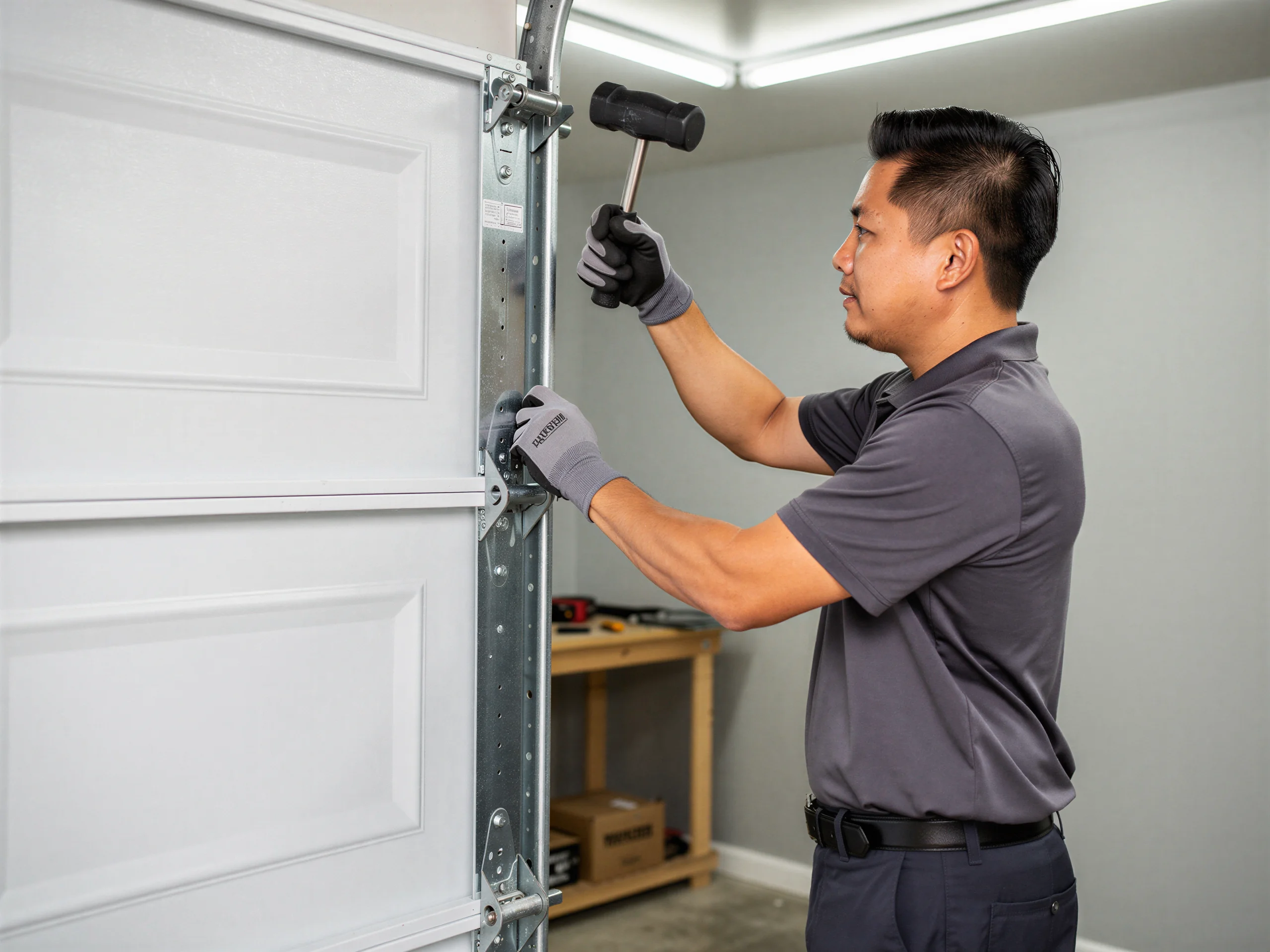
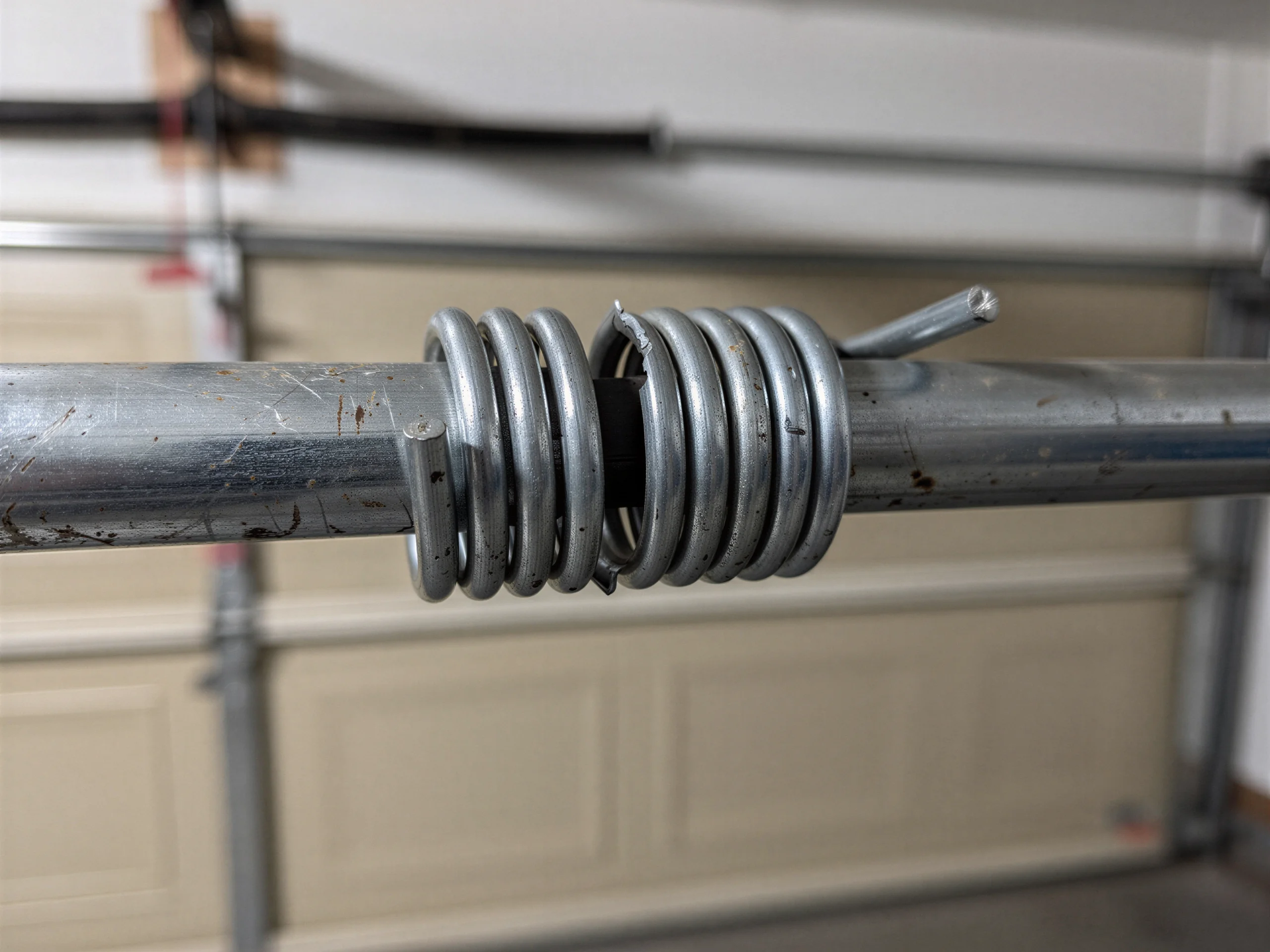
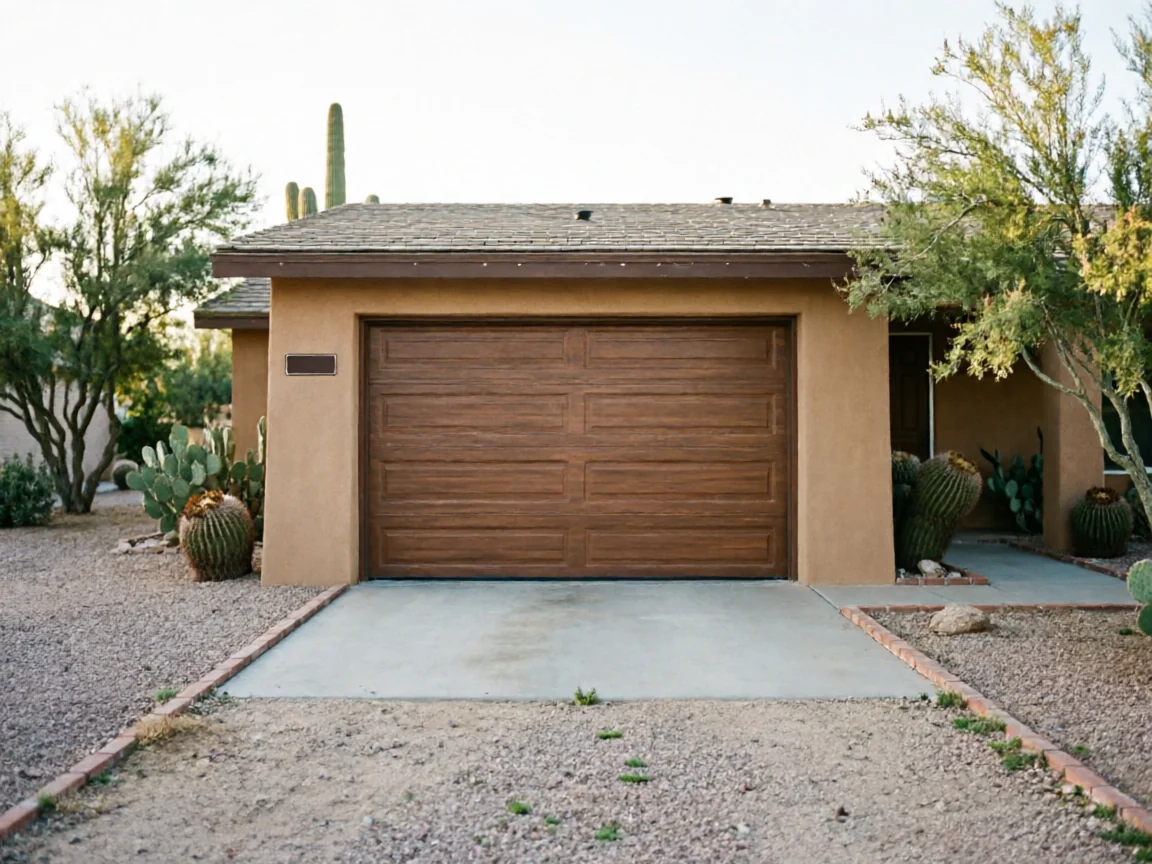
Swapping a single panel on a sectional door isn't the hardest DIY garage door job, but it's not a weekend-warrior job either if the door is still under spring tension. You have to support the door, sometimes disconnect the opener, and get the section out without the whole assembly racking sideways on the track. If it's the bottom panel near the spring side, or you're not sure how the torsion spring is loaded, that's where people get hurt, and it's the one part of this job we'd rather you not attempt alone.
Where DIY actually works is cosmetic: cleaning chalky faded panels, touching up small dings with filler before they rust through, tightening loose hinges. Where it stops working is structural - a panel that's buckled enough to bind in the track, or one where the foam core has separated from the steel skin, which you'll feel as a hollow flex when you press on it. That's a replacement, not a patch.
What Causes It Around Here
Most houses on this side of the service area went up in the 1980s and 90s, with Apple Valley's median landing around 1987, and that era of door is the one we see failing panel-first rather than spring-first.
Thin gauge dents easily
The steel gauge used back then dents more easily than what's sold today, and thirty-plus years of sun on a door facing south or west does real damage to the painted skin - chalking, fading, and eventually the top coat lifting off the steel.
Heat cycling, not moisture
The climate here runs on the warmer side without the damp-rot problems coastal towns deal with, so you're not fighting rust from moisture so much as heat cycling. A panel that sits in full sun all afternoon expands, cools overnight, and expands again the next day - thousands of cycles over three decades.
Hidden foam-to-steel separation
That stress is what separates foam insulation from the steel skin on the inside face, which you can't see until the panel starts to feel soft or flex under hand pressure. Basketball hoops mounted over garages add their own dent pattern on one or two panels specifically, which is common enough on these properties that we check for it on sight.
Stocked Parts
We carry panel stock sized for the door dimensions common to 1980s and 90s sectional doors, since that's the bulk of what's on the road out here. Standard steel panels in the sizes that match this era's doors, we usually have on the truck or can get same-trip from Victorville. What we don't keep on hand is an exact color and rib match for every discontinued line from that period - if your door is a less common brand or a style that's been out of production a while, we may need a day or two to source the closest match before we come back to install.
We'll tell you up front on the phone whether your door's panel style is something we stock or something we need to order, so you're not waiting on-site while we figure it out.
The Symptom
The giveaway on an aging panel is usually visual before it's functional: a dent that's caught dirt and started to show rust at the edges, or a section that's visibly lighter than the rest of the door from sun exposure.
Hollow-feeling panel foam failure
Press on a suspect panel - if it flexes with a hollow give instead of feeling solid, the foam core has likely let go from the steel skin, and that panel is only going to get worse.
Panel binding at one spot
Functionally, a bent panel can bind against the track as the door travels, which shows up as the door hesitating or grinding at one spot every time, not just occasionally.
Groove wearing into roller
If you're hearing that same scrape at the same point in the door's travel every time, it's worth having someone look at the panel and the track alignment together before it wears a groove into the roller.
Talk to a local pro
Garage door service in Victorville?
Same-day service with honest, upfront quotes.