Booking a Visit
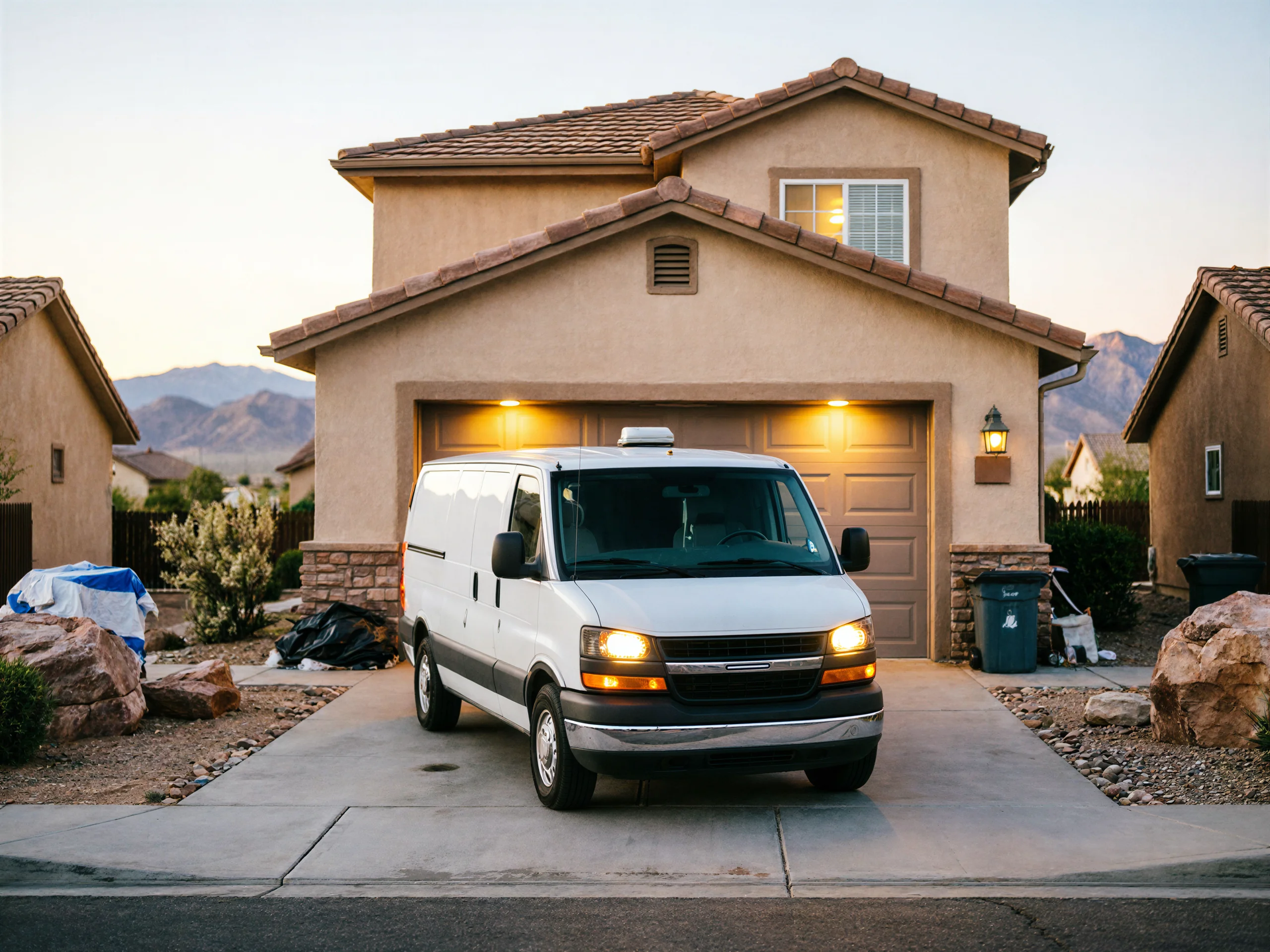
We run this job out of Victorville, about 16 miles down from Piñon Hills, so we're not sitting on a truck around the corner. That means we ask a few more questions up front - door size, whether it's a single or double, roughly how old the house is - so the truck that shows up has the right spring and roller stock already loaded instead of making a second trip. With only 2,495 households out here, this isn't a neighborhood we're rolling through every day, so a clear description of the symptom before we leave the shop saves you real time on the appointment.
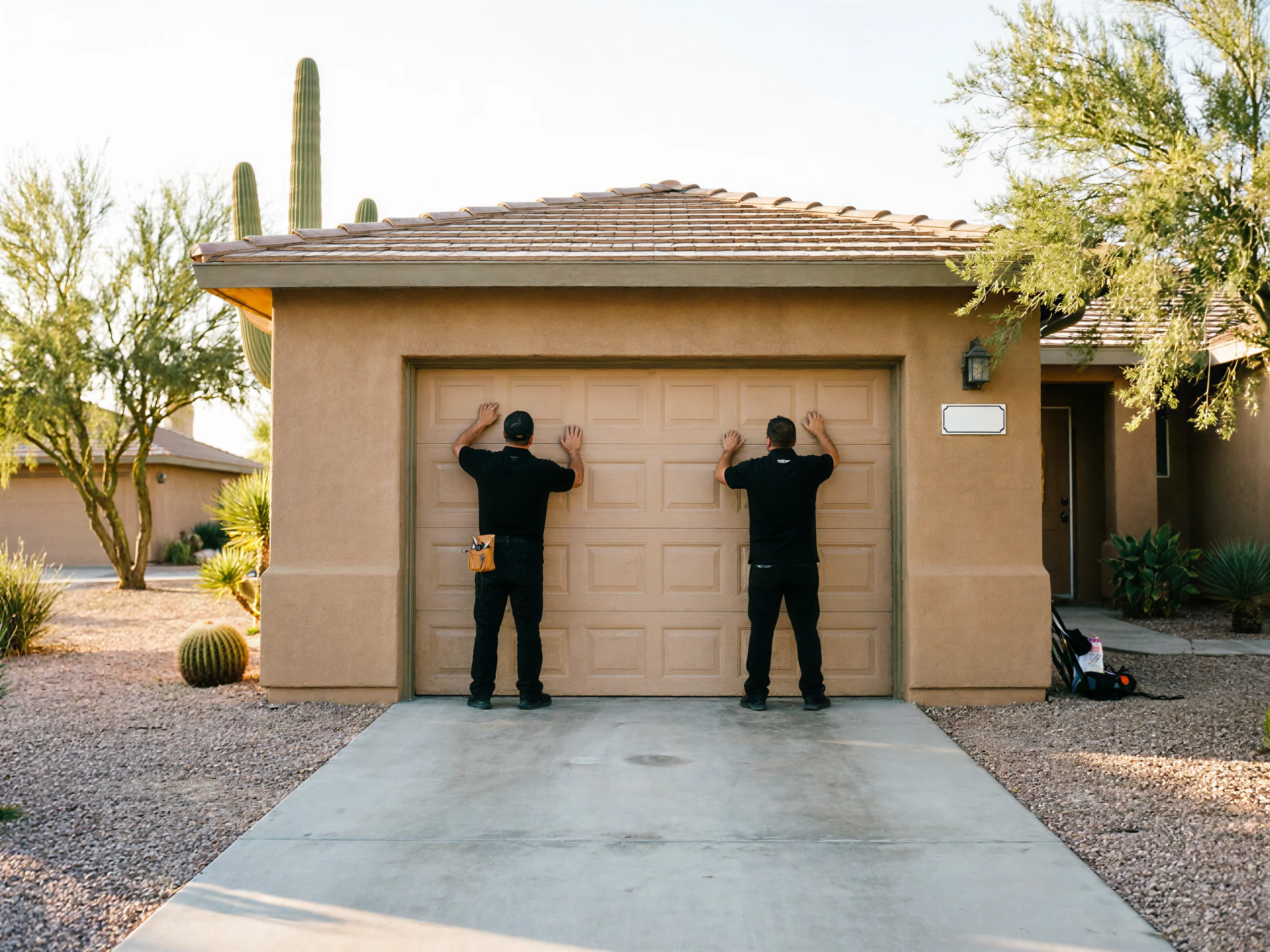
We'll give you a window, not a guess, and we stick to it. If you can be home to walk us to the door and open it once by hand before we touch anything, that's the fastest way to start the visit - it tells us in ten seconds whether we're dealing with a spring, a track, or an opener problem before a single tool comes out.
Doing It Yourself
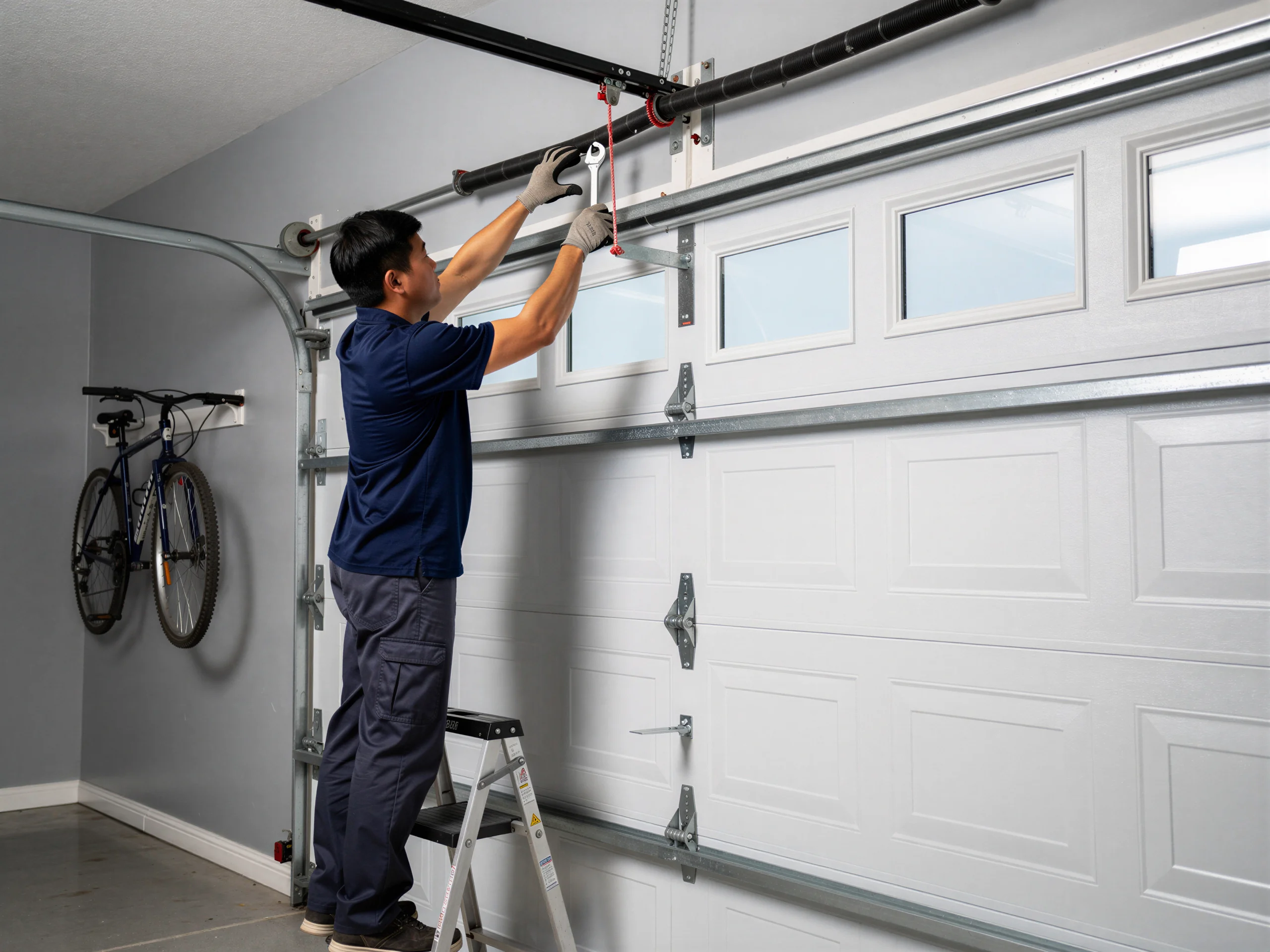
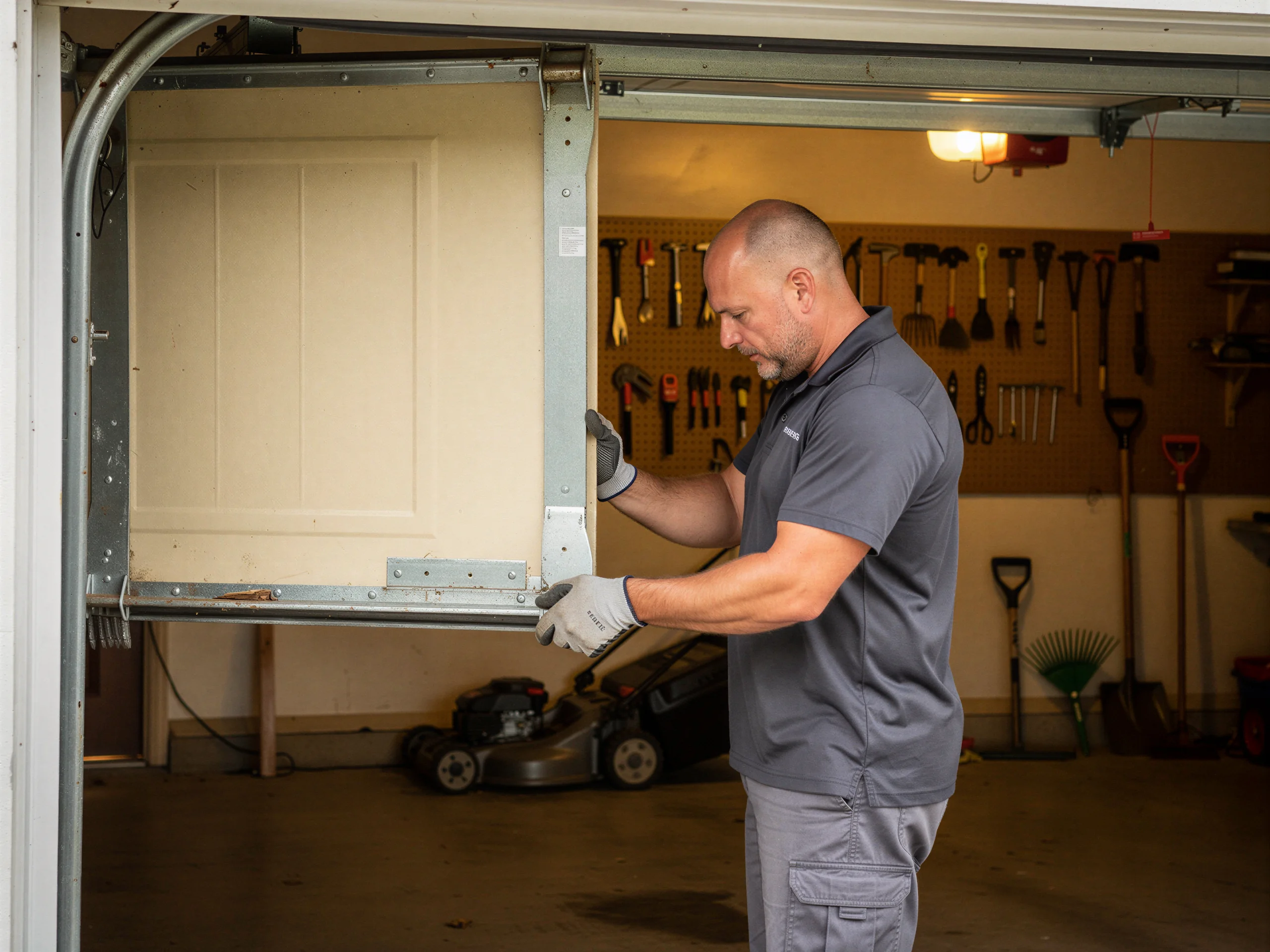
A door built around 1991 - which covers most of what's out in Piñon Hills - is a steel sectional door on a torsion spring, not the older flat extension-spring setup some people picture.
Lubrication and hinge tightening
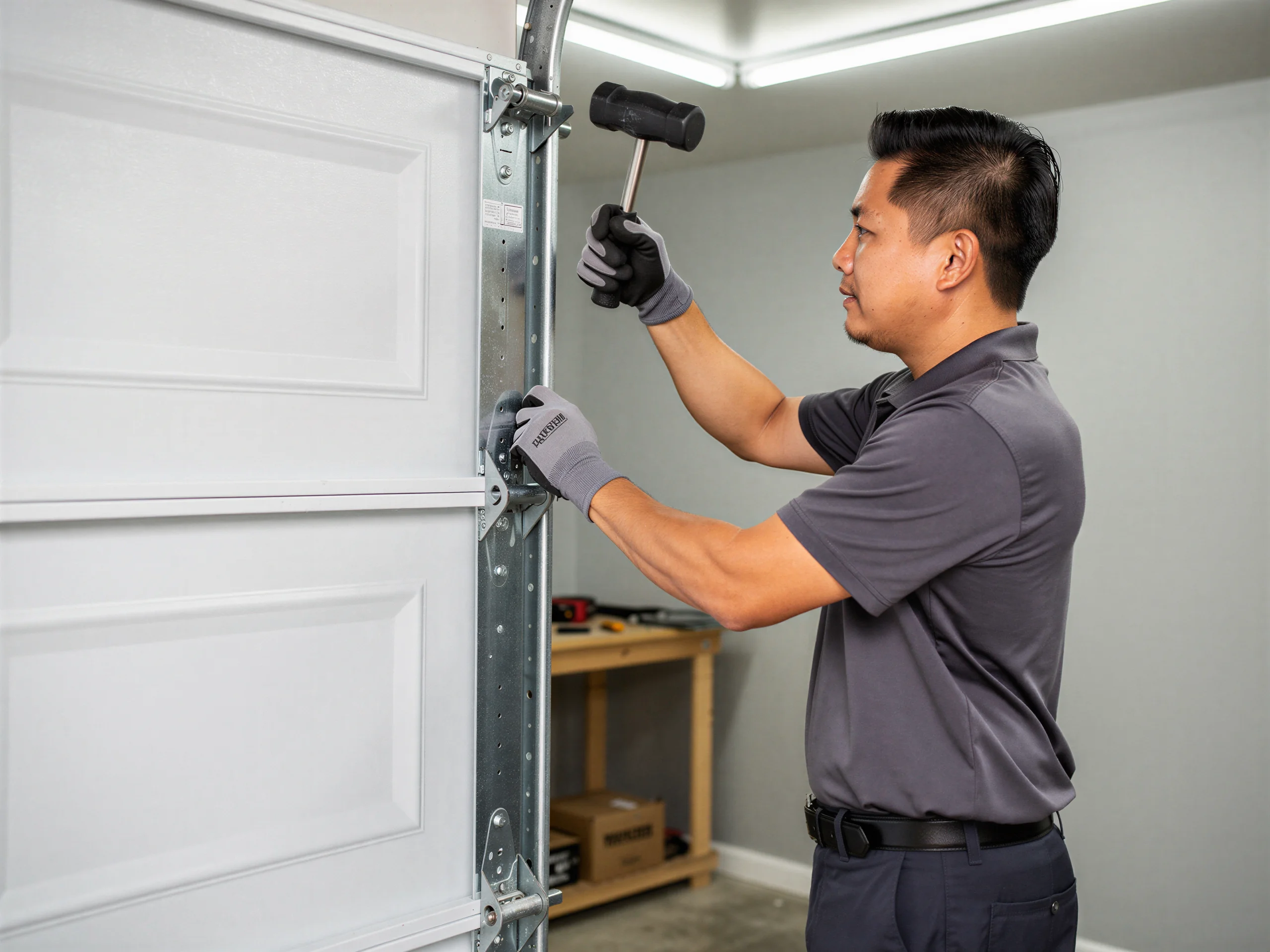
You can safely do a few things yourself: lubricate the rollers and hinges with a garage-door-specific lubricant (not WD-40, which just washes grease off), tighten loose hinge bolts, and clear track debris. What you should not touch is the torsion spring itself.
Original winding cones shear
It's wound under enough tension to break a wrist or worse, and at this age the spring has likely never been replaced, which means the winding cones and set screws are original 1991-era hardware that can shear without warning. If the door is off its track, binding on one side, or the opener is grinding without lifting the door, stop and call.
Five-minute fixes by phone
Those are jobs where guessing costs more than the service call. We'd rather talk you through a five-minute fix over the phone than charge you for one - that's the honest limitation here: we don't make money telling you not to call, but we'll still tell you.
Stocked Parts
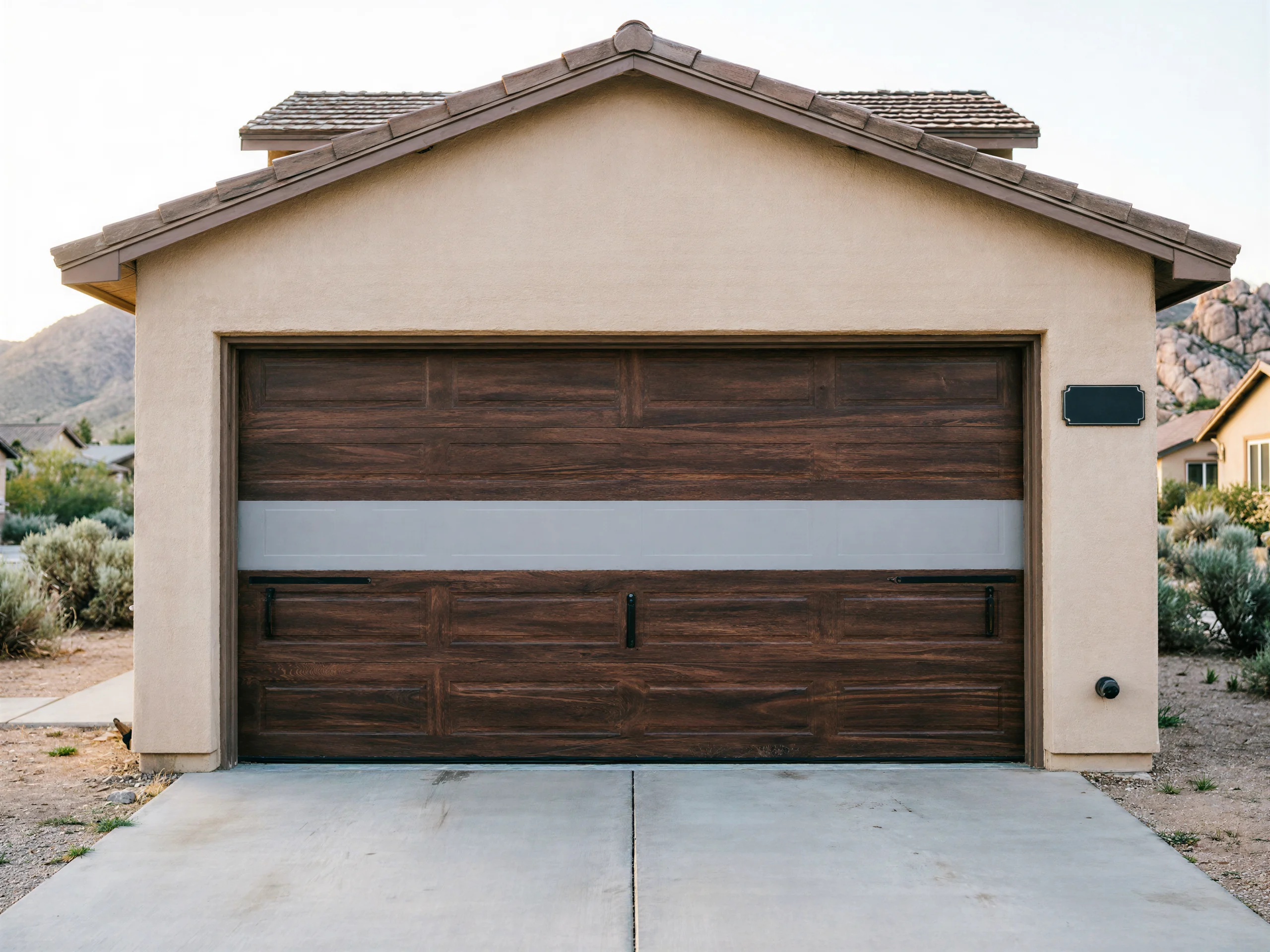
Housing in this area runs 1966 through 1997, with the median landing right around 1991 - so the doors we see out here are almost all steel sectional panels on torsion springs, sized for a standard single or double bay, not the wood or fiberglass panels you'd find on a newer custom build.
Core breakage parts on truck
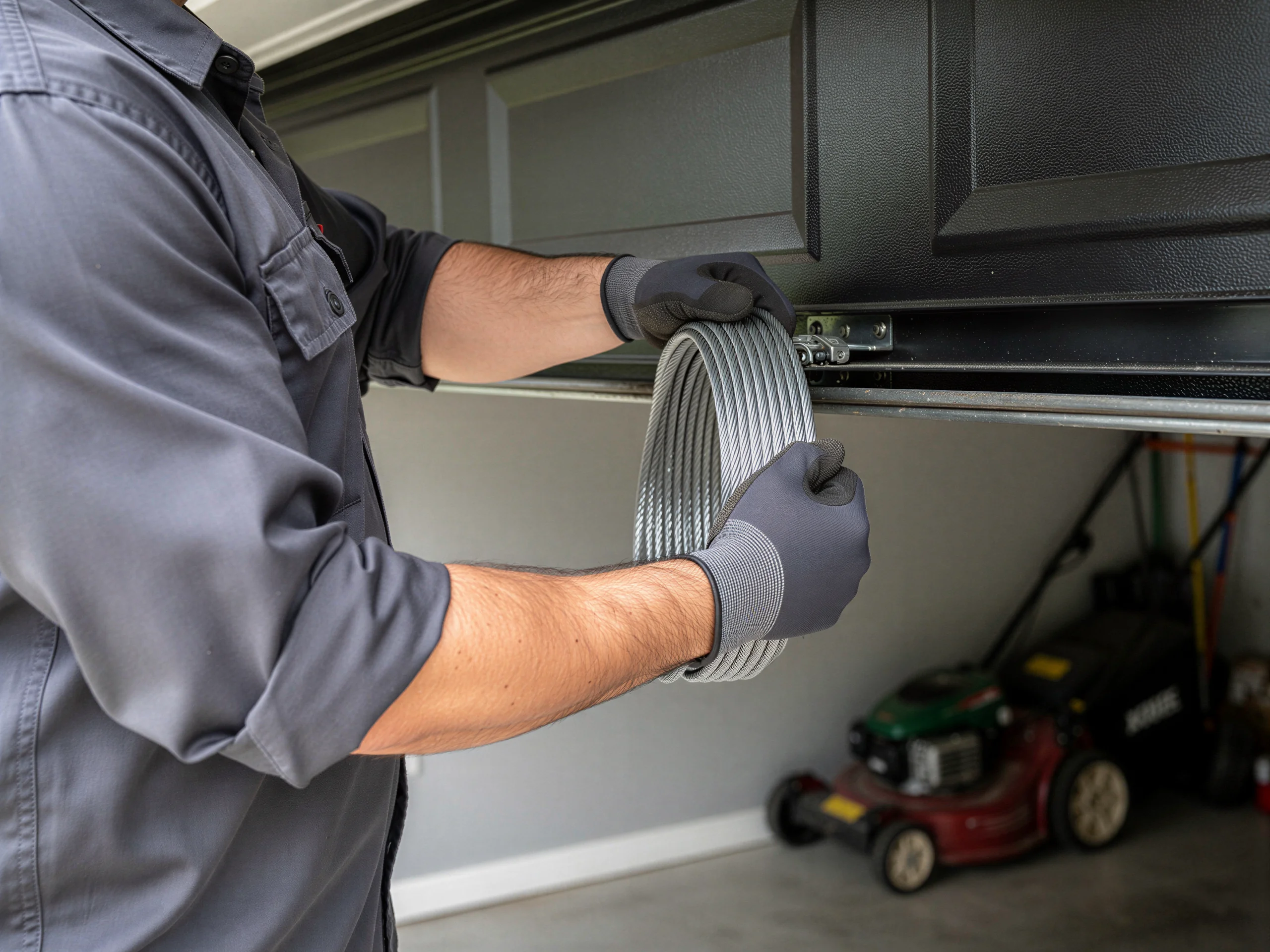
We keep torsion springs, galvanized lift cables, and steel rollers sized for that era on the truck because they're what breaks most often at 30-plus years of cycling.
Insulated retrofits and overlays
What we don't carry routinely is anything custom - insulated panel retrofits, odd-width openings, or decorative overlay kits. Those get special-ordered, and depending on the manufacturer that can mean a wait.
Uncommon sizes need notice
If your door is one of the less common sizes or styles, we'll tell you that on the first visit rather than promise a same-day fix we can't deliver.
The Symptom
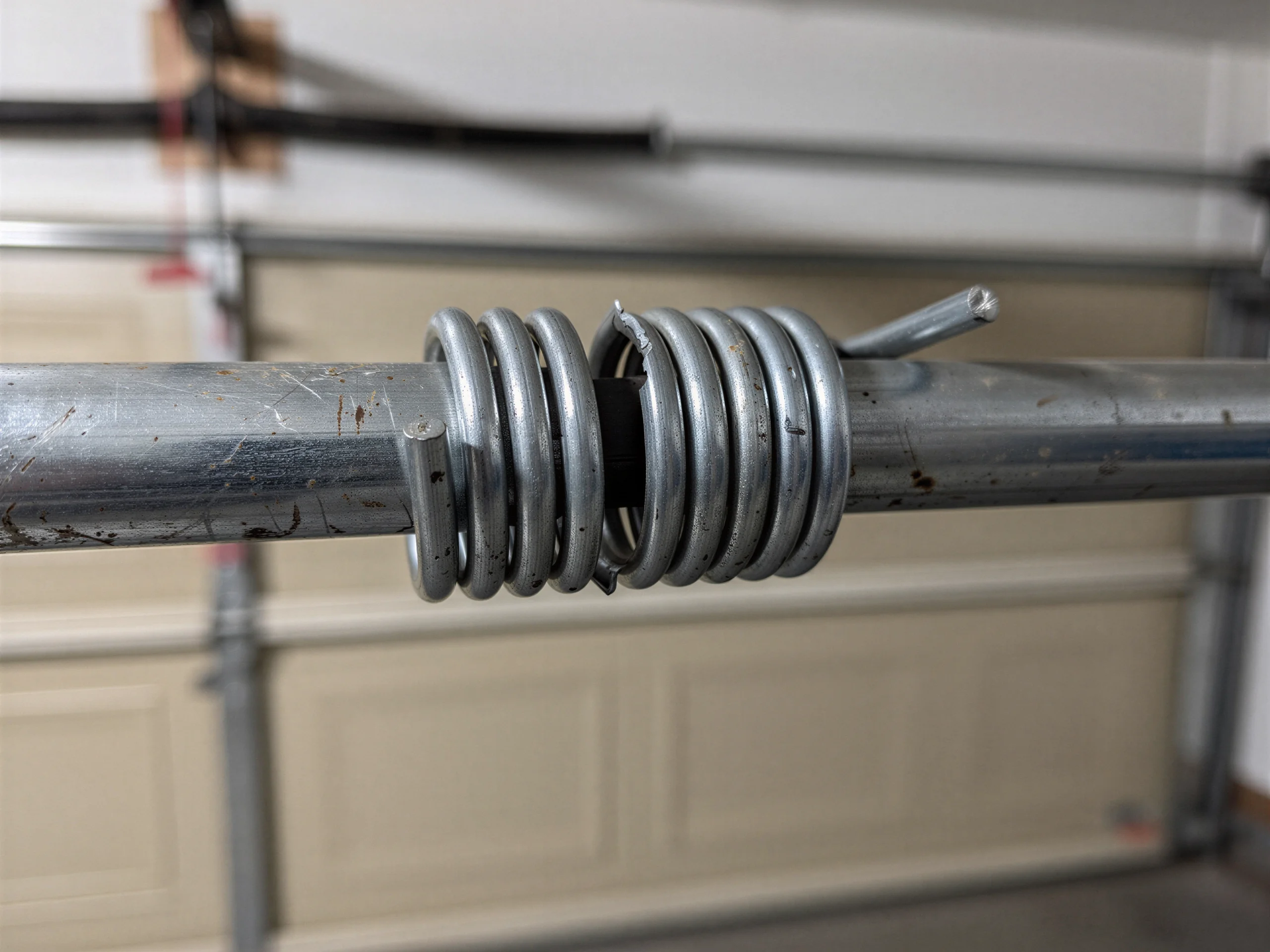
The complaint we hear most from this stretch is a door that's suddenly heavy - it used to lift with one hand and now it barely moves, or the opener strains and reverses partway up. On a door this age, that's almost always the torsion spring losing tension or breaking outright, not the opener failing. The opener motor is doing the work the spring used to do, and it wasn't built to carry a full steel door on its own for long.
A second common one: the door shudders or bangs partway through the cycle. That's usually a roller worn out of round or a bent track - both common once a steel sectional door passes the 25-to-30-year mark, which is where most of Piñon Hills' stock sits now. Either symptom is worth a call rather than a workaround, since a door running on a failing spring or bad roller can come down faster than the opener can catch it.
Talk to a local pro
Garage door service in Victorville?
Same-day service with honest, upfront quotes.