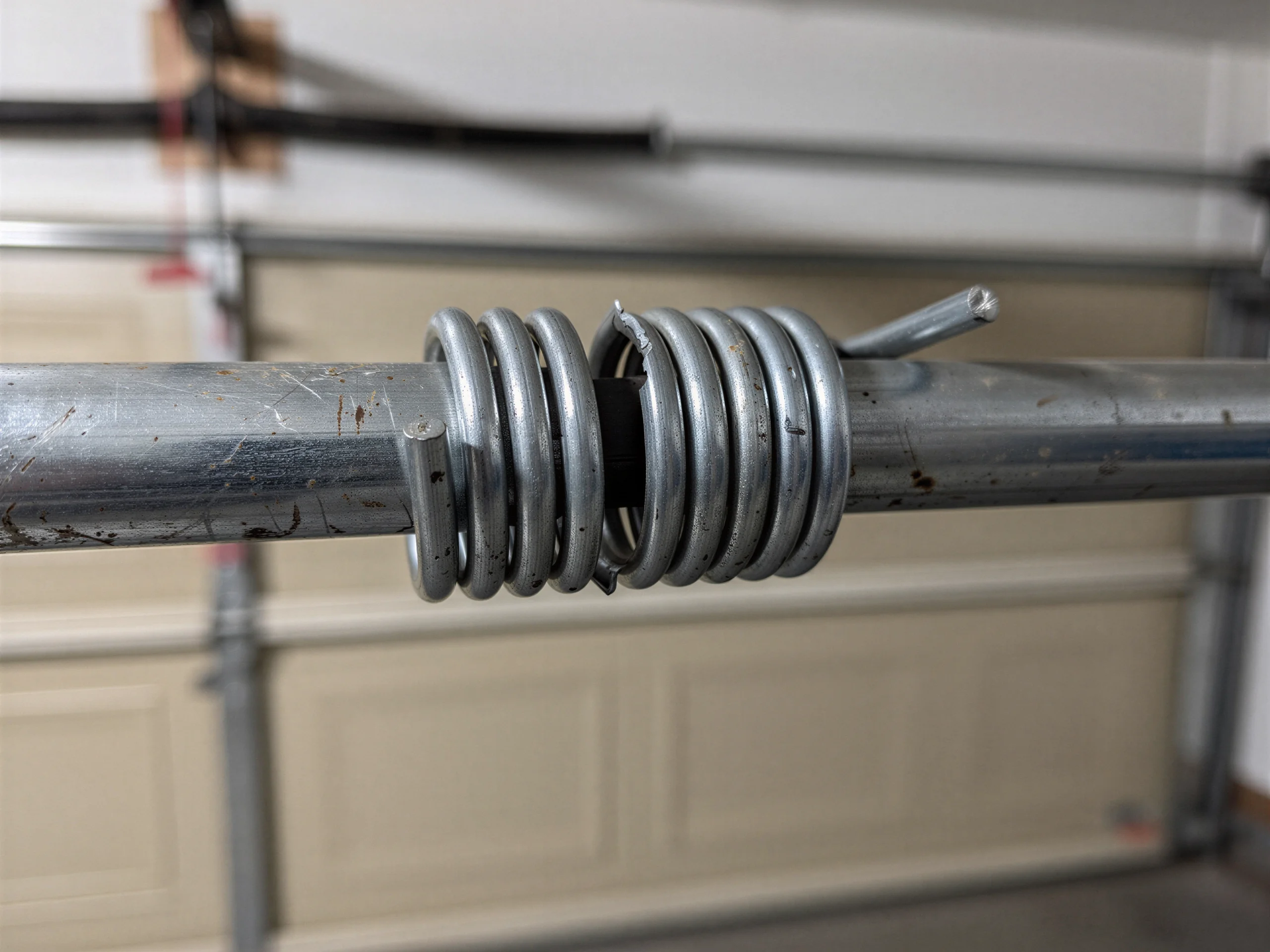
The Symptom
The fault we see most out here is a torsion spring that's lost its wind entirely, not one that's frayed and about to go. The door drops fast when you pull the release, or the opener strains and reverses halfway up.
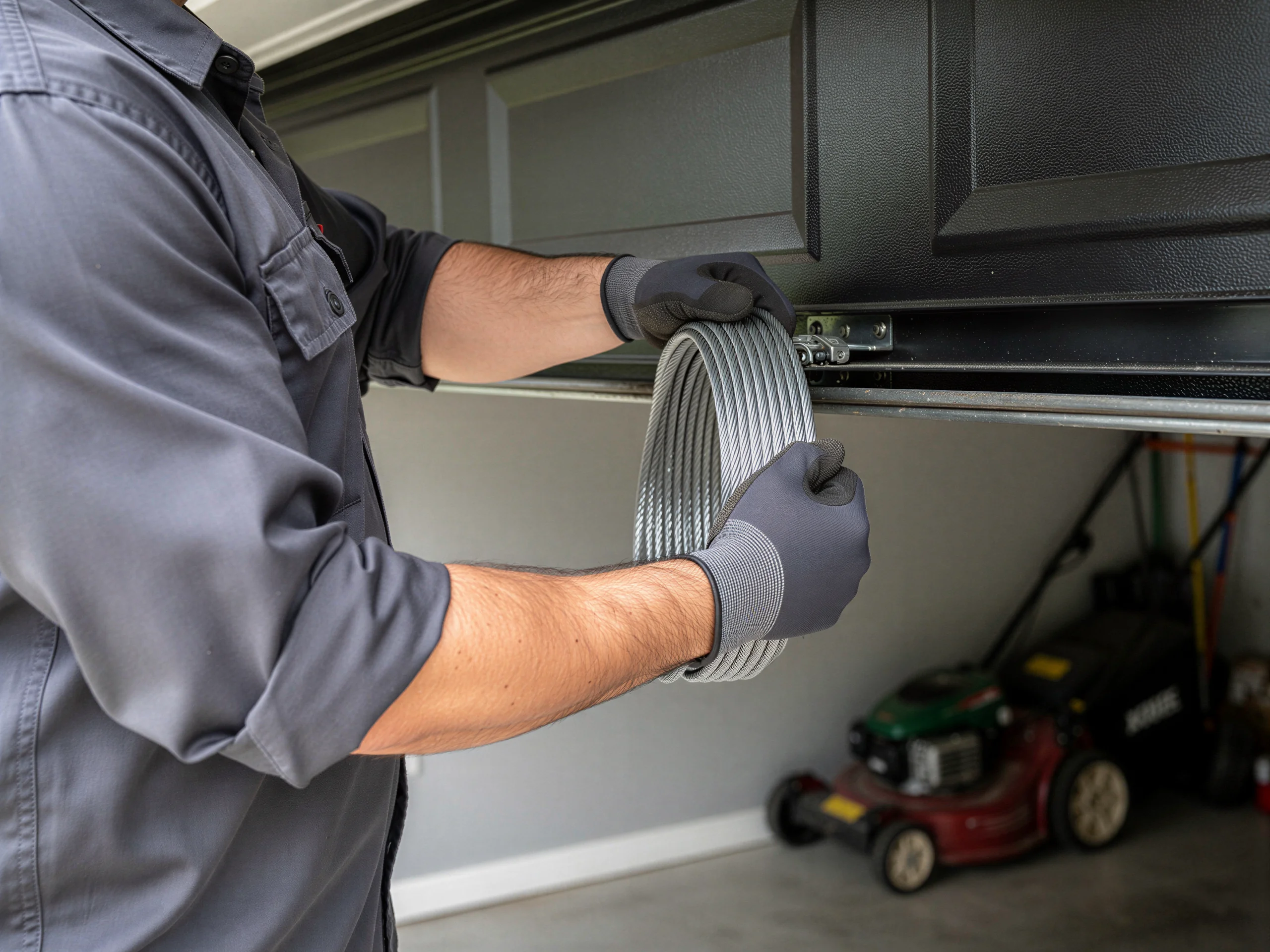
Thirty-year-old original spring
On a house built around 1991 - which is the median build year for Piñon Hills - that usually means the original spring, now over three decades into a job it was never rated to do forever.
Build date reveals hardware
That build date matters because it tells us what's on the wall before we even see the door. Housing across this stretch of the high desert went up mostly in the 1980s and 90s, and most of those builders spec'd one spring size for one door weight.
Heat wears spring temper
Thirty-plus years of heat cycling wears the steel's temper down, and the first sign is almost never a loud bang. It's a door that feels heavier every month until one day it doesn't move at all. If your opener motor sounds like it's working harder than it used to, that's the spring talking before it quits.
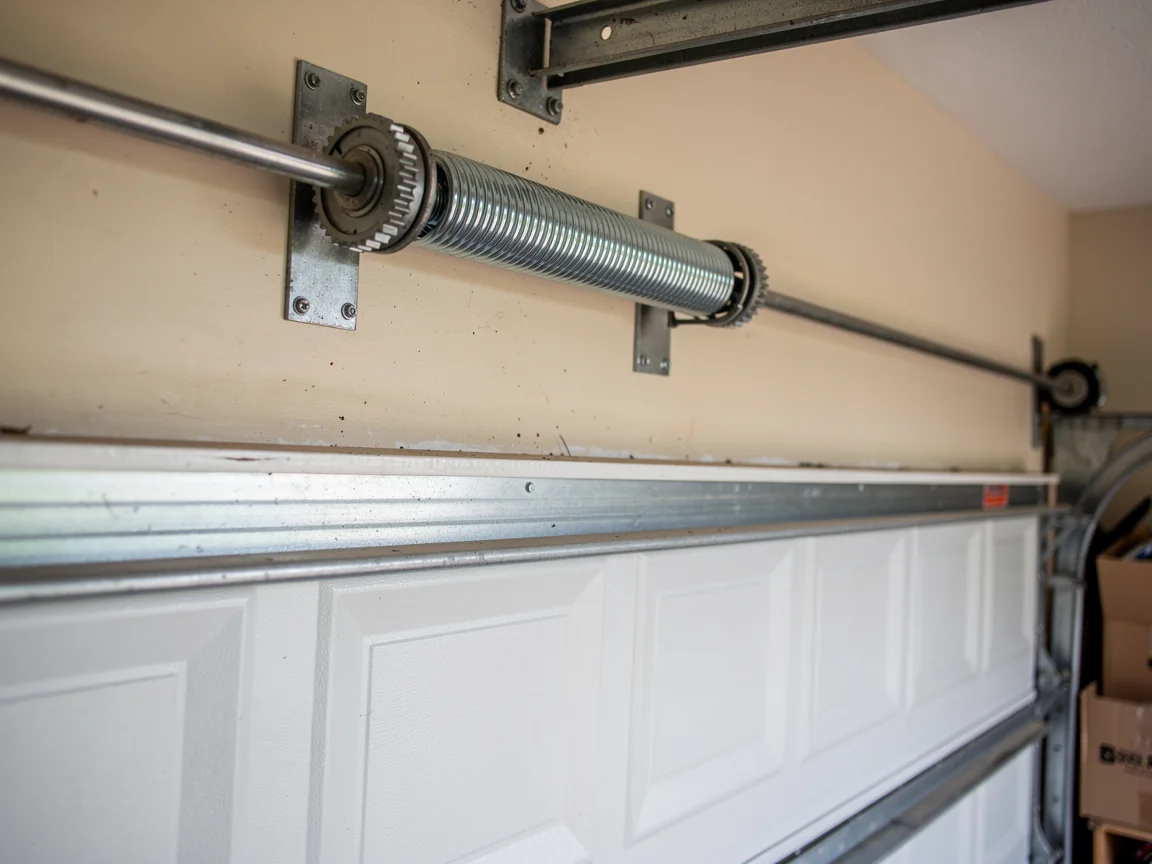
Doing It Yourself
We'll say this plainly: don't wind a torsion spring yourself. The bar that winds it is under enough tension to break a wrist or worse, and there's no safe way to learn that lesson on your own garage.
Lift-by-hand stiffness check
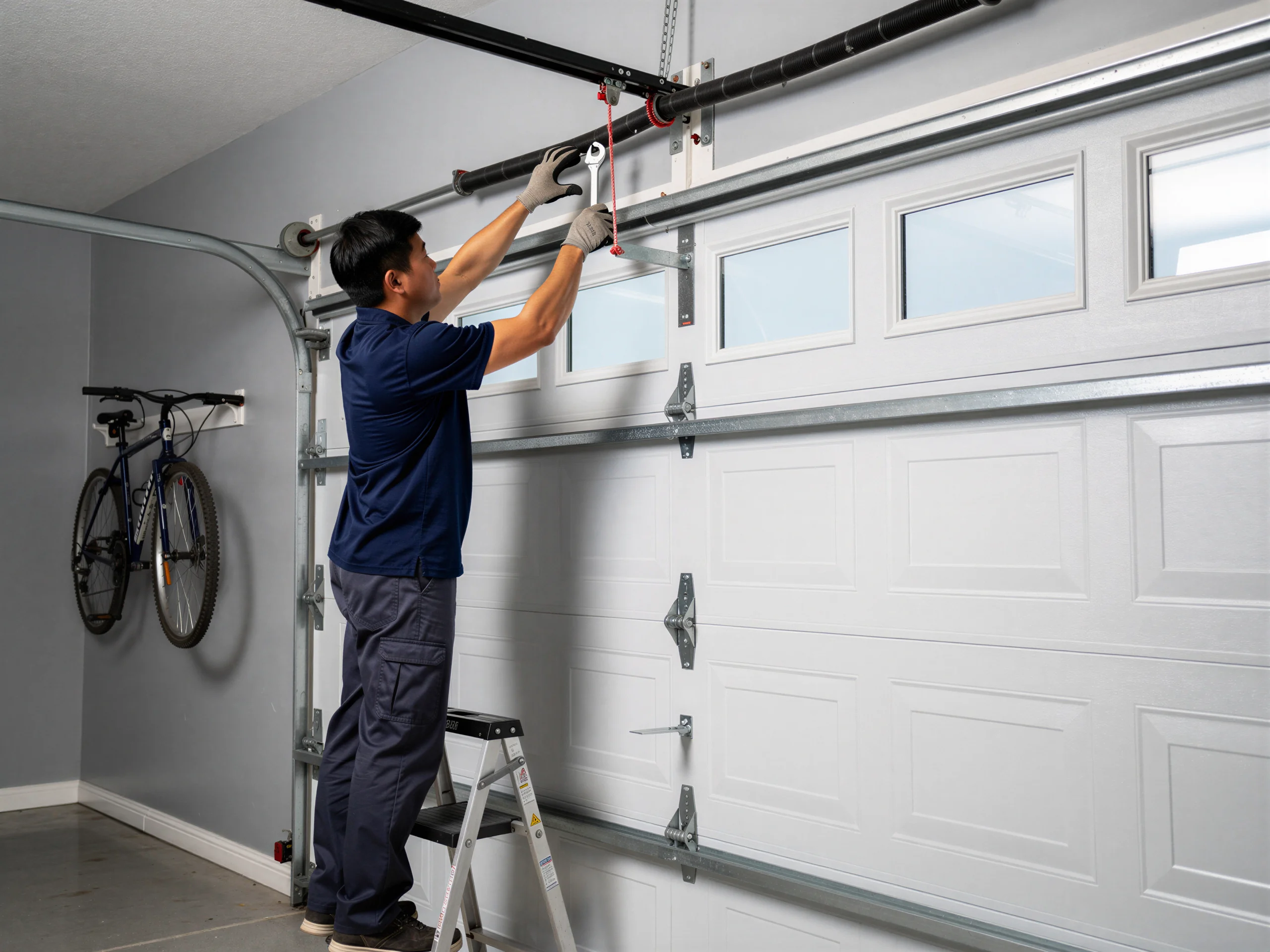
What you can do without risk is look. Check whether the spring above the door is in one piece or has a visible gap where it's snapped. Check if the door is noticeably harder to lift by hand with the opener disconnected - that's a spring losing tension before it fails outright.
Stiff door is scheduled job
We also won't pretend every visit needs a truck roll from Victorville the same day. If the door still opens and closes, even stiffly, it's not an emergency - it's a scheduled job, and that's worth saying since waiting a day or two costs you nothing but convenience.
Forcing opener burns gears
What does cost you is forcing a door with a broken spring using the opener; that's how openers burn out gears meant for a door the spring should be lifting, not the motor.
Stocked Parts
Across the area we cover - including Piñon Hills, Phelan, Oak Hills, Apple Valley, Adelanto, Spring Valley Lake, and Mountain View Acres - the housing stock runs 1966 through 1997, with most doors matching springs sized for that window. We carry the torsion spring sizes that match 1980s and 90s double and single-car doors, which covers the bulk of what's actually on these streets, Piñon Hills included at its 1991 median build year.
What we don't stock on the truck are springs for the handful of newer custom doors or older pre-1966 builds - those get special-ordered, and that's the one real lead-time gap worth knowing about before you call. For the standard torsion setup on a house from this era, though, the part's usually already in the truck when we leave Victorville.
Booking a Visit
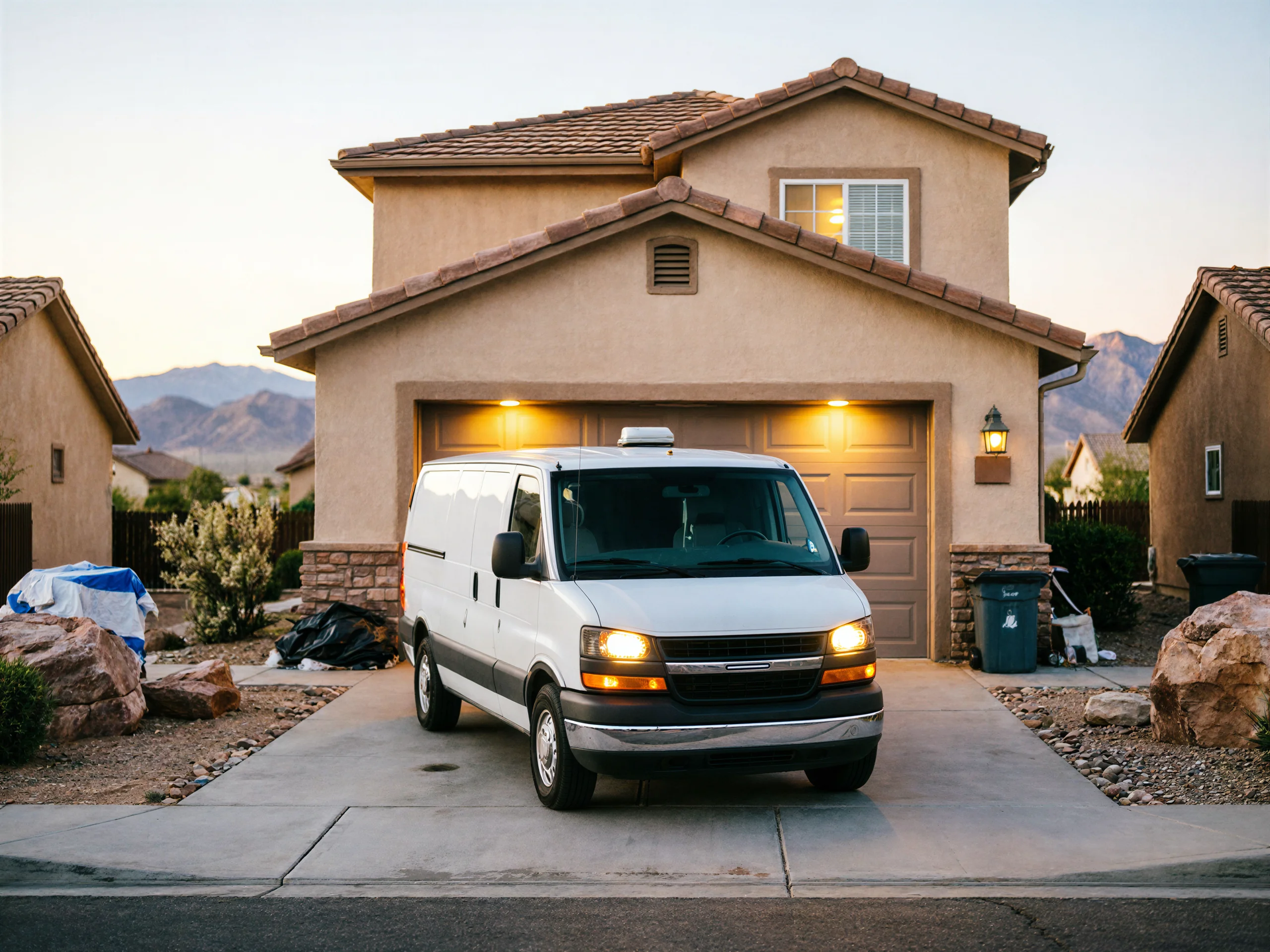
Piñon Hills sits about 16 miles out from our shop in Victorville, so when you call for a spring job here, we're scheduling a drive, not a walk-in.
Distance factored into quotes
That's worth knowing up front - we don't have a branch in town, and the quote you get factors in that distance. With 2,495 households in Piñon Hills and a median income of $65,160 - lower than the wider service area's $74,778 - we try to be straight about what a repair costs versus what a full door replacement costs, especially on older torsion setups where the track and rollers are just as tired as the spring.
Spring swap versus full fix
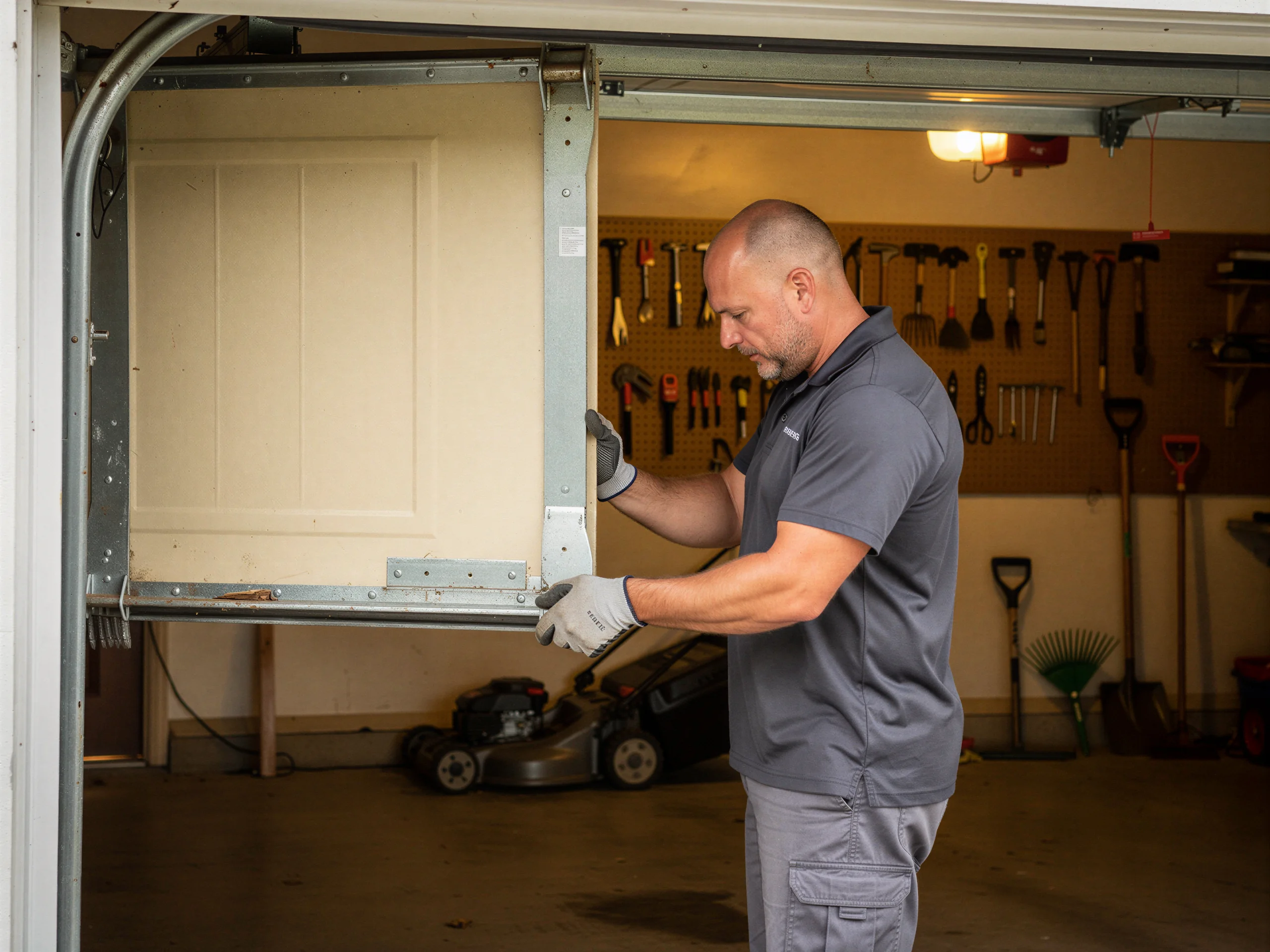
A spring swap on a sound door is usually the right call. A door that's also racked, dented, or running on original rollers from the same 1991 install might be past the point where a new spring alone fixes it.
Honest option, not first pitch
We'll tell you which one you've got, not just sell you the first option. See garage door services in Piñon Hills for the rest of what we handle out here, or check spring repair details for the Victorville shop itself.
Talk to a local pro
Garage door service in Victorville?
Same-day service with honest, upfront quotes.