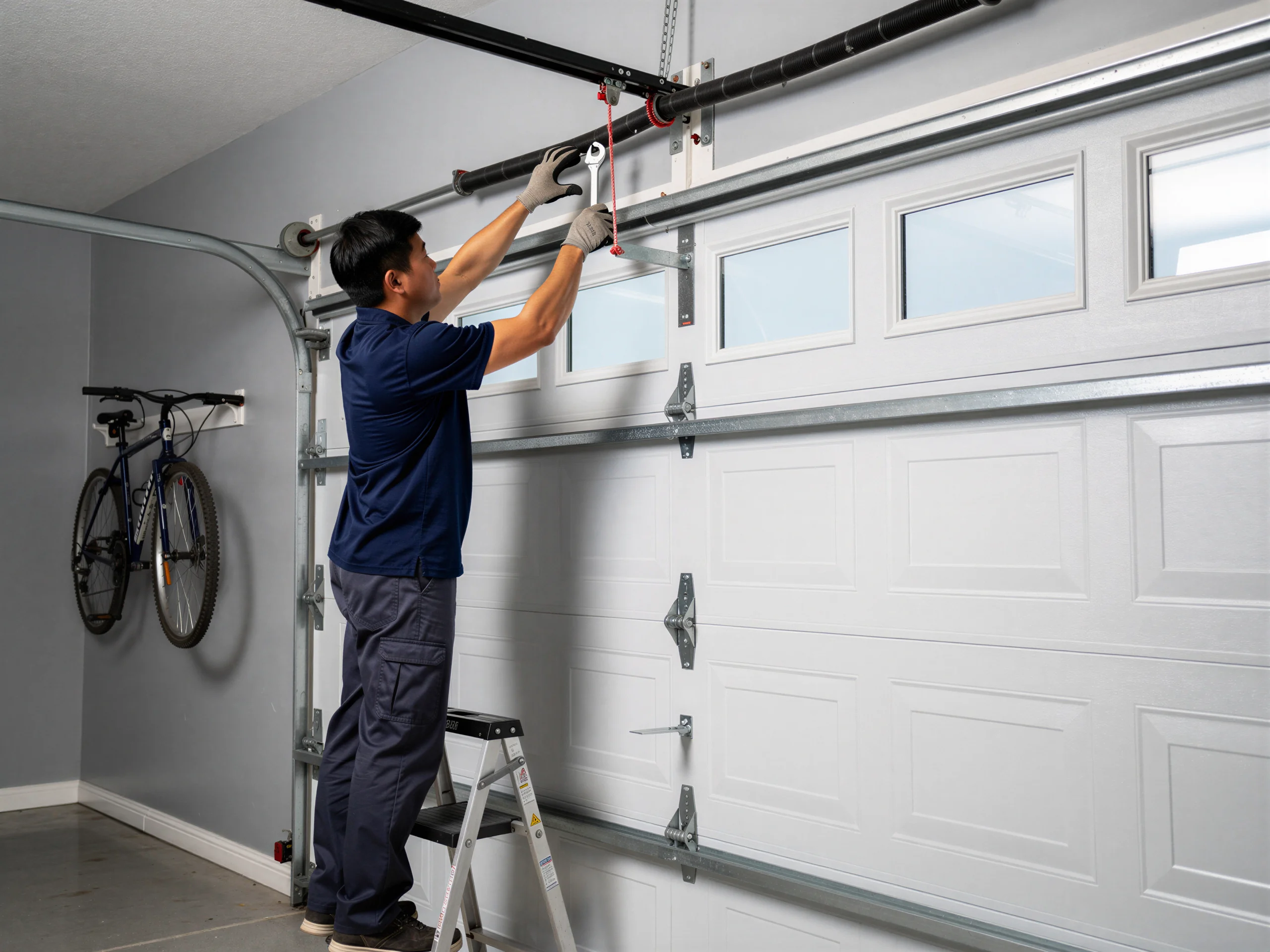
The Symptom
Crestline's median household income sits at $79,378, a notch above the wider service area's $74,778. That number matters more than it sounds like it should, because it sets where the repair-or-replace line falls.
Repair before replacement spending
At this income level, a $300-$600 spring or roller job is an easy yes, but a full door swap competes with other household spending, so most calls here start as repair calls, not replacement calls.
Fix cost versus new door
If your door is dragging, slamming, or won't open past a foot, the first question isn't "how old is the door" - it's whether the fix costs less than a third of a new one. For most of what we see out this way, it does.
Most calls end in repair
That's the lens for everything below. Crestline isn't a town where every third call ends in a full door swap. It's a town where a torsion spring, a bent track, or a worn cable gets fixed and the door goes another decade.
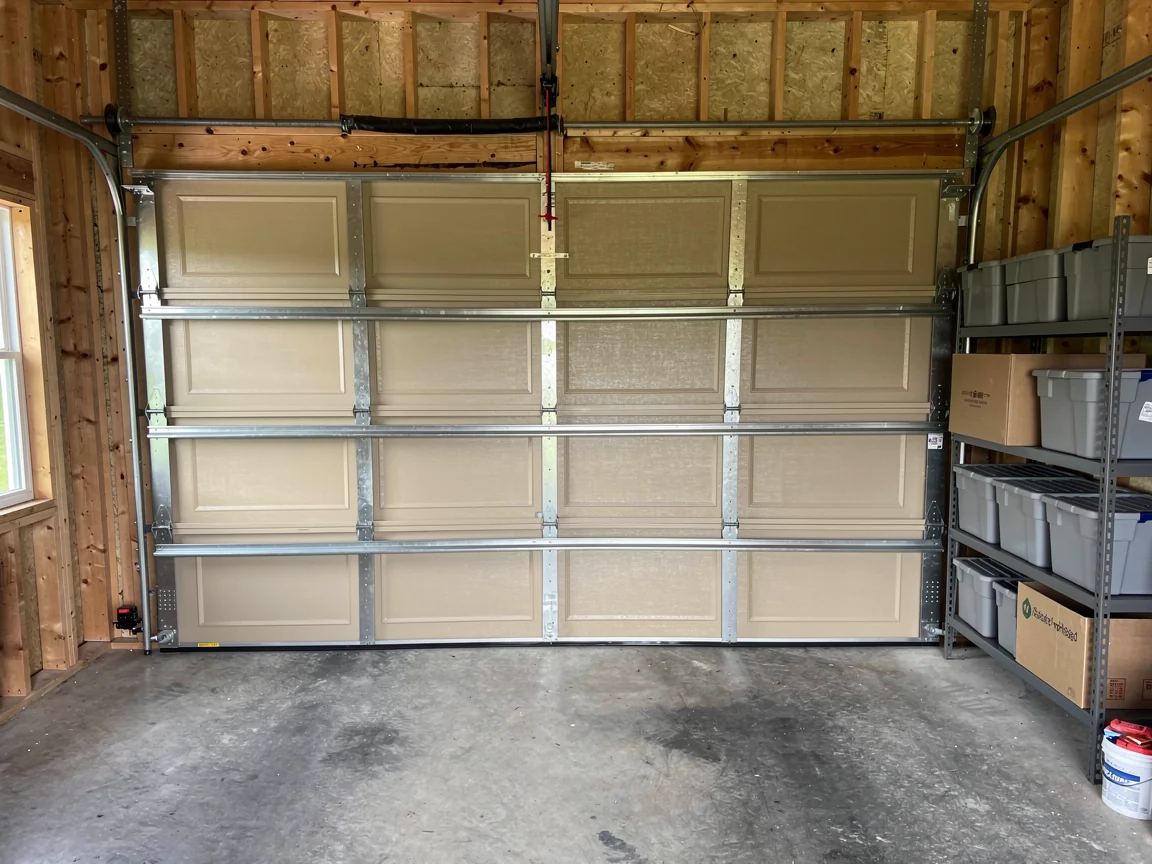
What Can Go Wrong
The service area as a whole runs 1966 to 1997 built, median around 1989. Crestline sits at the old end of that range, with a median year built of 1966.
Older extension spring setups
That's a meaningfully older stack of houses than a lot of what we cover, and older houses mean older garage door systems - extension springs instead of torsion, single-wire photo eyes or none at all, openers from well before today's safety-sensor requirements.
Pulley and cable wear points
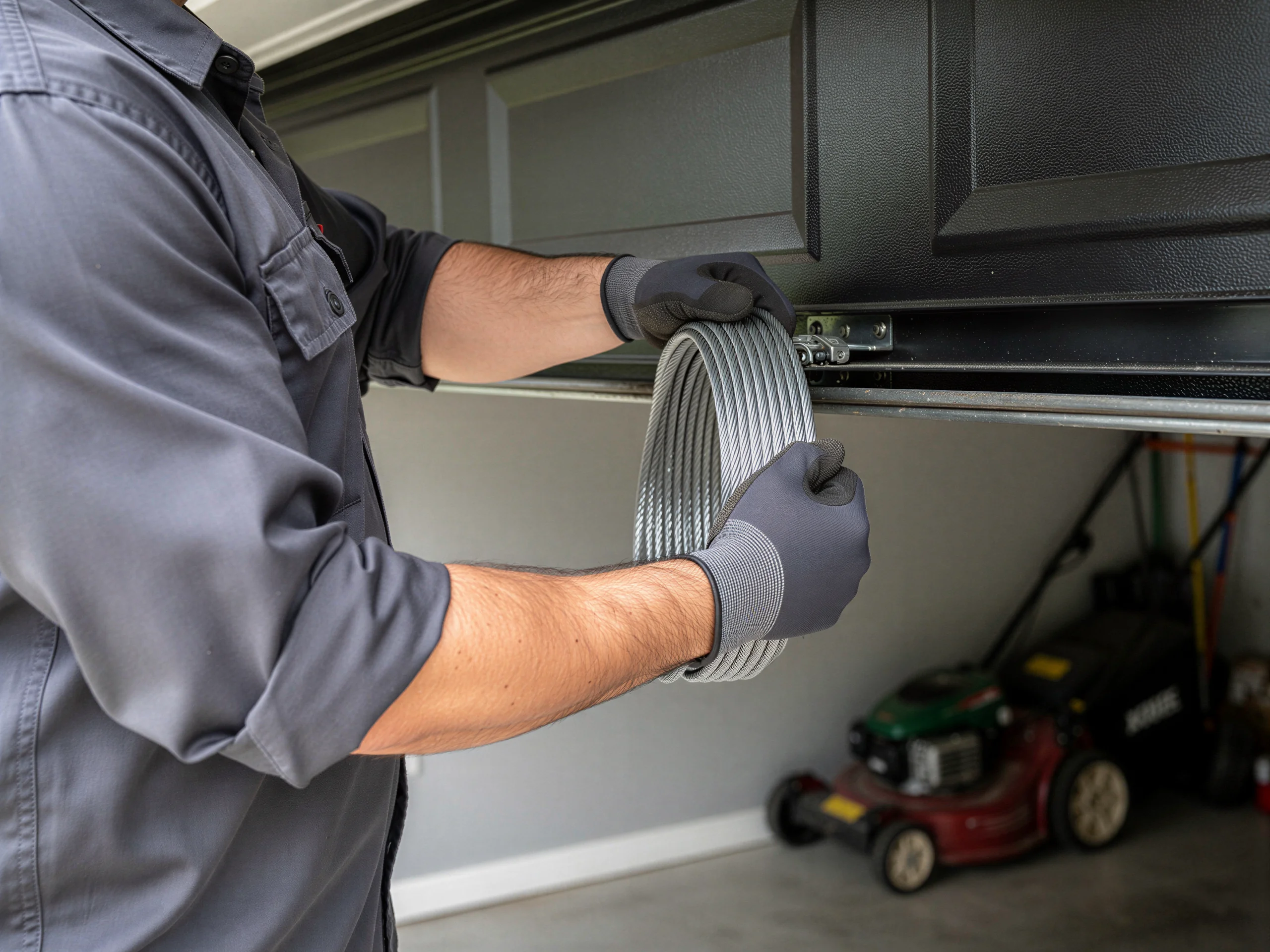
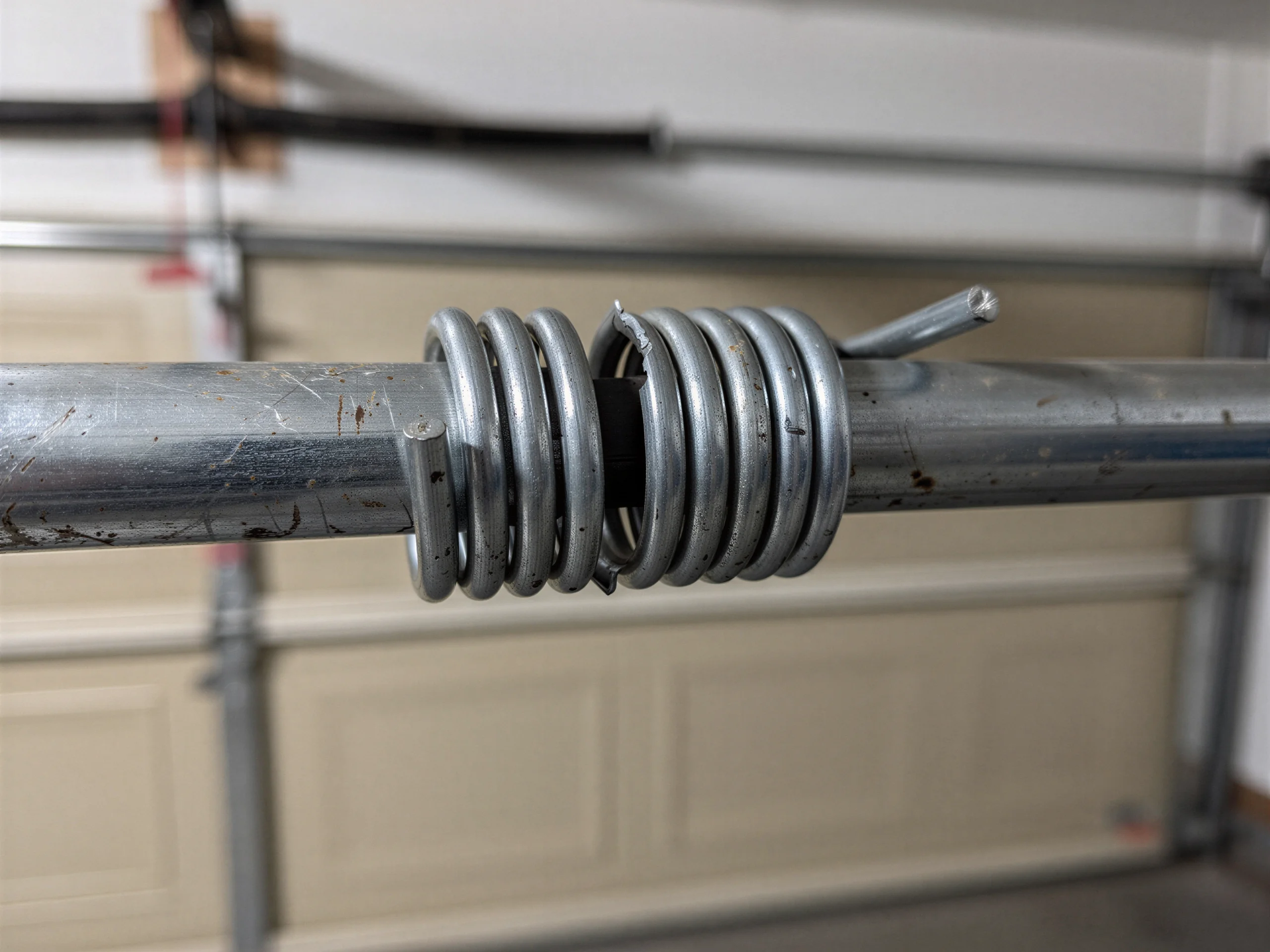
What breaks on a 1966-era setup isn't what breaks on a 1990s door. Extension springs stretch and fatigue differently than torsion springs, and the pulley-and-cable rigging that goes with them wears at different points - usually the pulley bracket or the bottom cable where it loops.
Settling shifts track alignment
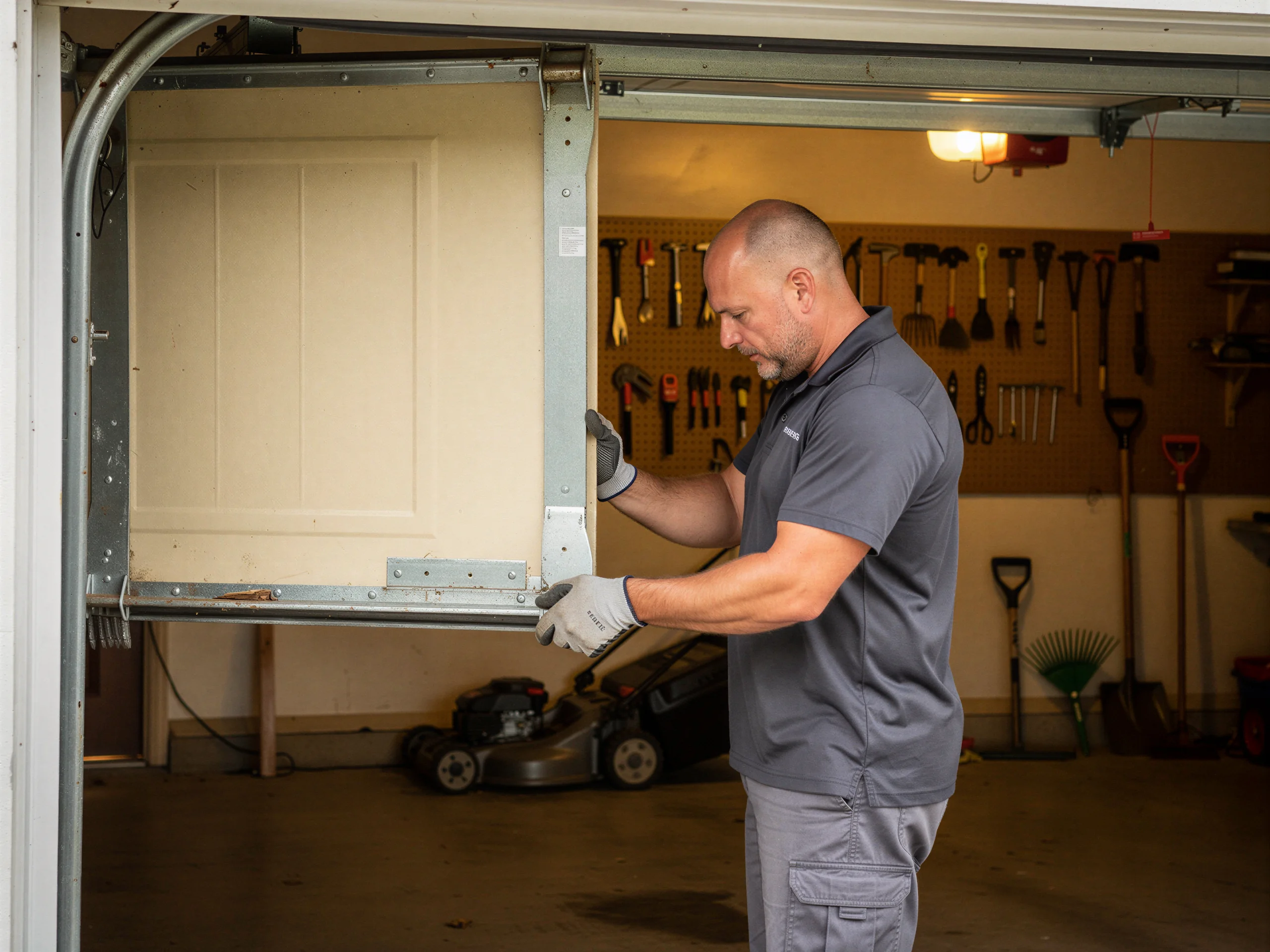
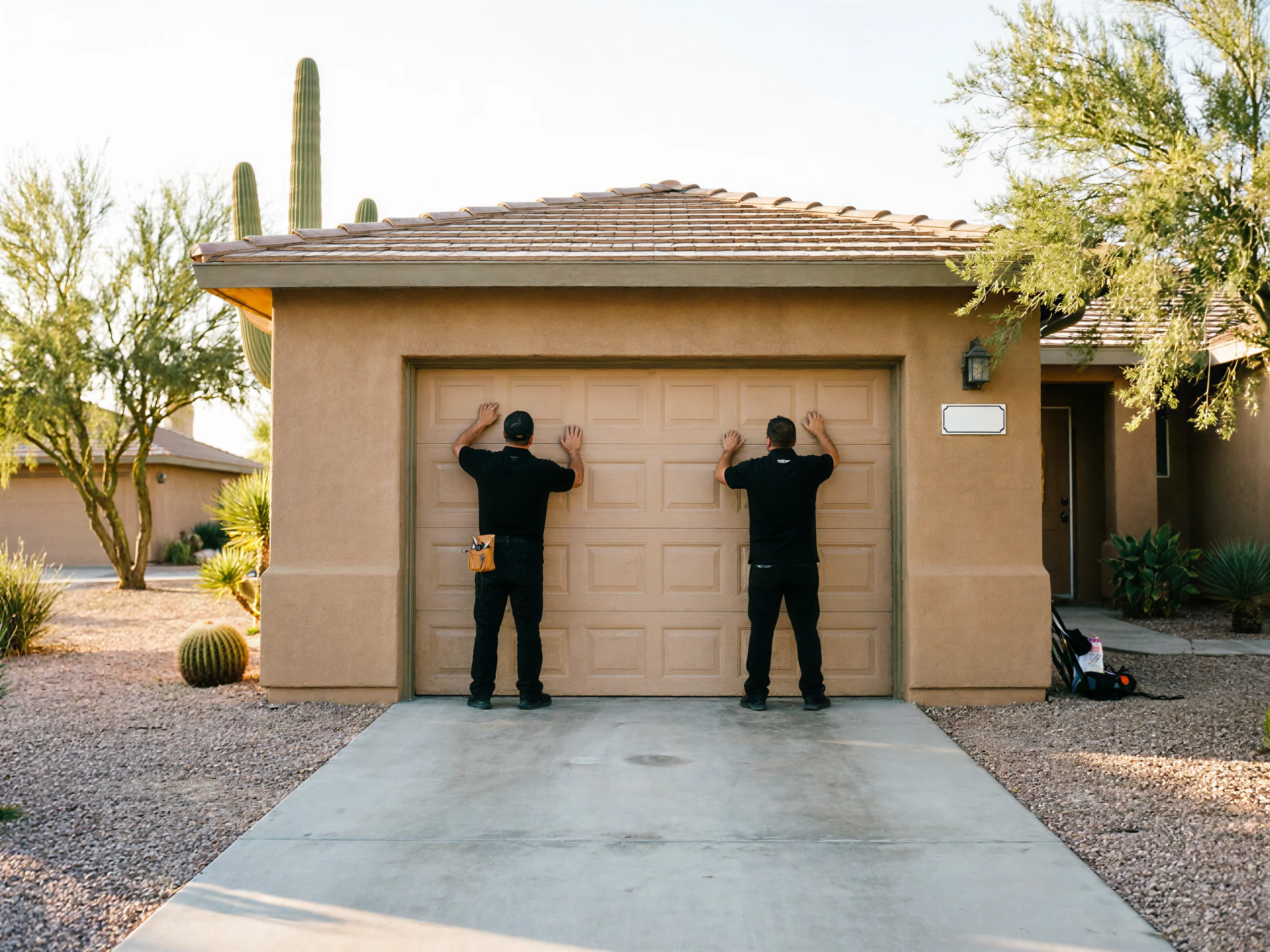
Track alignment on these older jambs tends to drift because the original hardware was never built to today's tolerances, so a door that's run fine for years can start binding after a settling shift in the structure, not a sudden part failure. None of this is exotic. It's just older hardware doing what older hardware does, which is wear unevenly instead of all at once.
Doing It Yourself
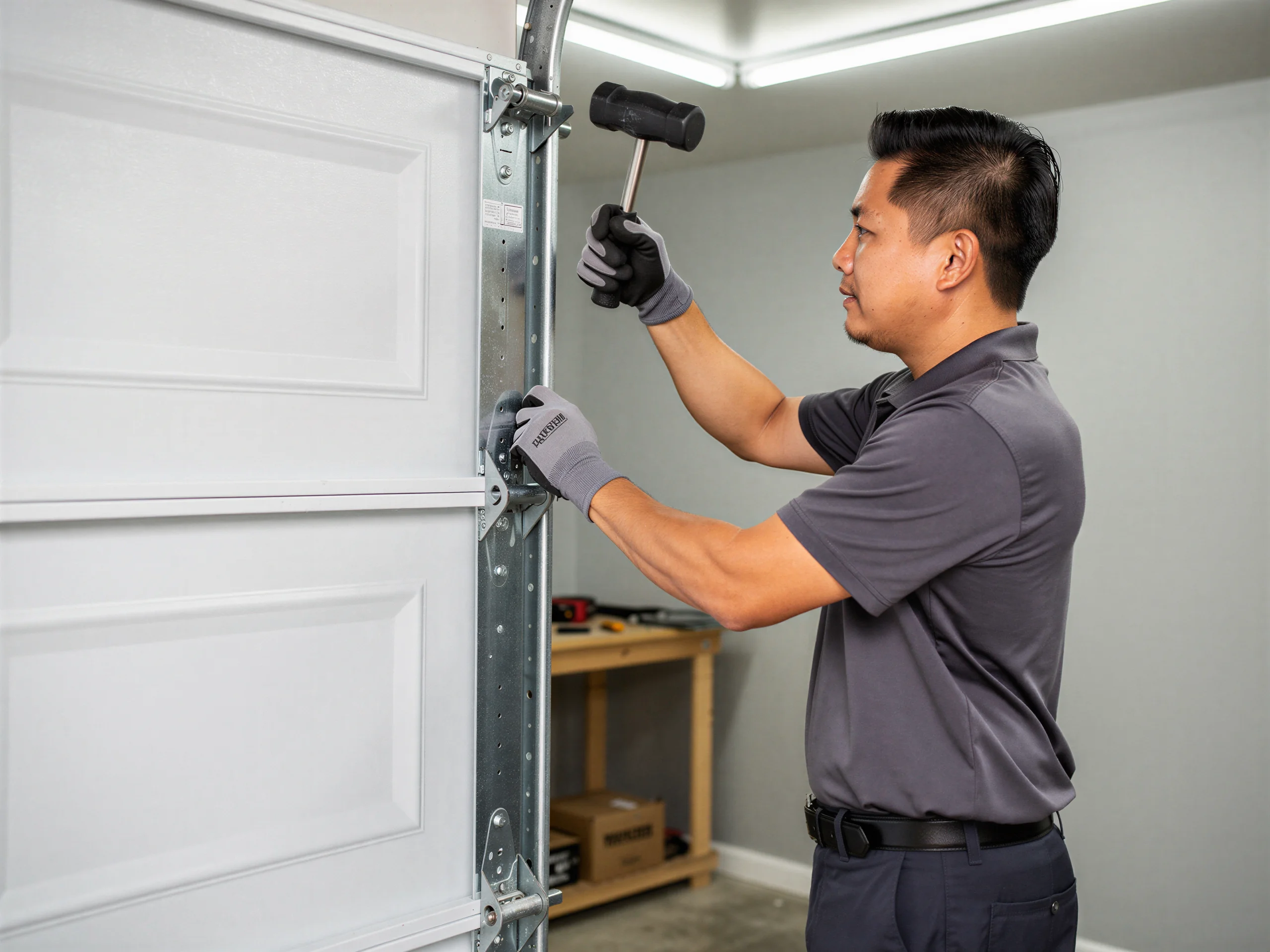
A loose track bracket, a dirty photo eye, or a roller that's chirping - those are fair weekend jobs if you're comfortable on a ladder and you unplug the opener first. What's not a DIY job, on a house this age or any other, is anything involving the spring itself. Extension and torsion springs both hold enough stored tension to break a hand or worse, and on older extension-spring setups there's often no safety cable running through the spring to catch it if it lets go. That's the one we won't talk you through over the phone.
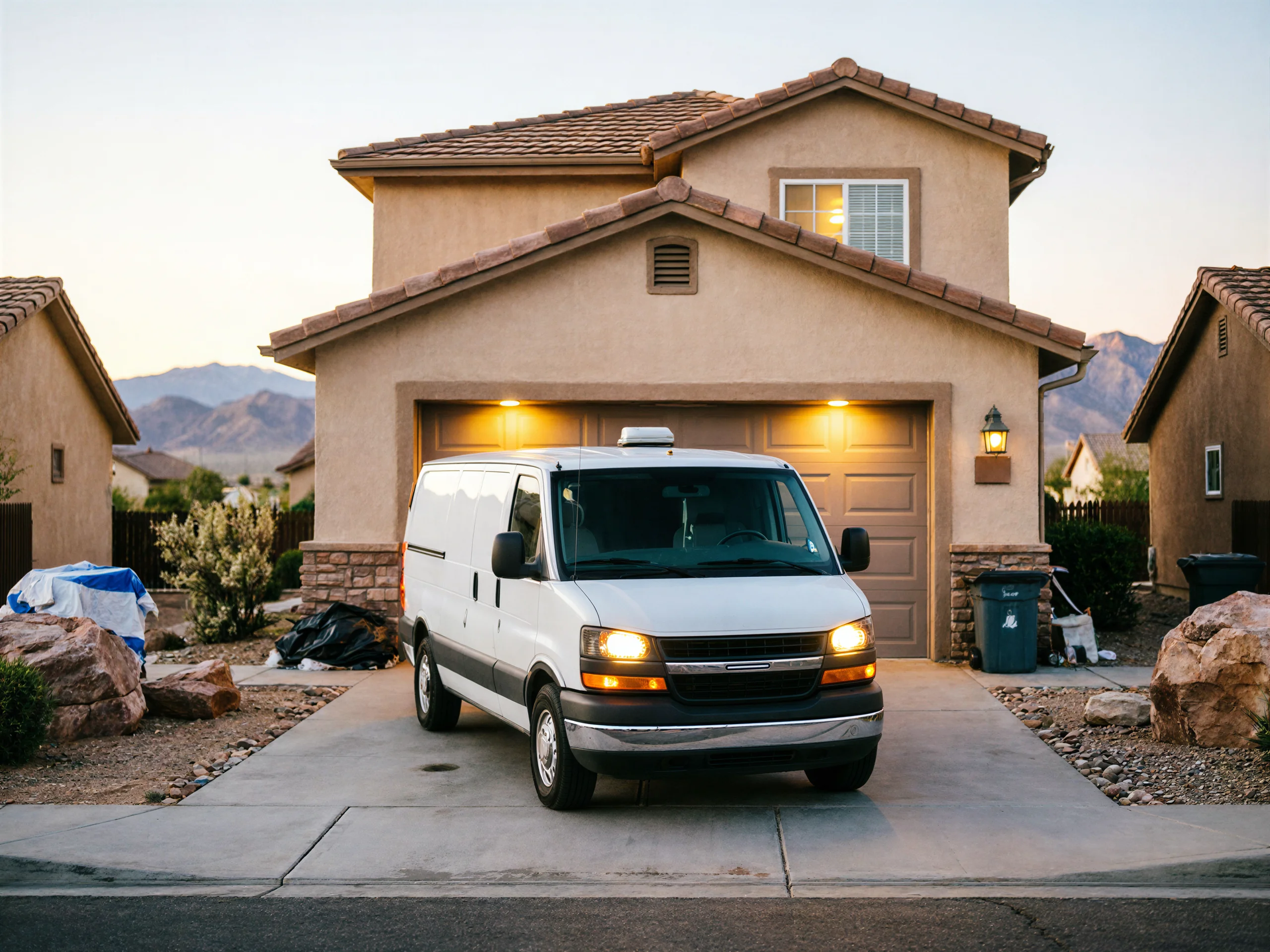
Worth saying plainly: we don't do same-day dispatch to Crestline. We run out of Victorville, about 19 miles off, so if your spring snaps on a Saturday night, plan on us scheduling the visit rather than showing up in the hour. For everything that isn't a stuck door blocking a car you need, that's a fine trade-off.
Stocked Parts
Across the roughly 4,047 households in Crestline, the parts that fail most are the parts tied to 1966-era hardware: extension springs sized for older lift systems, pulley-and-cable sets, and the heavier-gauge rollers that these original tracks were built around. We carry common extension spring sizes and standard cable on the truck, along with torsion springs for the newer doors that have since replaced original setups during past remodels.
What we don't stock on the truck is anything custom - odd-width doors, discontinued opener control boards, or panel sets for a door that's been replaced piecemeal over the years. On a house this old, that's not rare. If a part needs to be ordered, we'll tell you that on the first visit instead of guessing, and we'll give you a straight read on whether it's worth waiting on or whether the door's at the point where replacement beats another patch.
Talk to a local pro
Garage door service in Victorville?
Same-day service with honest, upfront quotes.