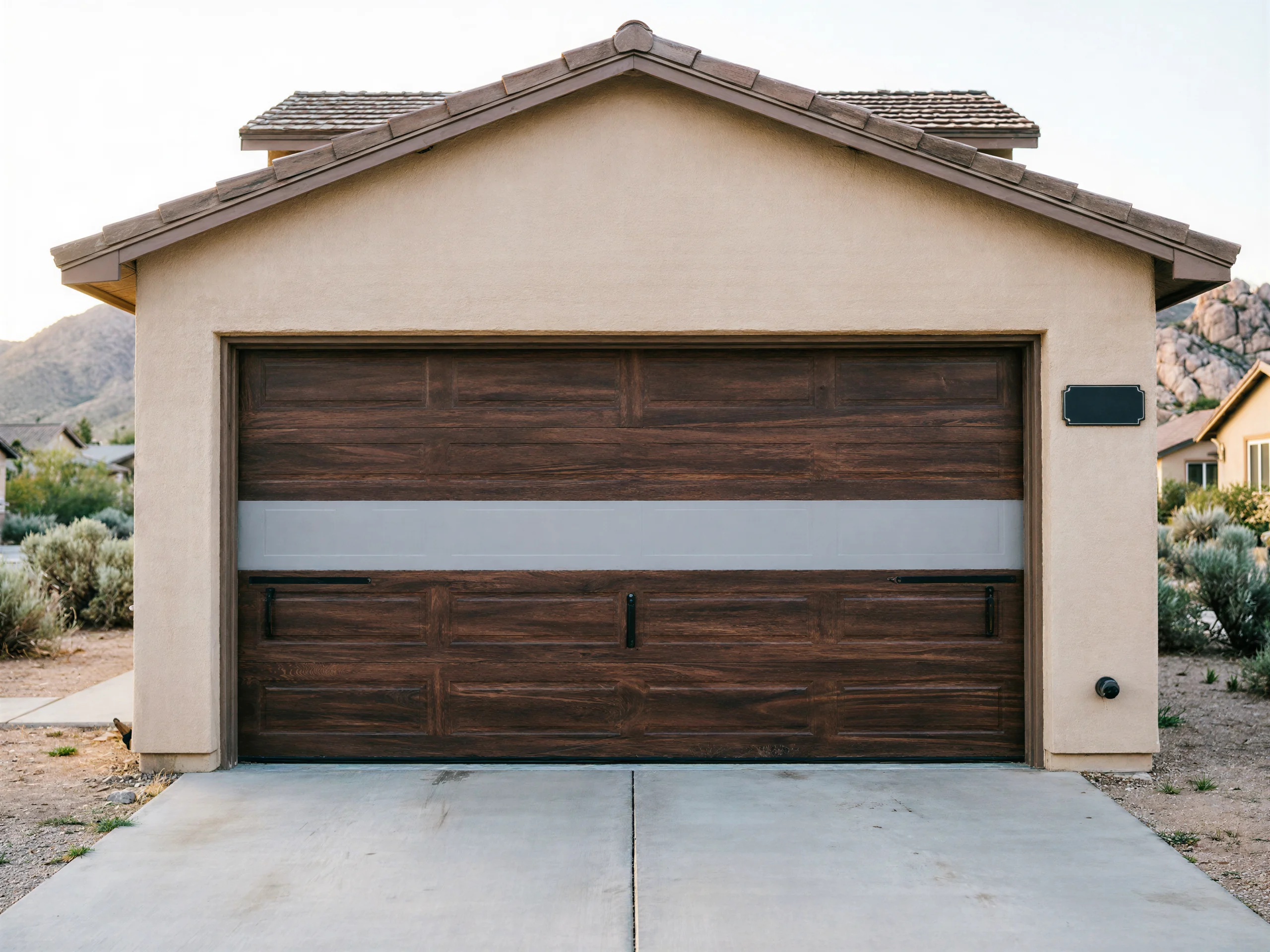
The Symptom
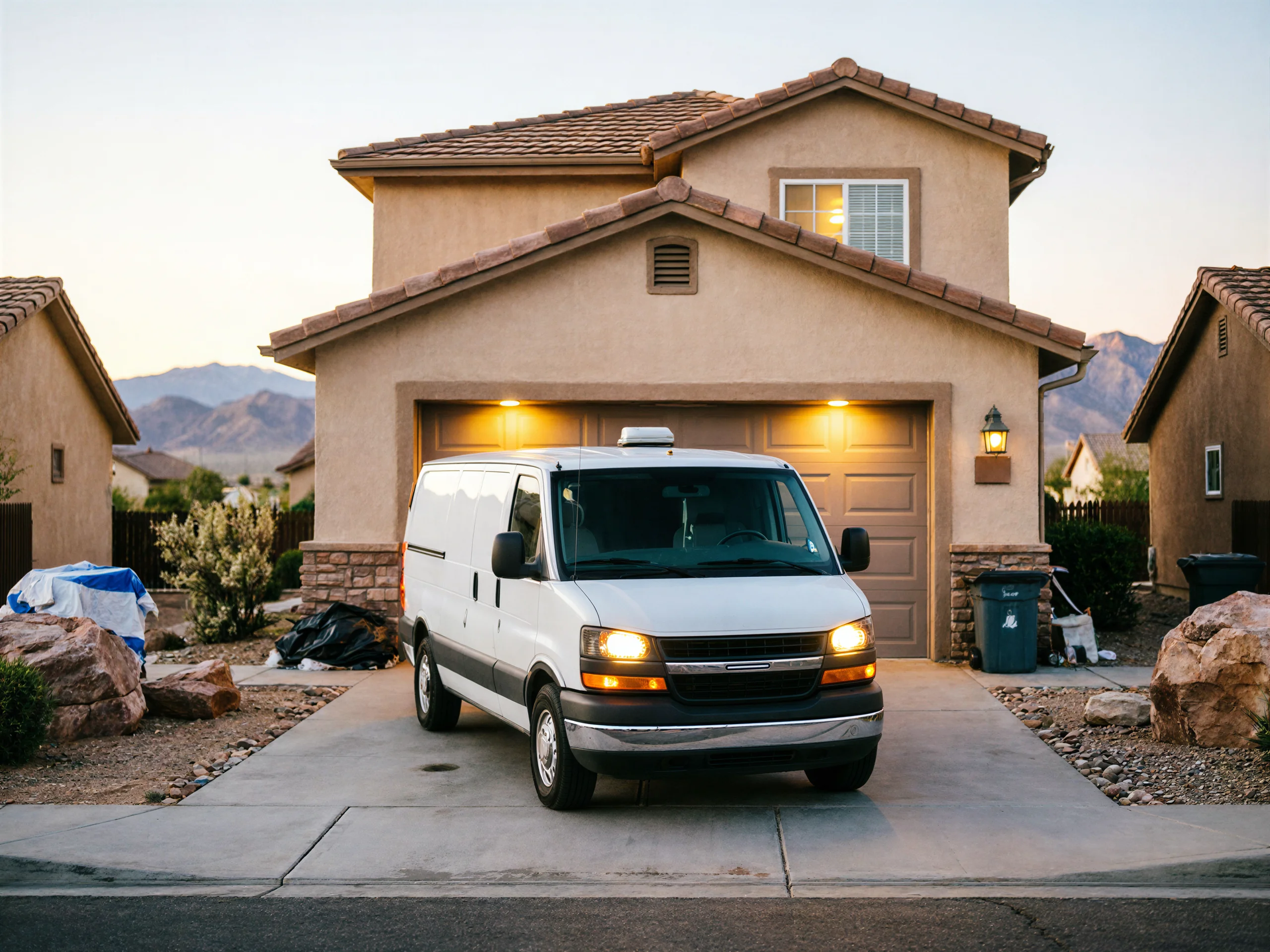
Crestline is nineteen miles from our Victorville shop, which is enough distance that we load the truck before we leave, not after we see the door.
House age before panels
When a homeowner calls about a cracked or caved-in panel, the first question we ask isn't "what color is your door" - it's how old the house is, because that tells us what's bolted behind the panel before we ever drive up. A dented panel on its own is usually cosmetic.
Bind at damaged section
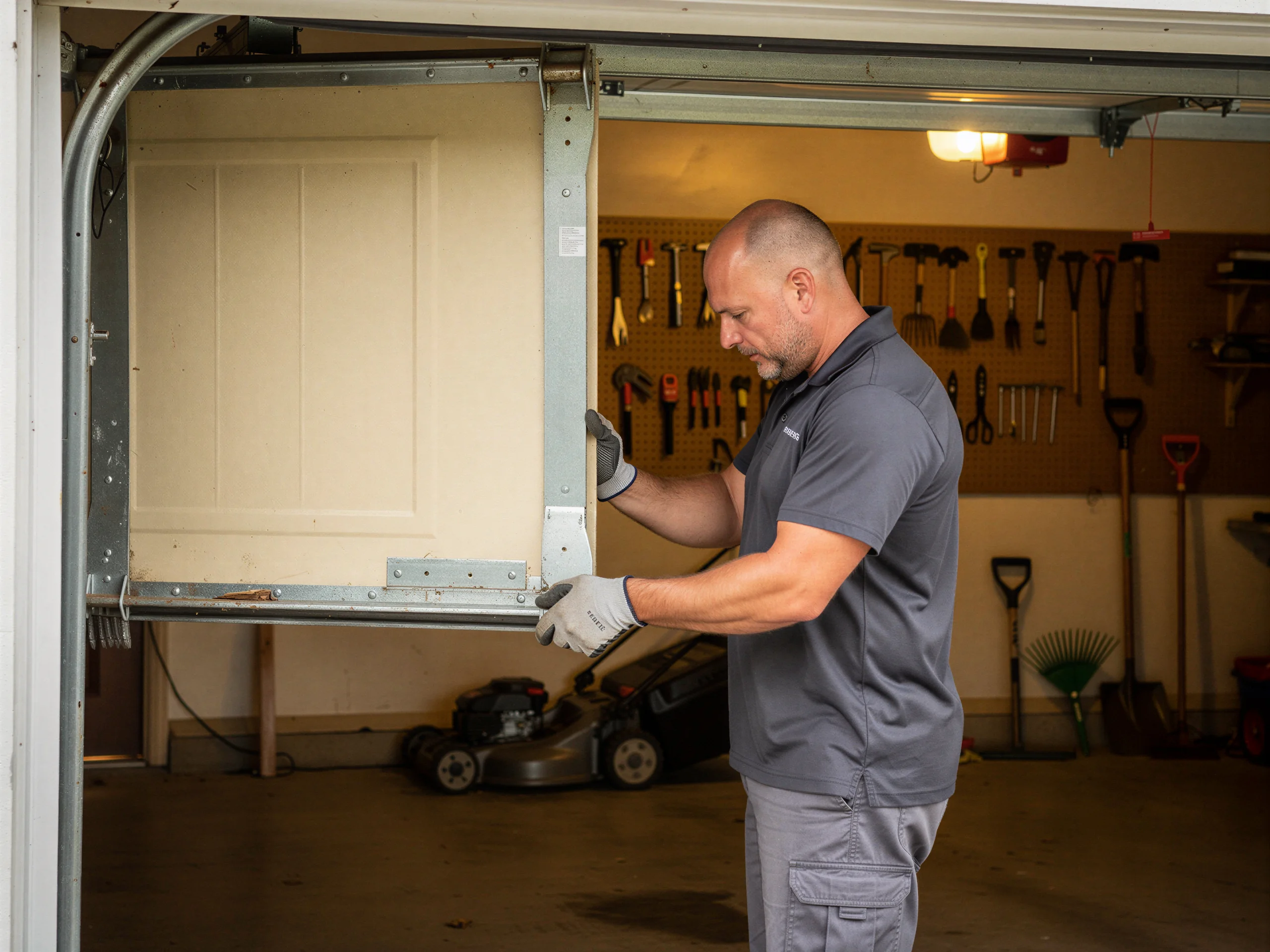
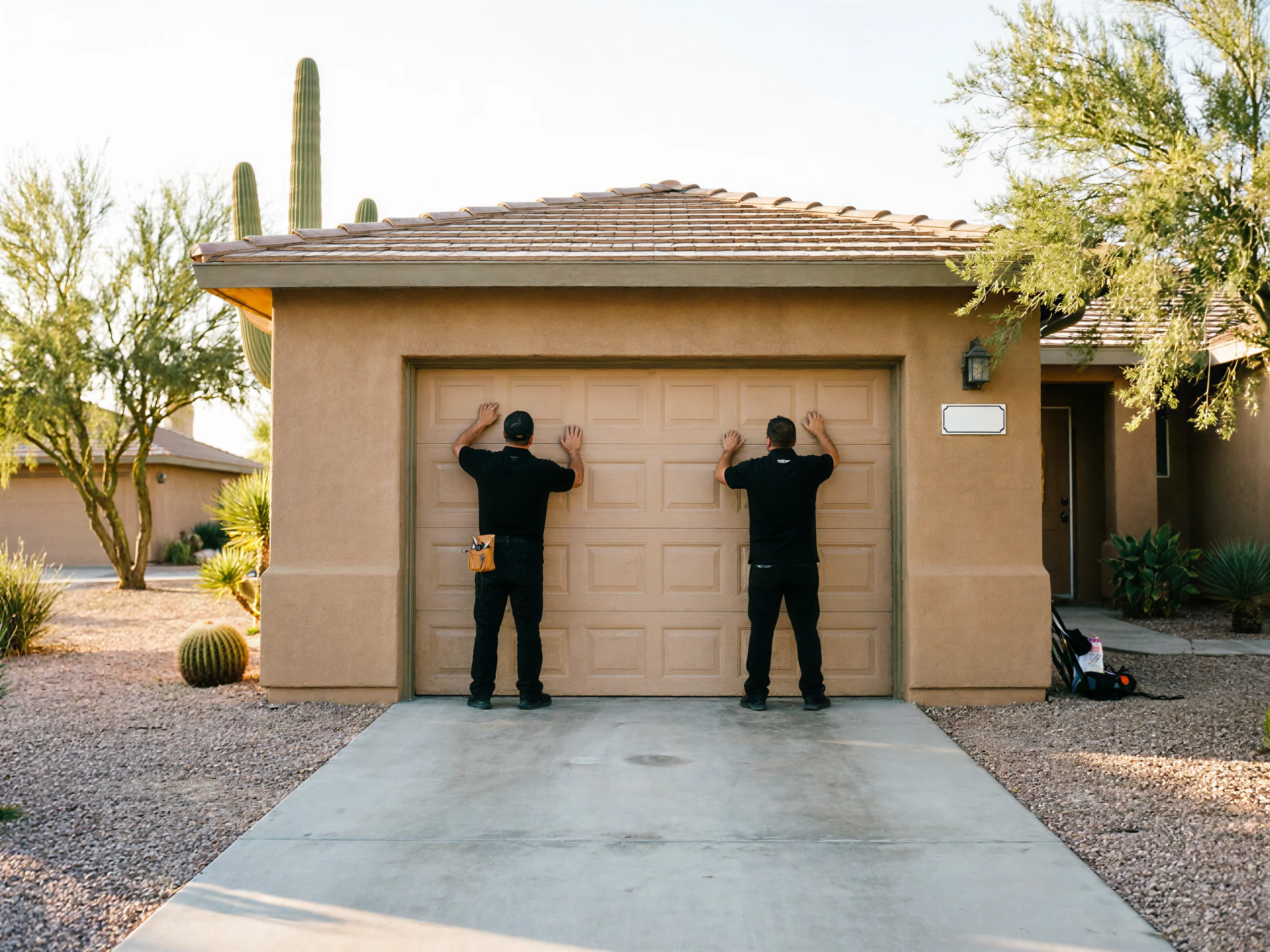
The symptom that matters is what's happening at the seam: does the door still roll straight on the track, or does it bind and pop the roller when it passes the damaged section? If a single panel is bowed inward and the door still opens and closes square, that's a panel job.
Frame damage from pulled track
If the track pulls away from the jamb when the door cycles, the damage has already spread past the panel and into the frame, and that changes what we load on the truck before the nineteen miles back down. We'd rather know that on the phone than guess it in the driveway.
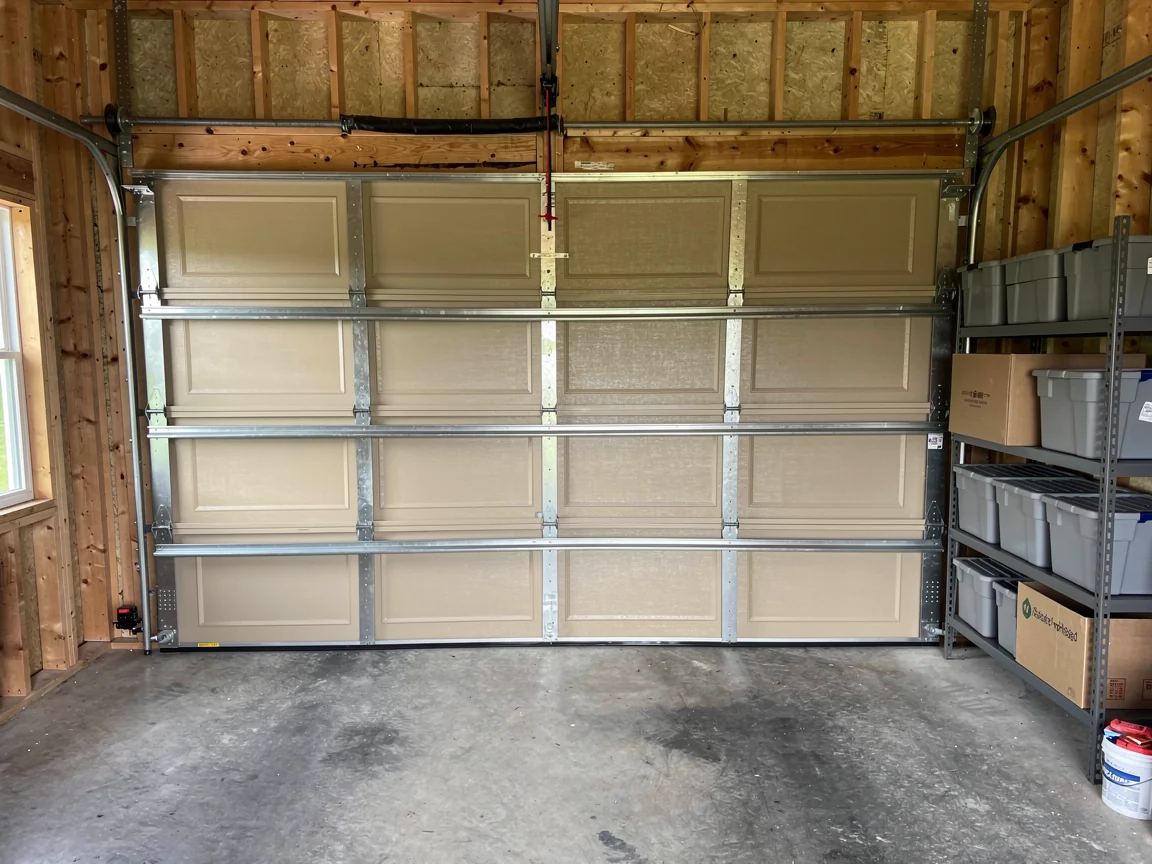
What Can Go Wrong
The area's housing stock centers on 1966, decades older than the newer tracts further down the valley, and that earlier build date shows up directly in the hardware behind a damaged panel.
Track spacing mismatch
Doors from that era commonly ran on heavier gauge track with bracket spacing that newer steel sections don't match. Replace one panel with a modern off-the-shelf piece and you can end up with a seam that doesn't sit flush, because the panel height or the stile profile is slightly off from what the rest of the door was built with.
Impact bends the stile
The other risk is what's underneath the dent. On an older door, a hard impact - a car bumper, a falling branch, wind-driven debris - often tweaks the stile enough to throw the whole panel out of plane, even when the surface damage looks confined to one spot.
Misalignment causes repeat repairs
If we don't catch that misalignment before replacing the panel, the new section binds against the roller within a few months and you're paying for the same repair twice.
Doing It Yourself
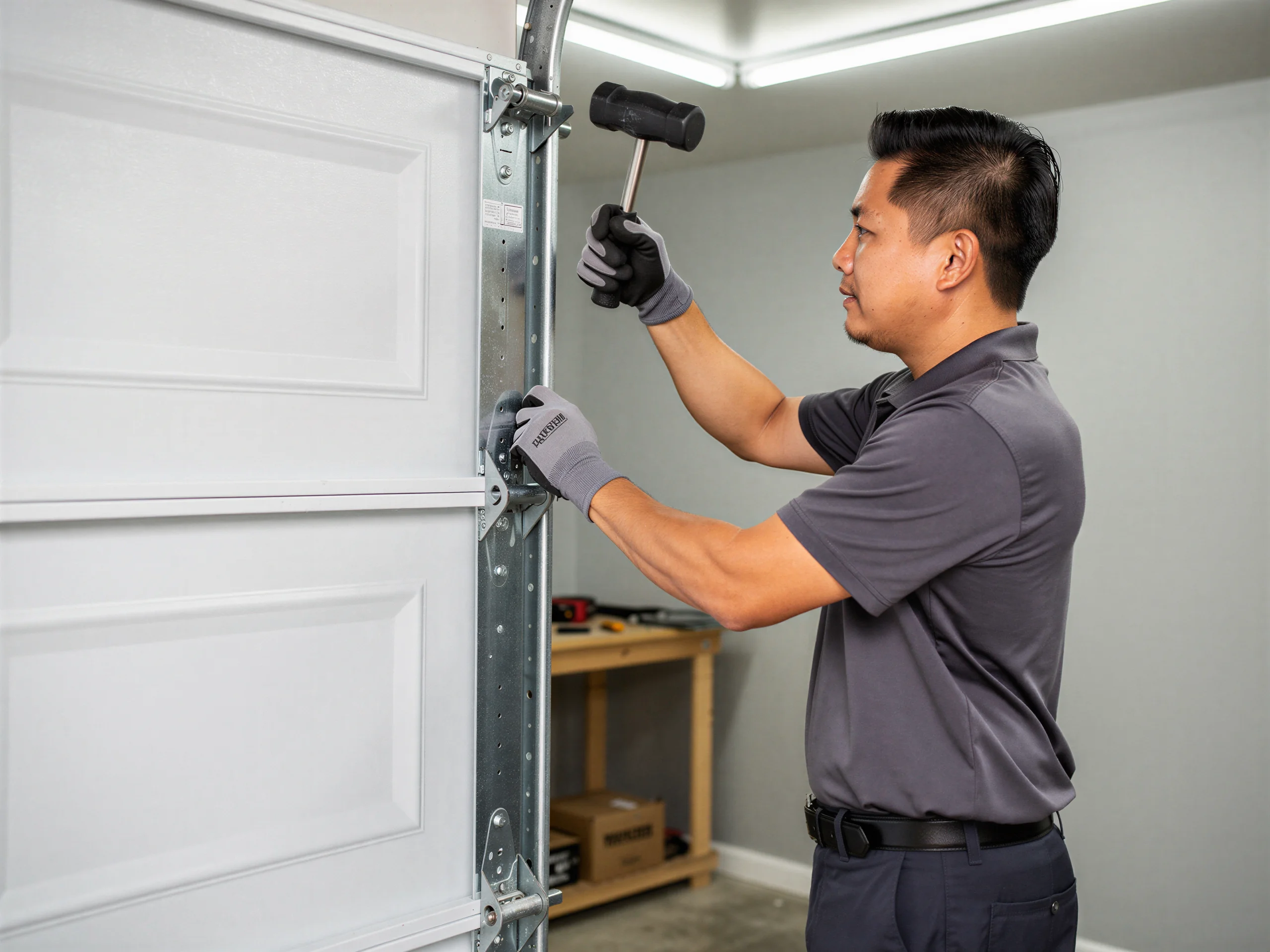
A single scratched or lightly dented panel on a door that still tracks straight is a reasonable DIY panel swap if you can find a matching section - the fasteners are usually just hex bolts along the stile. Where it stops being a weekend job: any door built in the mid-1960s to early-1970s window common around here often used panel dimensions and hinge spacing that current retail panels don't match without trimming or re-drilling, and that work goes sideways fast if the door is still under spring tension while you're doing it.
We won't talk anyone out of trying the easy case. But if the dent is near a hinge, near the bottom corner where the cable anchors, or if the door has started dragging on one side since the impact, that's not a panel problem anymore - that's a frame and alignment problem wearing a panel's clothes, and it's worth a second set of eyes before you spend money on a part that won't fix it.
Stocked Parts
We don't keep a local stock in Crestline - everything comes out of the Victorville truck, which is part of why we ask detailed questions up front instead of showing up to diagnose. For the 1960s and 1970s door styles that make up a good share of the roughly 4,047 households in this area, matching panel stock isn't something we can promise sight unseen; some of those older sections are no longer made in the original profile, and we'll tell you that on the phone rather than after the drive.
What we can usually match without delay is standard-width steel panel sections for doors installed from the 1980s onward, since that's the more common stock we carry for the broader service area. If your door falls into the older bracket, we'd rather quote you a full replacement option alongside the panel repair than send a mismatched piece out on a nineteen-mile drive and have it not fit.
Talk to a local pro
Garage door service in Victorville?
Same-day service with honest, upfront quotes.