The Symptom
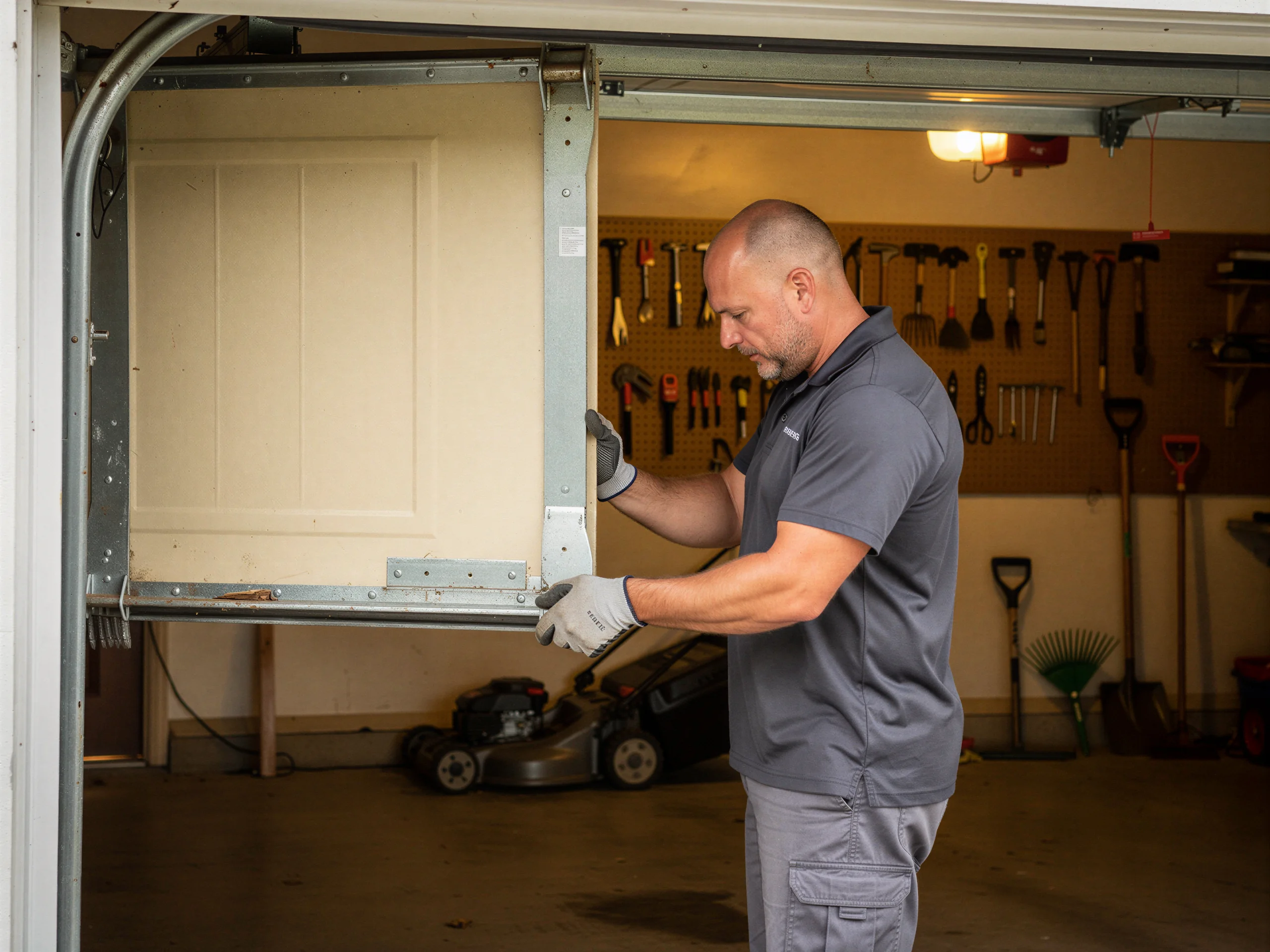
Most of the service calls we get from Crestline start the same way: a door that used to open quiet now grinds, hesitates, or drops the last foot instead of settling.
Oldest median housing stock
That's not a coincidence. The median home here was built around 1966, which puts it well ahead of the 1989 median for the wider area we cover out of Victorville. A door installed or replaced in that era has had decades to work its hardware loose, and the symptom you're hearing - rattling track, a spring that groans before it lifts, an opener that strains - usually traces back to parts that are simply older than what we see on the newer side of town.
Long-run worn-part planning
Crestline sits about 19 miles from our shop, which is one of the longer runs on our route, so when you call we're already thinking about what's likely to be worn rather than guessing once we get there.
Sagging corner and remote range
A door that's sagging on one corner, or a remote that only works if you stand right under it, points to fatigue in parts that have outlived their rated cycle count, not a one-off glitch.
What Can Go Wrong
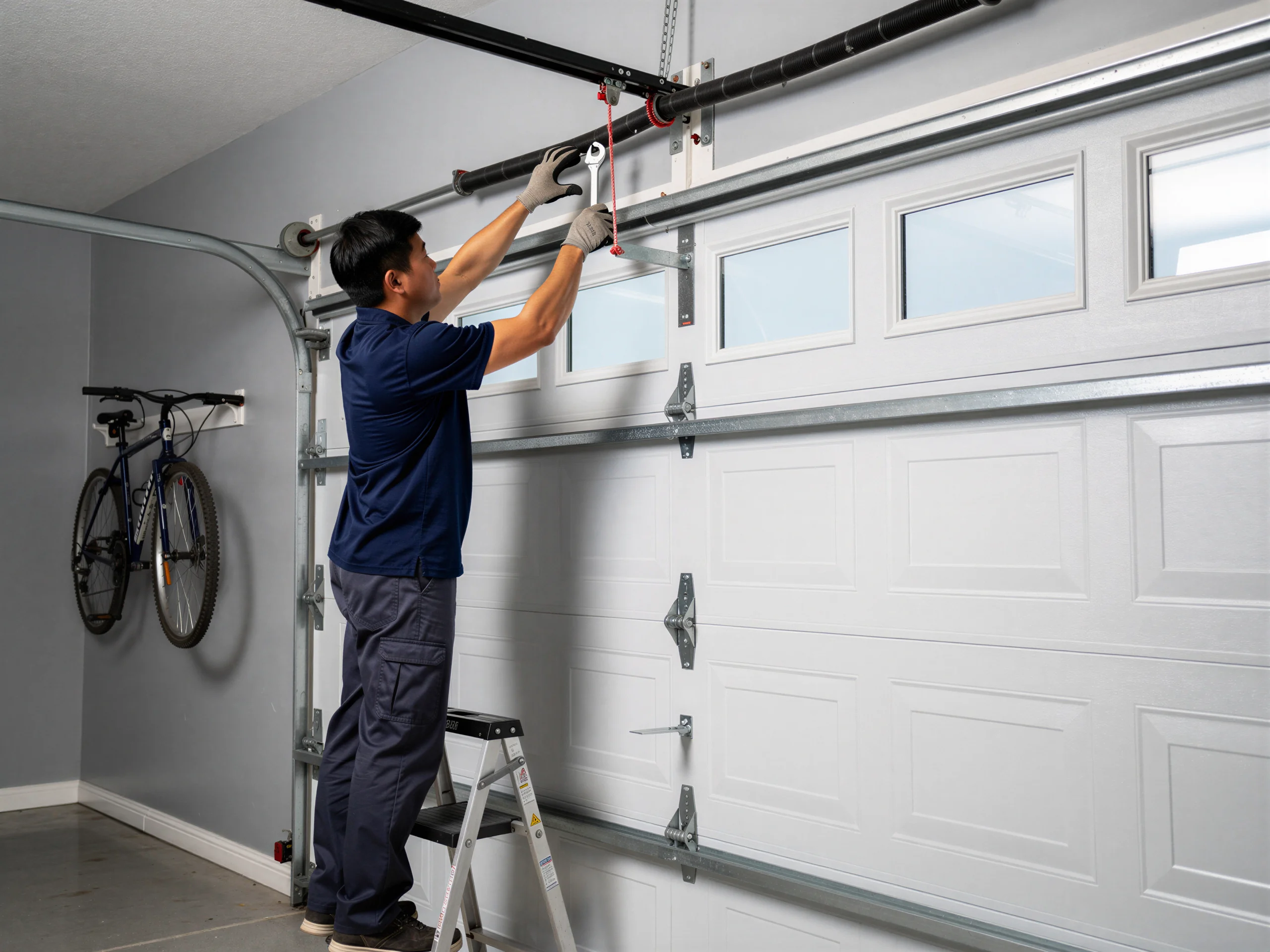
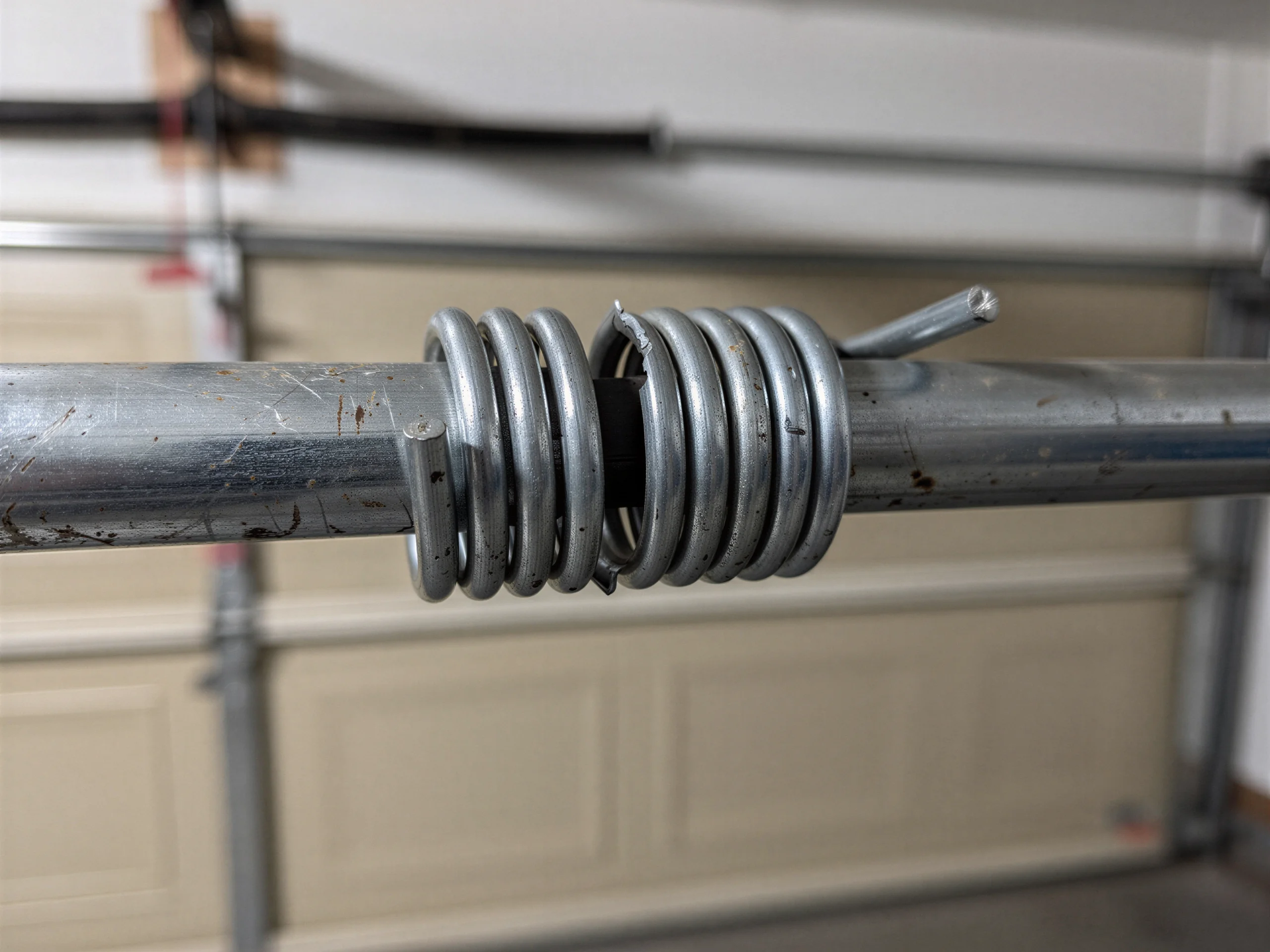
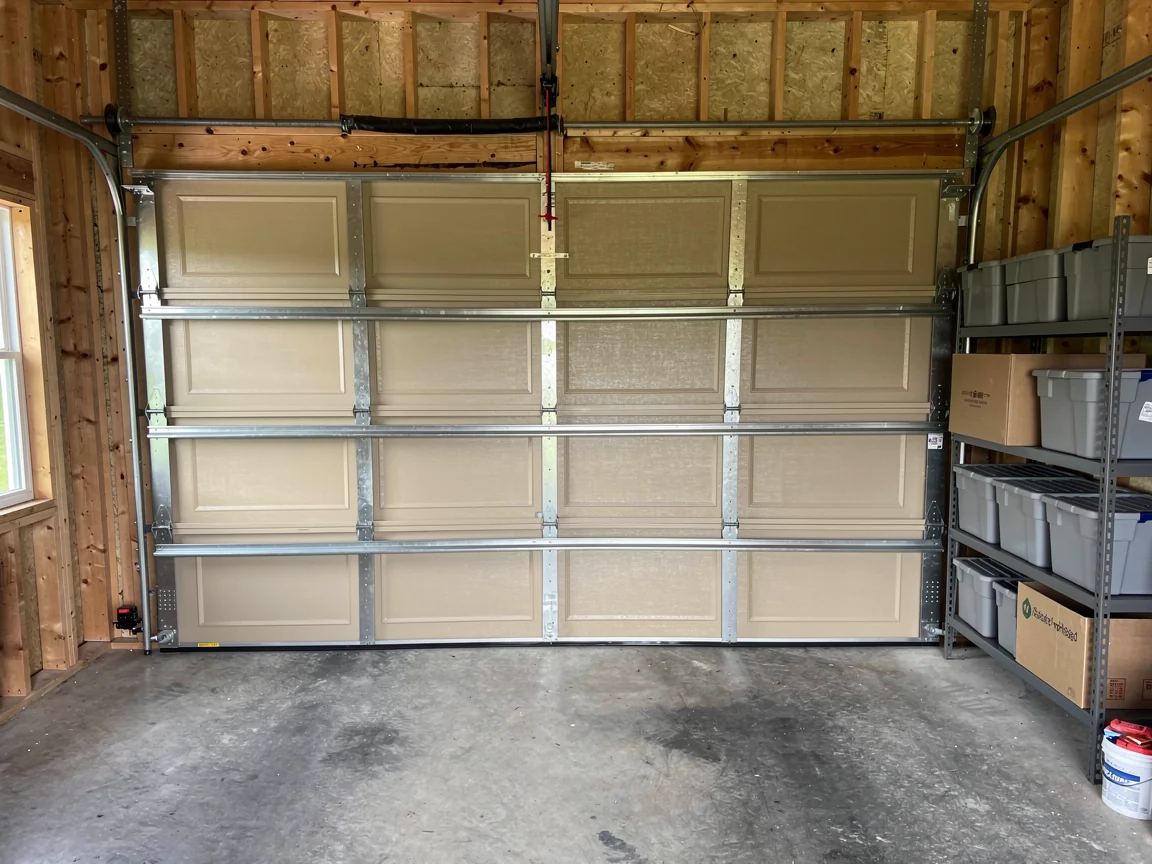
On a house built in the 1960s, the torsion spring system has usually been replaced at least once already, sometimes with hardware that doesn't match the original door weight.
Uneven lift, one side
That mismatch shows up as uneven lift - one side rising faster than the other - and it's one of the more common issues we find once we're actually looking at the shaft and cable drums instead of just the opener.
Panel rust and seam gaps
Panel rust and seam separation also turn up more often on older stock, especially where the door has gone through enough summers that the finish has chalked and the seams have loosened. The area sits in a moderate-heat climate band, and repeated heat cycling over fifty-plus years does more to warp panels and dry out rollers than any single bad season does.
Cracked nylon rollers
Rollers themselves are a frequent failure point too - nylon rollers from an earlier install era tend to crack rather than wear smooth, and a cracked roller binding in the track is often the real reason a door that 'just needs oil' keeps sticking.
Doing It Yourself
Lubricating hinges and rollers, checking that the photo-eye sensors are aligned, and tightening visible hardware are reasonable jobs for a homeowner to do on a Saturday morning, regardless of the house's age. Those don't require touching anything under tension.
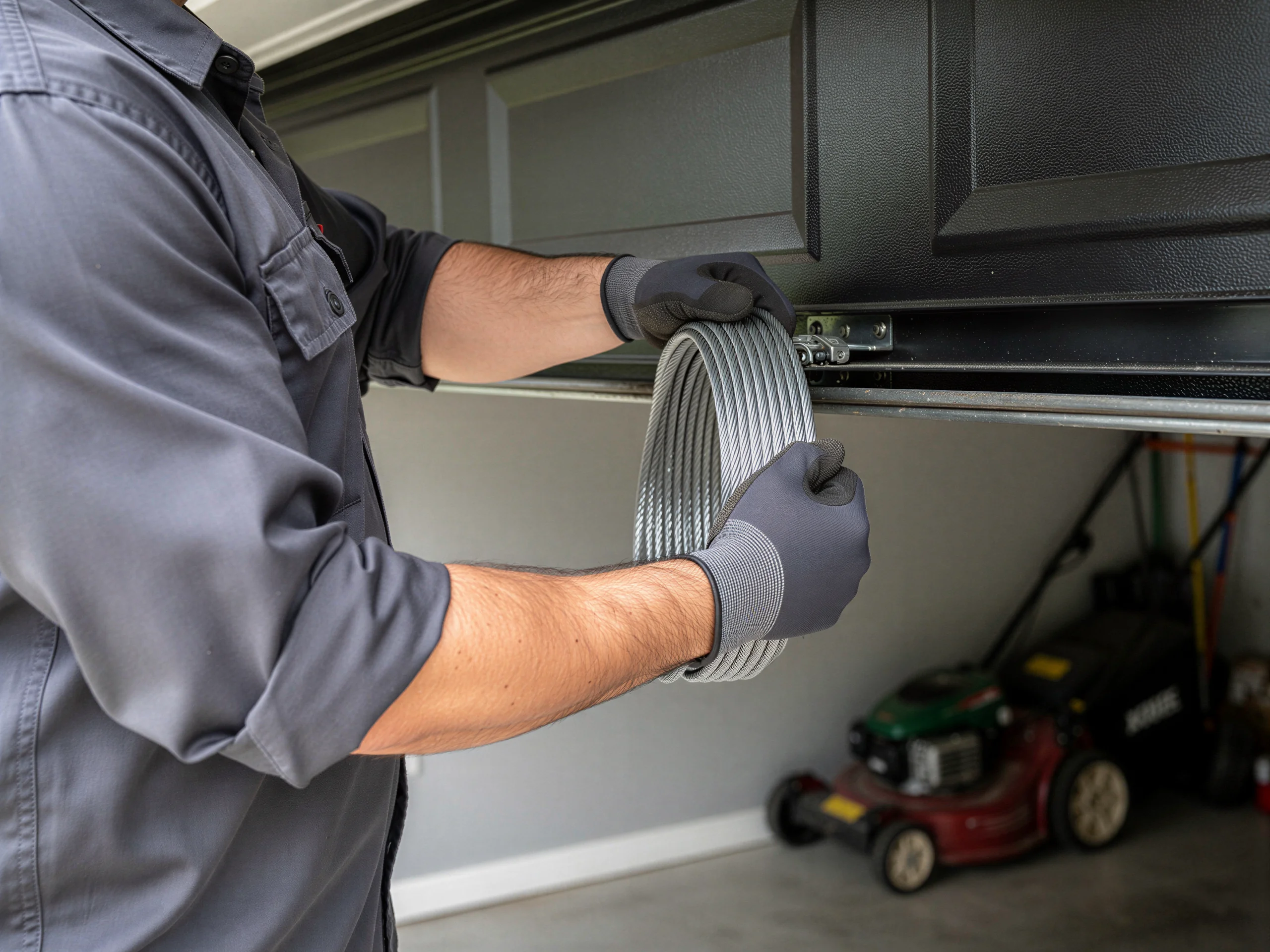
Where we draw the line is the torsion spring and the cables attached to it. On a door this old, the spring has been under load for a long time, and nobody can tell you from the driveway whether it's one good cycle or one hundred away from letting go. We don't walk people through spring replacement over the phone, and we won't sell you the parts to do it yourself - that's not a convenience we're willing to trade for a trip to the ER. If your door is sagging, binding, or the opener is straining to lift it, that's a call for us, not a weekend project.
Stocked Parts
We carry the torsion springs, cables, and roller hardware that fit the door styles common to houses built in the 1966-1997 window, since that covers most of what we see across this area. For Crestline specifically, where the housing skews toward the older end of that range, we bring stock sized for the heavier, earlier-style doors rather than assuming the lighter hardware that's more common on newer construction elsewhere.
One honest limitation: if your door uses a discontinued panel style or an opener model that's been out of production for years, we may need to order that specific part rather than pull it off the truck, and that can add a few days to the job. We'll tell you up front if that's the case rather than quoting a same-day fix we can't actually deliver.
Talk to a local pro
Garage door service in Victorville?
Same-day service with honest, upfront quotes.